Inspection procedures and the criteria for compliance and non-compliance are explained based on
the piping configuration of the sample line leading to the 15ppm bilge alarm.
Inspection Procedures and Criteria for Compliance and Non-Compliance
- Sample line valves and/or fittings assessment
1.1. Where valves (hereinafter ”Valve X”) and/or union joints are fitted on the sample line to the 15ppm bilge alarm:
The inspection procedure differs depending on whether Valve X and/or the union joint are sealed.
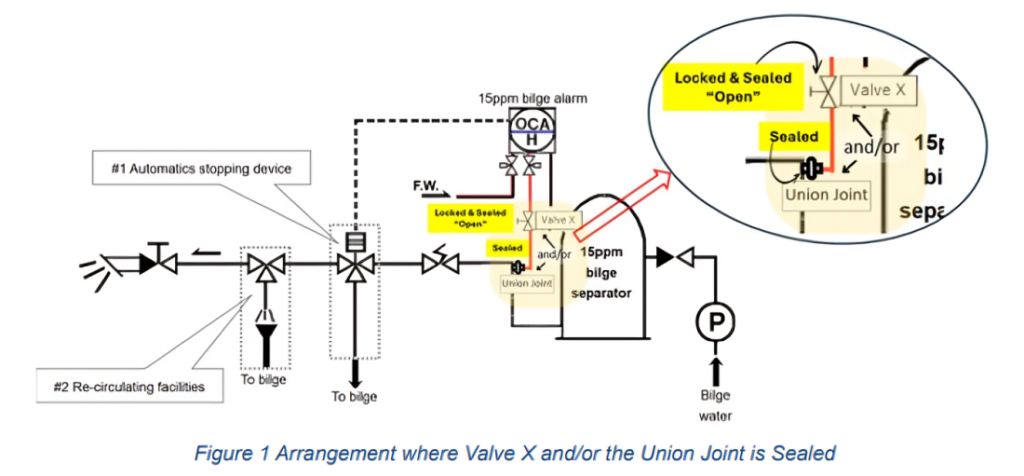
AA) Where Valve X and/or Union joint is sealed (Refer to Figure 1)
PSC will confirm compliance with the following (1)–(3), and PSC does not require testing by closing Valve X.
(1) Valve X and/or union joint is locked and sealed in the open (normal operating) position.
(2) The integrity of the seals is maintained.
(3) The arrangement matches the approved drawings (The approved drawing should indicate the condition of Valve X and/or the union joint as ”Locked and Sealed Open)
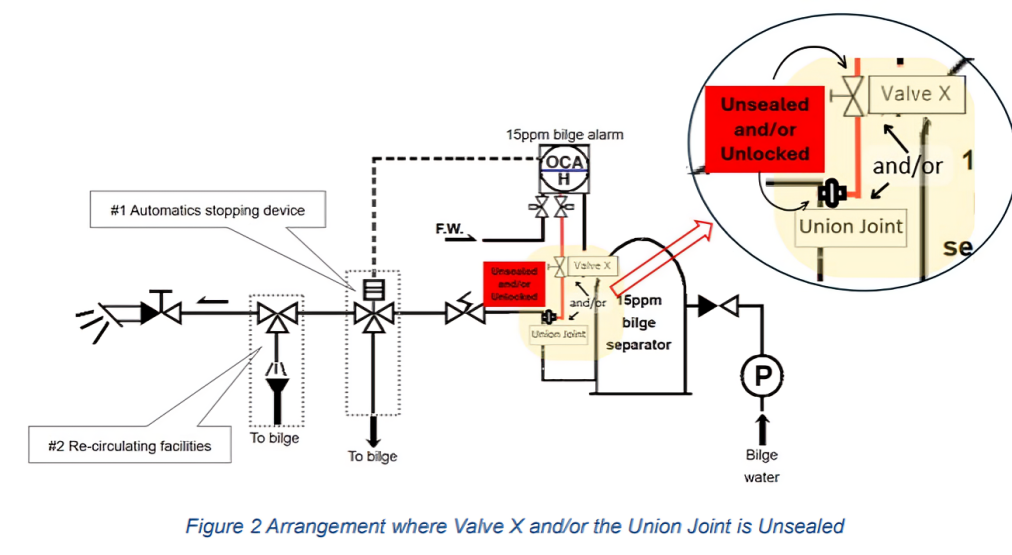
BB) Valve X and/or the Union Joint are unsealed (Refer to Figure 2)
PSC may require a test by intentionally closing Valve X and/or disconnecting the sample line at the union joint
while the system is running.
a. Compliance Criteria
Upon closing Valve X and/or disconnecting the sample line at the union joint:
・ The 15ppm bilge alarm should be activated,
&
・ The automatic stopping device (3-way valve) should stop overboard discharge.
b. Non-compliance Criteria
Upon closing Valve X and/or disconnecting the sample line at the Union joint,
・If the alarm does not activate and the discharge does not stop automatically, the arrangement is considered
non-compliant
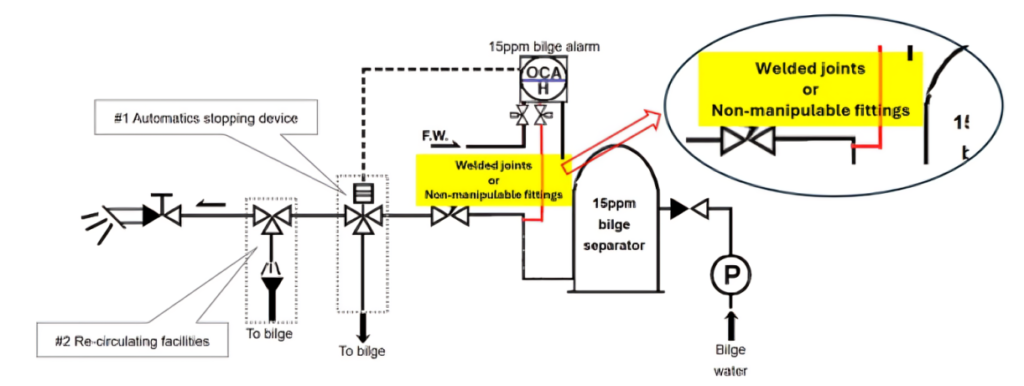
Figure 3 Arrangement where no Valve X and/or no union joint is fitted on the sample line to the 15ppm bilge alarm
1.2. Where no Valve X and/or no union joint is fitted on the sample line to the 15ppm bilge alarm
(Refer to Figure 3)
: If the sample water line is fully welded, or if fittings/joints that cannot be operated or removed are used, the
arrangement is considered compliant from the standpoint of preventing willful manipulation
———————————————————————————————————————————————
2.Clean Water Flushing and Adequate Sample Flow Assessment (Prevention of Clogging)
During the inspection, PSC may assess the clean water flushing and check for no or inadequate sample flow
due to blockages (clogging) of the sample line. Such operational failures indicate noncompliance with the maintenance and shipboard operation requirements of the ISM code.
———————————————————————————————————————————————
Before entering ports, please ensure that the vessel complies with ①, ② or ③.
Where Valve X and/or union joints are fitted on the sample line
① Valve X and/or Union joint is sealed (Refer to Figure 1)
② If Valve X and/or the Union Joint are unsealed, (Refer to Figure 2)
: Upon closing Valve X and/or disconnecting the sample line at the union joint, the
15ppm bilge alarm is activated & the automatic stopping device (3-way valve) stops
overboard discharge.
・ Where no Valve X and no union joint is fitted on the sample line
③ The sample water line is fully welded, or if fittings/joints that cannot be operated or
removed are used. (Refer to Figure 3)
・Also, should either ② or ③ be selected instead of applying ①, please consult the manufacturer in advance
to confirm applicability and obtain any necessary advice.
(The Australian Maritime Safety Authority (AMSA) has issued Marine Notice (MN) 2025/06 regarding
inspection procedures and detention criteria for oil filtering equipment (15ppm bilge separator and 15ppm bilge
alarm).