
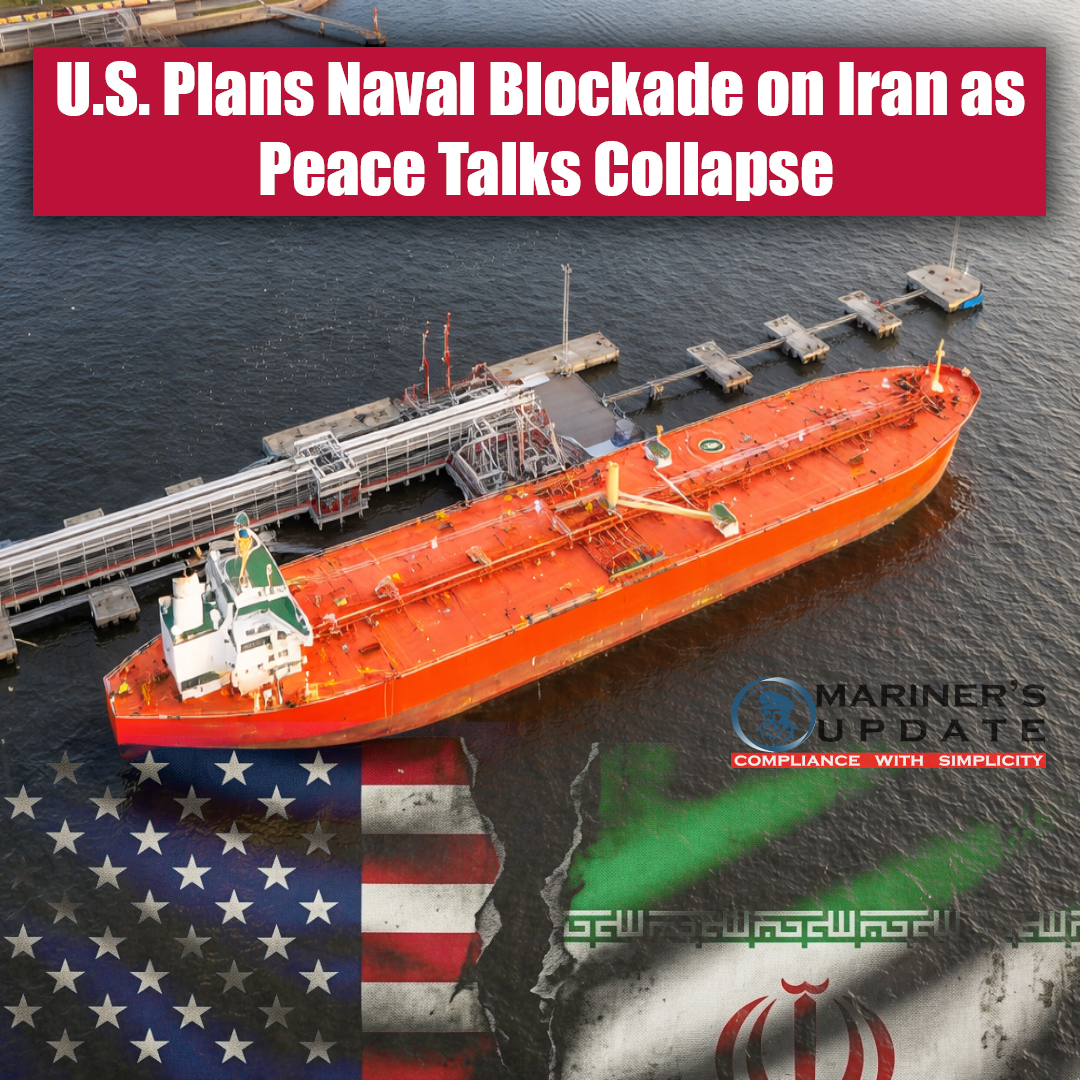
Key Highlights
- Iran signals strong retaliation, accusing the U.S. of taking an uncompromising stance in negotiations
- Oil prices surge past $100, dollar strengthens, and U.S. stock futures dip
- Fuel costs may remain elevated through upcoming elections, warns Donald Trump
- Despite tensions, both sides hint that further negotiations are still possible
What’s Happening
The United States has announced a sweeping naval blockade targeting all maritime traffic entering and leaving Iranian ports, following the breakdown of high-level talks over the weekend. The move threatens to unravel a fragile ceasefire that had only been in place for two weeks after weeks of intense conflict across the Gulf region.
These negotiations, held in Islamabad, marked the first direct engagement between the two nations in over a decade and the most significant diplomatic effort since Iran’s 1979 revolution. Despite initial optimism, discussions ultimately stalled over key disagreements, particularly around Iran’s nuclear program and control of strategic waterways.
Details of the Blockade
According to U.S. Central Command, the blockade will be enforced across Iranian ports in both the Arabian Gulf and the Gulf of Oman. While vessels traveling to non-Iranian destinations through the Strait of Hormuz will not be stopped, the U.S. has warned it will intercept ships suspected of financially supporting Iran through maritime tolls.
Additionally, U.S. naval forces are preparing to clear underwater mines in the Strait of Hormuz—a critical passage that handles nearly 20% of global energy shipments.
Market Reactions
Global markets reacted swiftly. Oil prices surged more than 7%, crossing the $100 mark, while the U.S. dollar strengthened and stock futures declined. Shipping activity has already begun to shift, with several oil tankers avoiding the region ahead of the blockade.
Experts caution that sustaining such a large-scale operation could prove challenging over time, especially without broader international support.
Iran’s Response
Iran has issued a stern warning, stating that any foreign military presence near its waters could be treated as a violation of the ceasefire and met with force. Officials have also rejected key U.S. demands, including halting uranium enrichment and cutting ties with regional groups.
Iranian leaders criticized the negotiations, accusing the U.S. of shifting expectations and acting in bad faith, even as discussions appeared close to a preliminary agreement.
What Comes Next
While rhetoric on both sides has intensified, there are still signals that diplomacy isn’t entirely off the table. U.S. leadership has expressed confidence that Iran may return to negotiations, though mixed messages continue to create uncertainty.
Meanwhile, analysts warn that even if the ceasefire holds, disruptions to energy supply could persist—keeping fuel prices high and adding pressure to the global economy in the months ahead.