
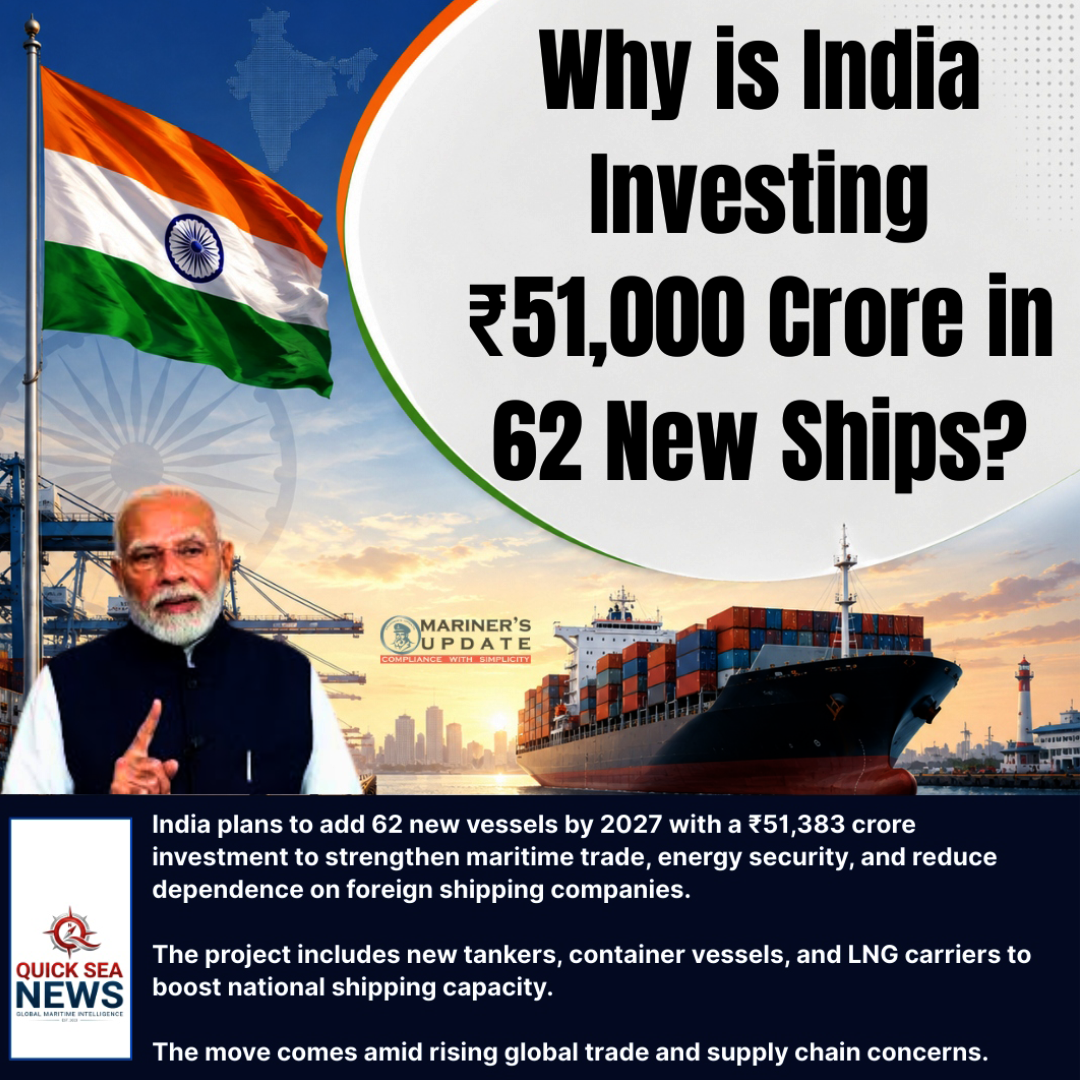
Why India Suddenly Approved ₹51,000 Crore for 62 New Ships — A Major Maritime Shift
India is preparing for one of the biggest maritime expansion programs in its history. The Ministry of Ports, Shipping and Waterways, led by Sarbananda Sonowal, is working on a strategic roadmap to significantly strengthen the country’s shipping capacity and reduce dependence on foreign vessels.
Under the ambitious plan, India aims to introduce 62 new vessels by March 2027 with an estimated investment of ₹51,383 crore. The expansion is expected to add nearly 2.85 million gross tonnage to India’s maritime fleet, marking a major step toward strengthening the country’s trade security and maritime independence.
The announcement came during a high-level inter-ministerial review meeting attended by officials from the Ministry of Petroleum and Natural Gas, Ministry of Chemicals and Fertilisers, Directorate General of Shipping, National Shipping Board, Directorate General of Foreign Trade (DGFT), along with representatives from major oil companies and maritime agencies.
Why India Is Taking This Step
The decision comes amid rising global maritime uncertainties. In recent months, tensions in the Red Sea, Strait of Hormuz, and other critical sea routes have increased concerns over global trade disruptions, freight costs, and shipping insurance premiums.
India currently depends heavily on foreign shipping companies from countries such as China, Greece, Singapore, Japan, and South Korea for transporting a major share of its cargo. Since over 90% of India’s trade by volume moves through sea routes, any disruption in international shipping can directly impact oil imports, fertilizers, coal, containers, and energy supplies.
To reduce this vulnerability, India is now focusing on building a stronger domestic maritime ecosystem under its long-term shipping strategy.
Key Focus Areas of the Expansion
The government plans to expand capacity across several critical vessel categories, including:
- Container vessels
- LPG carriers
- LNG carriers
- Crude oil tankers
- Bulk cargo vessels
- Green tugs
- Dredging vessels and tankers
Officials also reviewed operational preparedness, cargo flow management, and the impact of current geopolitical developments on maritime trade routes.
Strategic Role of Shipping Corporation of India
A major part of the expansion will involve the Shipping Corporation of India. The ministry reviewed the progress of a proposed joint venture between SCI and oil public sector undertakings (PSUs) for the acquisition of 59 vessels.
The initiative is expected to improve India’s long-term energy security while boosting domestic shipping and shipbuilding capabilities.
Government’s Long-Term Maritime Vision
During the meeting, Minister Sonowal directed officials to prepare a comprehensive white paper outlining:
- Existing gaps in the maritime sector
- Clear growth targets
- A time-bound roadmap for expansion
- Better coordination among key ministries and trade agencies
The government also emphasized closer coordination with the Ministries of Petroleum and Natural Gas, Chemicals and Fertilisers, and Commerce and Industry to ensure smooth implementation of the strategy.
Focus on Seafarer Safety
Alongside fleet expansion, the government stressed that the safety and security of Indian seafarers remain a top priority. Maritime agencies have been instructed to maintain heightened vigilance in sensitive and high-risk sea zones.
Experts believe this mega investment is not just about purchasing ships — it represents India’s larger ambition to emerge as a self-reliant global maritime power capable of protecting its trade, supply chains, and strategic interests during times of international uncertainty.