
Toxic Practices Beneath the Surface
A courageous seafarer’s report sheds light on environmental violations and the urgent need for stronger maritime reporting culture.
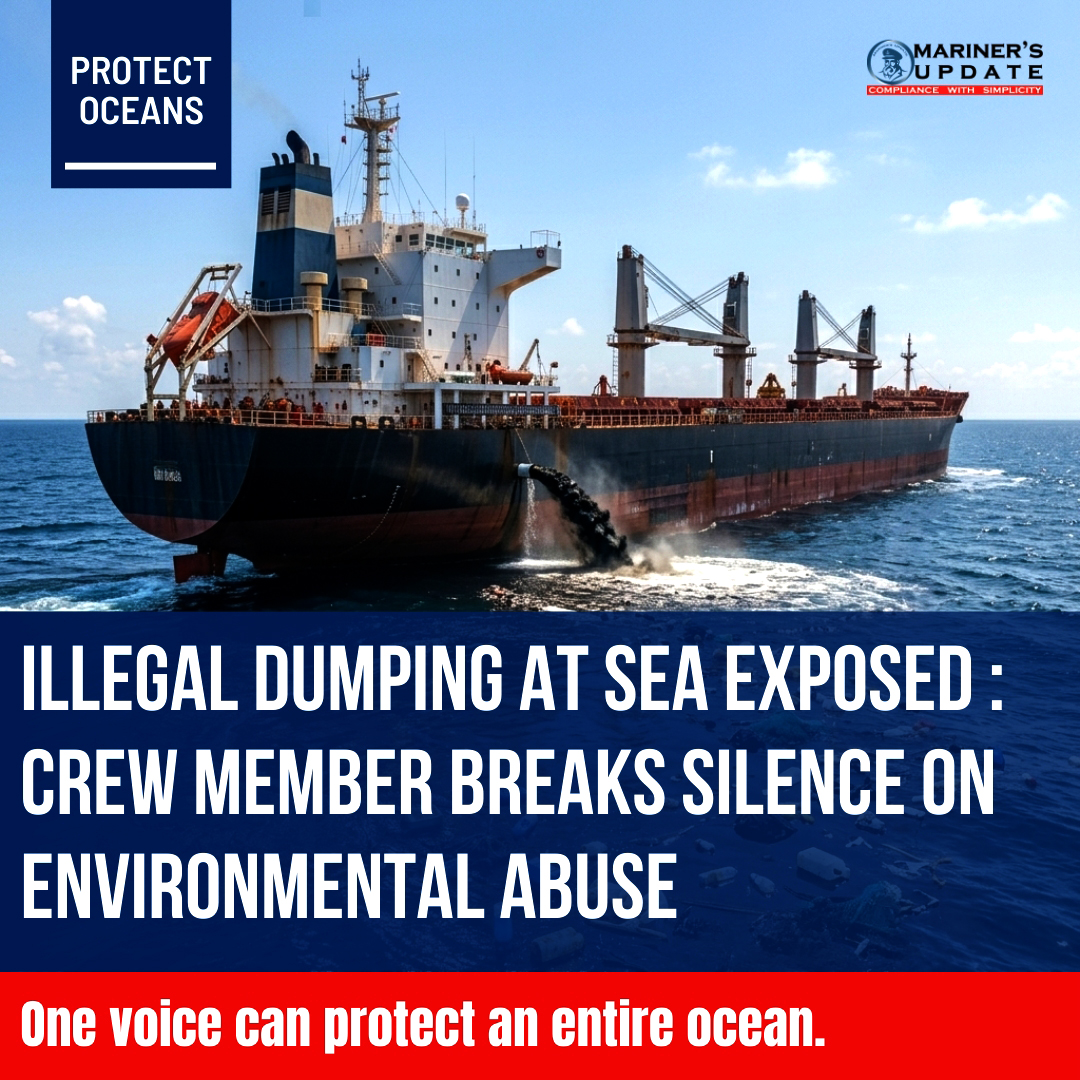
A serious case of illegal waste disposal at sea has drawn attention to ongoing environmental compliance challenges within the maritime industry. A crew member reported the unlawful discharge of oily waste and plastic into the ocean while the vessel was sailing toward its next port.
According to the report, senior officers allegedly instructed engine room personnel to discharge oily residues directly into the sea. The whistleblower documented the incident with photographs and videos before escalating the matter internally. When no corrective action followed, the individual contacted an independent maritime reporting channel to ensure the issue was addressed.
Following the report, the vessel’s flag state administration launched an inspection onboard. Authorities reviewed evidence provided by the reporter while maintaining communication with relevant stakeholders throughout the process.
The incident highlights the importance of protecting seafarers who speak up against unsafe or illegal practices. Despite feeling isolated during the reporting process, the whistleblower remained committed to protecting the marine environment and ensuring accountability.
Investigators also sought to understand why oily waste and sludge had accumulated onboard, raising broader concerns about vessel management, operational oversight, and onboard environmental culture.
Industry observers say the case reflects deeper systemic issues where illegal practices can gradually become normalized if left unchallenged. It also emphasizes the critical role of ship management companies and Designated Persons Ashore (DPA) in supporting transparent reporting systems and ensuring retaliation-free reporting environments.
Maritime safety advocates stress that effective environmental protection depends not only on regulations, but also on empowering seafarers to report violations without fear of professional or emotional consequences.
The case serves as a reminder that protecting the oceans requires collective responsibility from regulators, shipowners, managers, and crew alike.