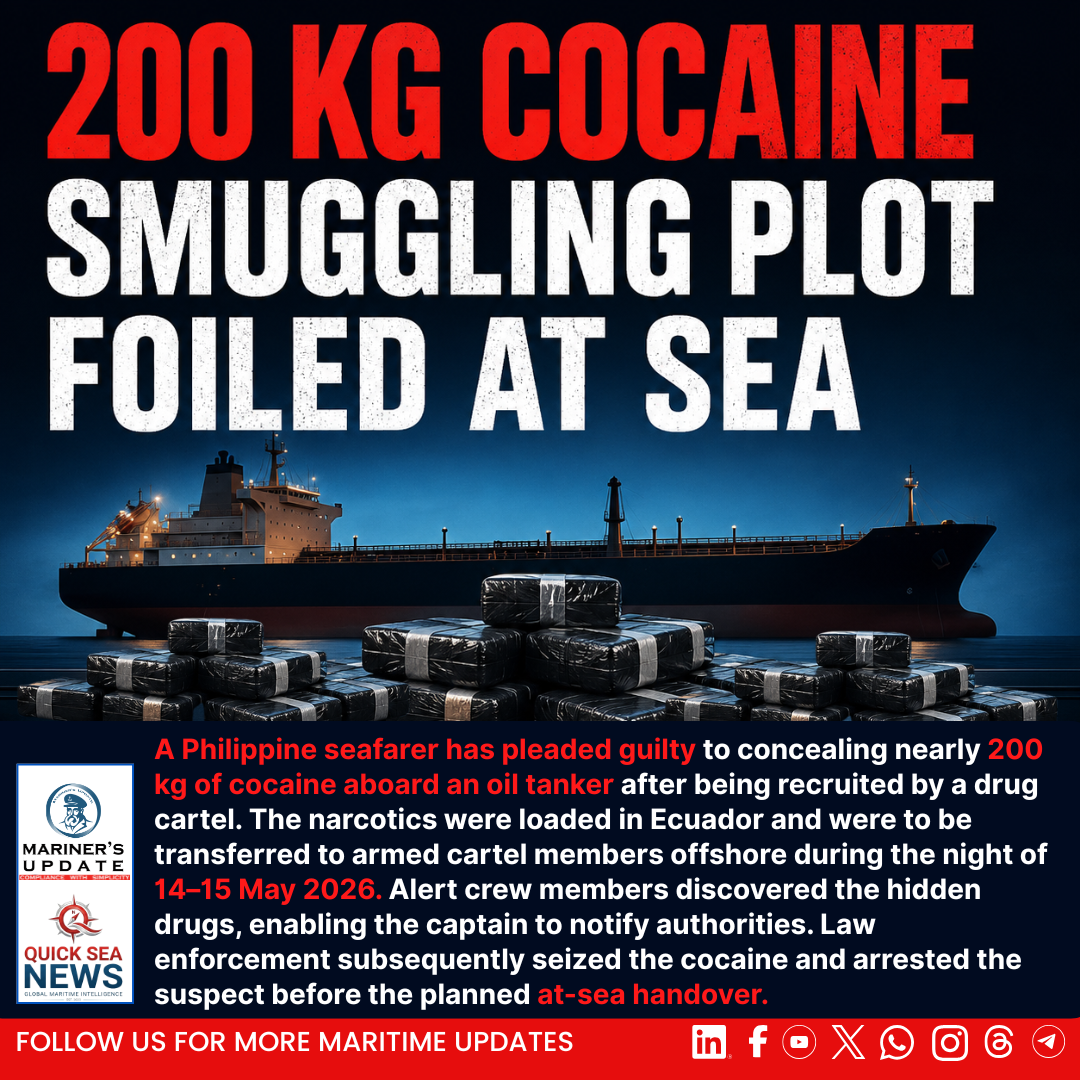
A major international drug smuggling operation targeting North American waters has been disrupted after a Philippine seafarer pleaded guilty to concealing nearly 200 kilograms of cocaine aboard an oil tanker as part of a sophisticated trafficking network linked to a Mexican drug cartel.
The able-bodied seaman admitted his involvement before a U.S. District Court in Los Angeles on July 13, acknowledging that he knowingly hid the narcotics onboard the vessel during its voyage from Ecuador. Authorities stated the operation was carefully planned, with the intention of transferring the cocaine at sea to cartel members waiting off the Mexican coast.
According to investigators, the seafarer was recruited by an individual identified only as “Luis”, who arranged for the cocaine to be loaded onto the Liberian-flagged tanker while it was in Ecuador. The drugs were concealed inside garbage bags and hidden in both the vessel’s trash room and the seafarer’s cabin to avoid detection during the voyage.
The smuggling plan called for the contraband to be transferred to a small boat carrying armed cartel members when the tanker reached a position approximately 80 nautical miles offshore during the night of May 14–15. Authorities revealed that if the initial transfer failed, additional boats had been arranged, with cartel members allegedly prepared to board the tanker and recover the drugs by force if necessary.
The operation, however, unraveled before the planned rendezvous. Crew members discovered suspicious garbage bags containing the concealed cocaine in the vessel’s trash room and immediately reported the finding to the ship’s master. Acting swiftly, the captain secured the narcotics, identified the seafarer allegedly responsible, and notified U.S. authorities before the vessel reached its intended offshore meeting point.
Following the report, U.S. authorities instructed the tanker to proceed to the San Pedro ports complex anchorage near Los Angeles. Law enforcement officers boarded the vessel, seized the cocaine shipment, and arrested the crew member without incident.
During the voyage, the ship’s captain also reported receiving radio communications believed to have originated from members of the cartel. Investigators believe these calls were attempts to establish contact with the tanker before the planned at-sea transfer or potential boarding operation.
The seafarer is scheduled to be sentenced on October 19. Under U.S. federal law, he faces a mandatory minimum prison sentence of 10 years, with the possibility of life imprisonment depending on the final judgment.
The incident underscores the growing threat posed by transnational criminal organizations exploiting commercial shipping routes to transport illegal narcotics. It also highlights the critical role of vigilant shipboard crews, decisive action by vessel masters, and close cooperation with maritime law enforcement in preventing commercial vessels from being used as platforms for organized crime.