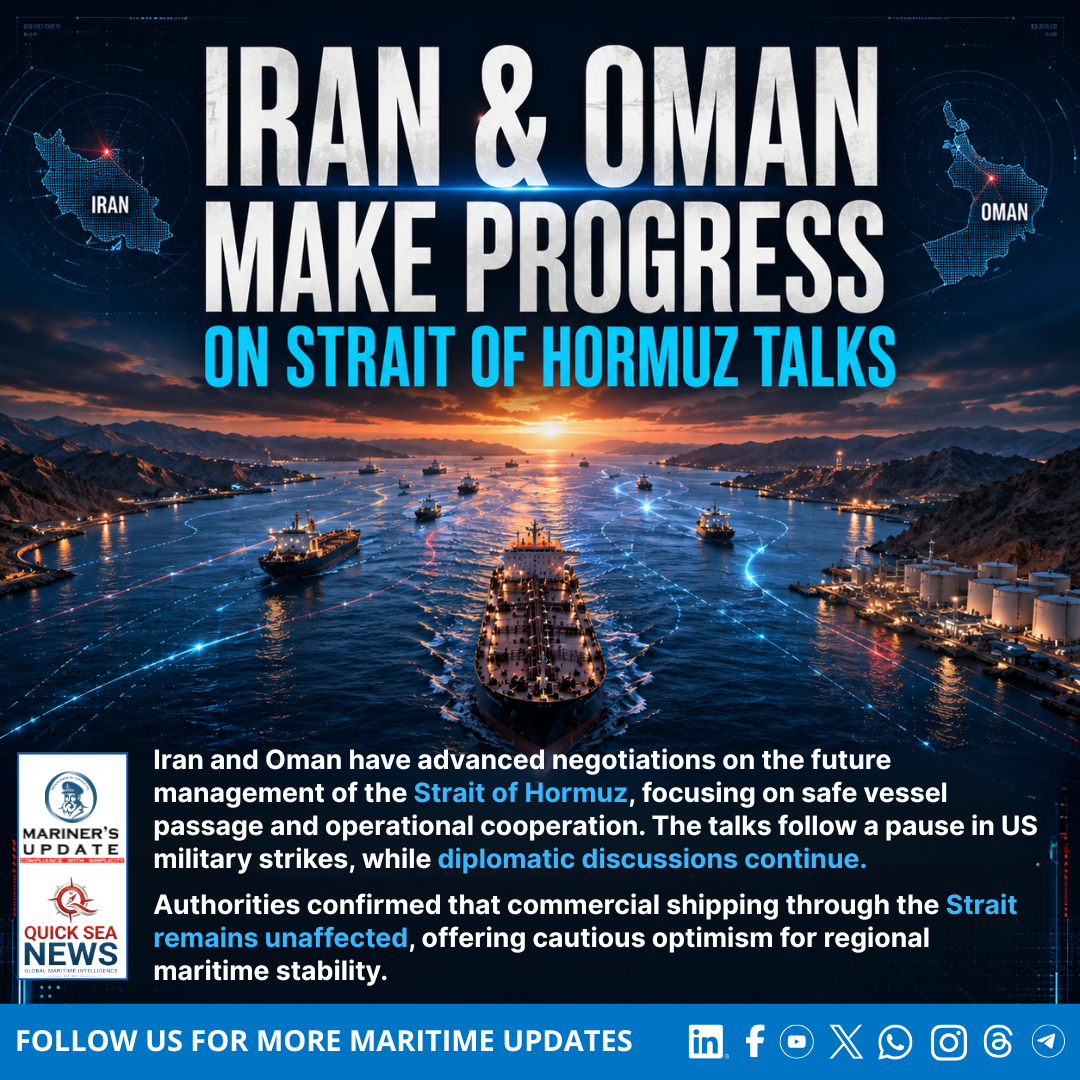
Iran has announced positive progress in ongoing discussions with Oman regarding the future management and safe navigation of the Strait of Hormuz, one of the world’s most strategically important maritime chokepoints responsible for a significant share of global oil and liquefied natural gas (LNG) trade.
According to Iranian Foreign Ministry spokesperson Esmaeil Baghaei, multiple rounds of negotiations were held in Tehran on Friday and Saturday between Iranian and Omani deputy foreign ministers. The meetings focused on strengthening cooperation over the management of the waterway while ensuring uninterrupted commercial shipping through the region.
Baghaei stated that both sides discussed common principles and operational mechanisms aimed at guaranteeing the safe passage of vessels transiting the Strait of Hormuz while respecting the sovereign rights of both Iran and Oman, which jointly border the strategic waterway.
He described the negotiations as constructive and useful, confirming that measurable progress had been achieved. Technical and political consultations between both countries are expected to continue as discussions move toward developing a broader framework for navigation and regional maritime cooperation.
The latest diplomatic engagement comes after weeks of heightened military tensions in the Gulf. The United States had resumed military strikes against Iran despite a memorandum of understanding reached in June that had briefly reduced hostilities. Those operations were intended to pressure Tehran over its influence and control around the Strait of Hormuz.
Earlier discussions between Iran and Oman had also included the possibility of introducing service fees for vessels using the Strait, a proposal opposed by Washington. Oman had additionally suggested that ships could transit the waterway through Omani territorial waters, a position that reportedly created friction with Tehran and contributed to renewed regional tensions.
In a significant development, Iran confirmed that no new US strikes had been recorded for nearly two weeks, indicating a temporary easing of military activity. Reports also suggest that US President Donald Trump declined to authorize another planned round of strikes after receiving a Pentagon proposal, choosing instead to allow diplomatic efforts to continue.
According to reports, the decision followed the arrival of an Omani delegation in Tehran to discuss a potential new arrangement aimed at reopening and stabilizing navigation through the Strait of Hormuz.
Despite the ongoing negotiations, Iranian officials emphasized that there has been no change in the current status of commercial shipping traffic, with vessel movements through the Strait continuing under existing conditions.
The Strait of Hormuz remains one of the world’s most critical maritime trade corridors, making any diplomatic progress between Iran and Oman closely watched by the global shipping, tanker, energy, and maritime industries.