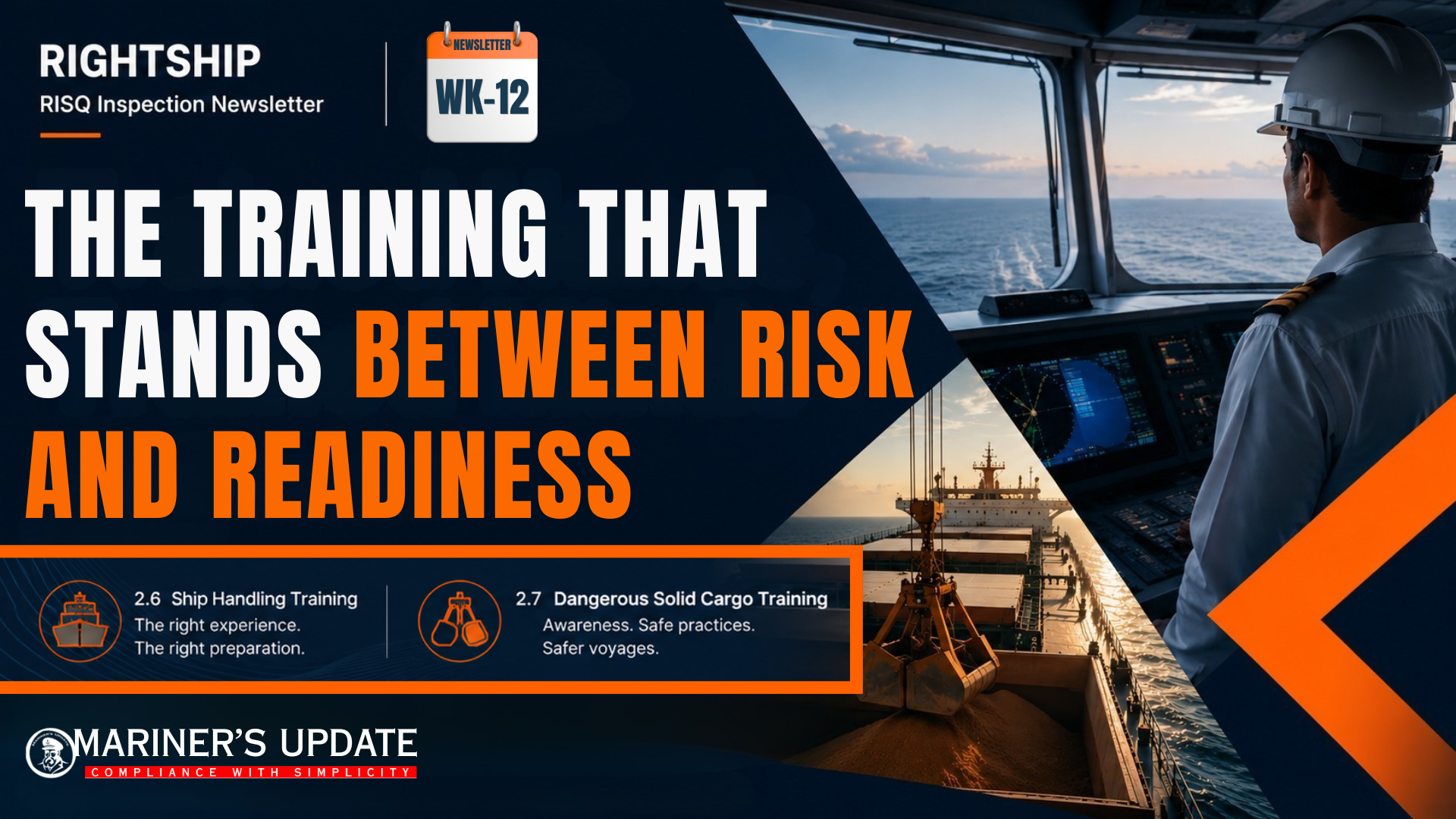
This week’s RISQ focus looks at two questions that test whether the right training has reached the right people onboard — from the Master on the bridge to the crew handling bulk cargo on deck.
2.6 – Has the Master Been Given the Right Ship Handling Training?
Experience on paper is not the same as experience on the bridge
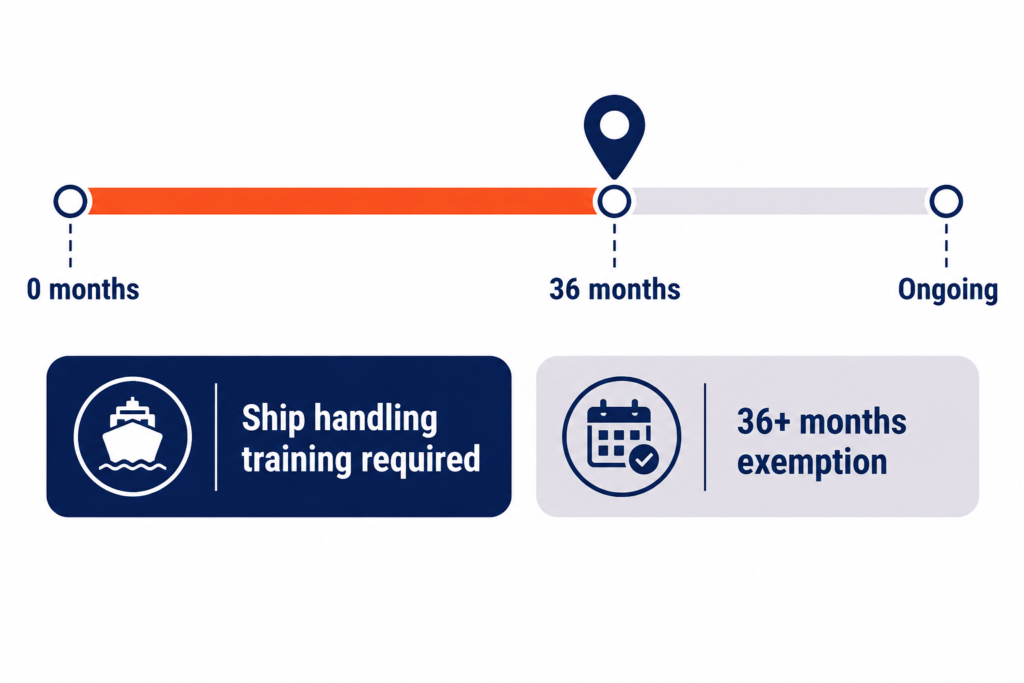
A Master’s competence to handle a ship safely depends on real, relevant experience — not just time served. Where a Master has less than 36 months of sea service in rank, or has recently been promoted, a structured ship handling course aligned with STCW Code B-V/a becomes essential before they take the conn on unfamiliar or high-risk vessels.
When does the 36-month exemption apply?
Only when the Master has served on the same type of vessel for at least the past 12 months. Anything less, and targeted training should close the gap.
Why handling characteristics matter more on certain ships:
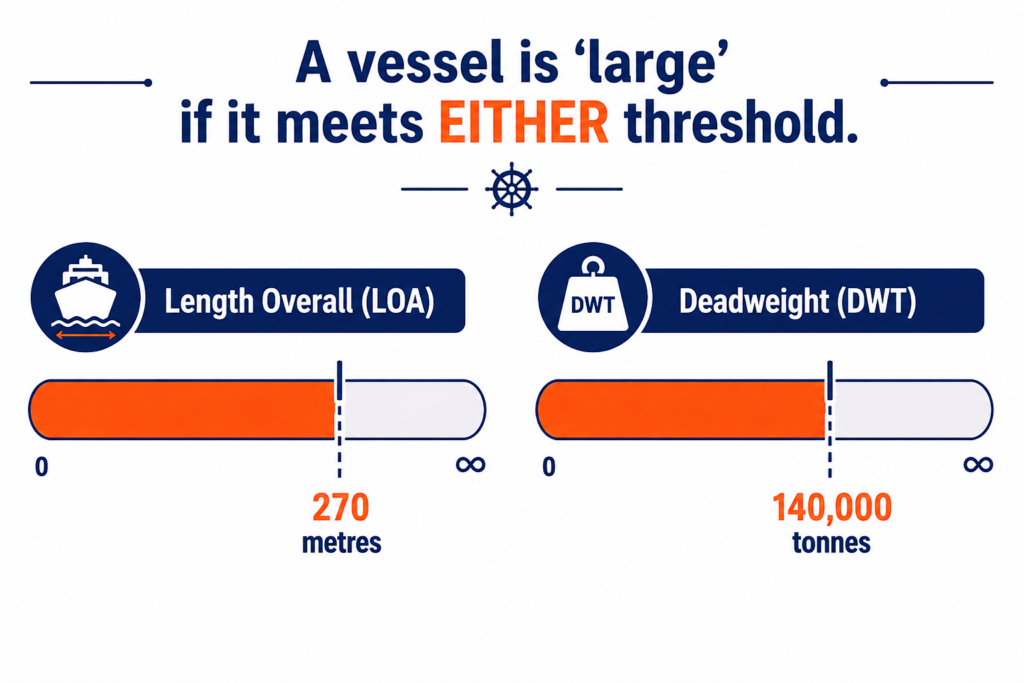
- Vessels of considerable deadweight, length, or unusual design behave differently under helm and engine commands.
- A Master moving to such a vessel should already have supervised experience on a similar type, or completed an approved ship handling simulator course.
- Training can be delivered onboard under formal supervision, or ashore at an approved facility.
Handover discipline: When training happens mid-voyage ahead of a command change, the vessel manager should define the training activities, confirm they are completed, and have them verified by the outgoing Master or a qualified Superintendent before the handover is signed off.
2.7 – Are Bulk Cargo Crews Trained for Dangerous Solid Cargoes?
Solid bulk cargo carries hidden risk — training is the first line of defence
Ships carrying dangerous and hazardous solid bulk cargoes rely on officers and ratings who understand what they are handling. This question checks whether that training has actually taken place — and if the ship carries no solid bulk cargo at all, it should simply be marked Not Applicable.
The benchmark is IMO Model Course 1.45, “Safe Handling and Transport of Solid Bulk Cargoes.” It exists to build awareness of the dangers that can arise during loading, carriage, and discharge, and to lift standards of safety and environmental protection under the IMSBC Code.
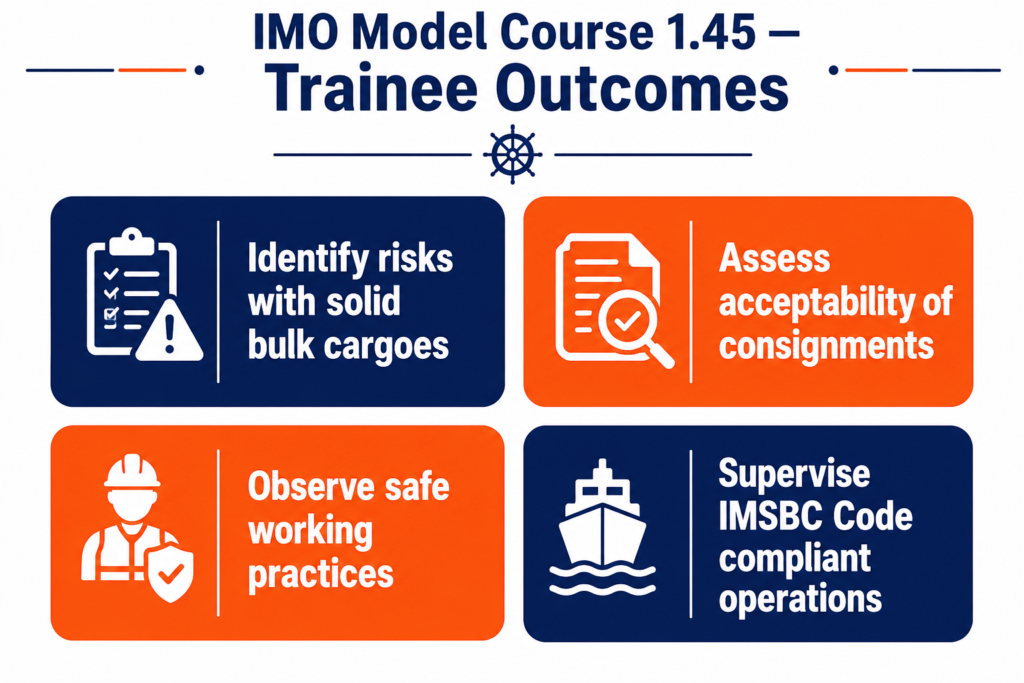
A crew member who completes the course should walk away able to:
- Identify the risks associated with solid bulk cargoes
- Assess whether a consignment is fit to load — especially Group A cargoes prone to liquefaction
- Follow safe working practices throughout loading and carriage
- Supervise operations in line with the IMSBC Code and port/security regulations
Proof matters: Completion should not be a verbal assurance. A certificate or equivalent document confirming IMSBC Code training under IMO Model Course 1.45 should be issued and kept on record.
The takeaway: Competence at the top and skill on deck go hand in hand. Verifying training — not just certificates in a file — is what keeps ship handling safe and bulk cargo operations free of avoidable incidents.