Early Warning Signs Ignored
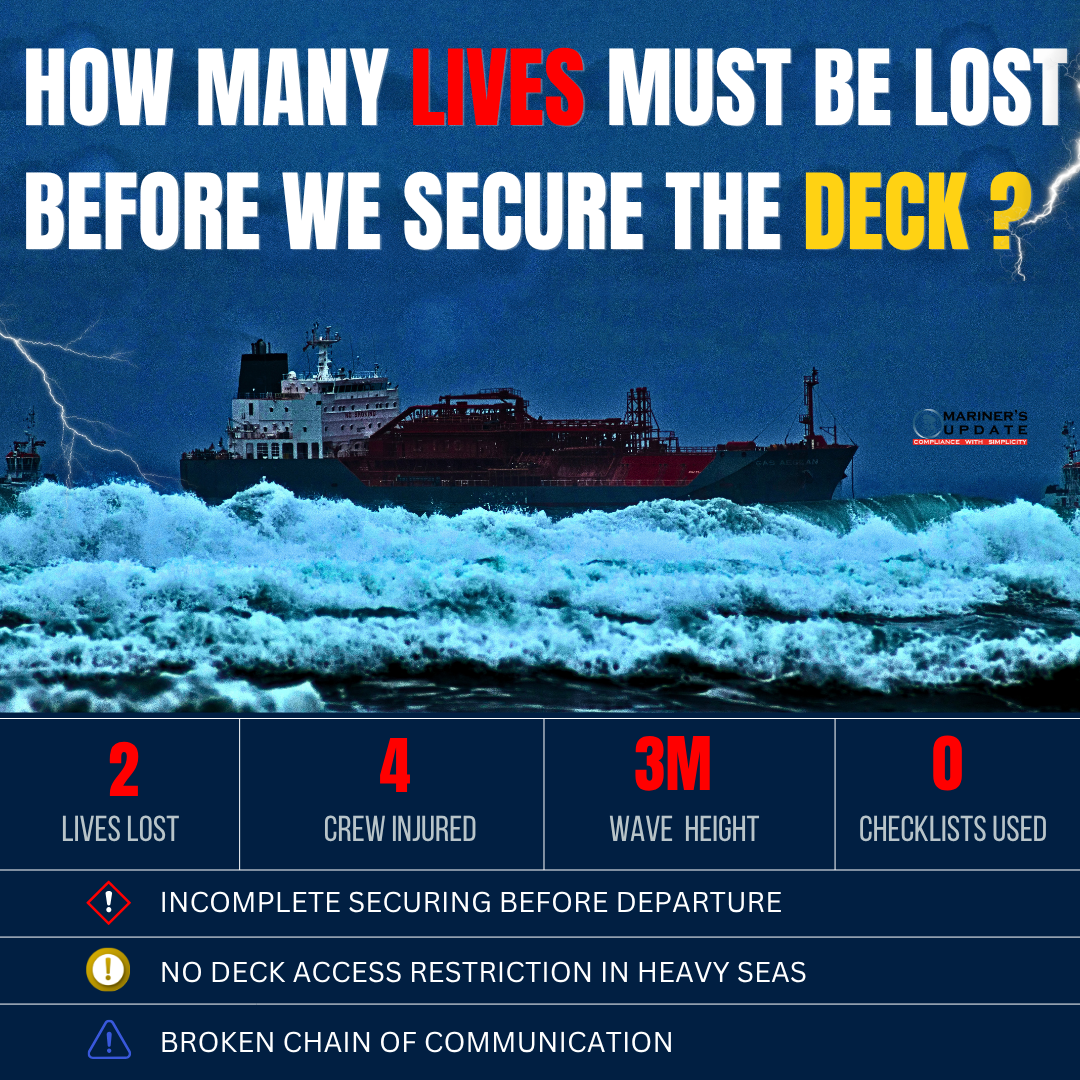
Prior to departure, weather forecasts clearly indicated the development of a low-pressure system, bringing strong winds and increasing sea swell. At 0500 hours, after the pilot disembarked, the master instructed the crew to secure all mooring lines and deck equipment. While the aft station was confirmed secure, work at the forward station was left incomplete, with the intention of finishing it later.
Despite this incomplete task, the vessel proceeded to sea. Command was handed over to the third officer without a clear update on the unsecured forward station, and the master left the bridge.
Escalating Conditions at Sea
As the voyage progressed, sea conditions worsened. Heavy swells caused the vessel to slam against waves, prompting the master to wake and order a reduction in speed along with a course adjustment. By midday, wind speeds had increased further, and waves reached heights of approximately three meters.
Meanwhile, routine operations continued. After lunch, the chief officer went on deck to inspect container lashings, while the bosun and deck crew returned forward to complete the unfinished securing work.
The Incident
Shortly afterward, a powerful wave broke over the forecastle deck, violently knocking crew members off their feet. The chief officer discovered four injured crew members and immediately raised the alarm.
The vessel altered course toward the nearest port. Injured personnel were moved to the ship’s medical facility, and although a medical evacuation was considered, it was not feasible under the prevailing conditions. Upon arrival at port later that evening, paramedics boarded the vessel. Tragically, two crew members succumbed to their injuries, one required emergency surgery, and another was treated onboard.
Gaps in Safety Practices
Although a pre-departure safety meeting addressed the expected weather conditions and crew responsibilities, critical safety measures were not effectively enforced. Deck access remained unrestricted despite deteriorating conditions, and the company’s heavy weather checklist was not used due to unclear guidelines on when it should apply.
Several missed opportunities contributed to the incident:
- The forward station should have been fully secured before departure.
- The master should have verified vessel readiness before proceeding to sea.
- The handover between officers lacked essential safety information.
- There was no dynamic reassessment of whether deck operations remained safe as weather worsened.
Systemic Shortcomings
The incident also exposed broader organizational and procedural weaknesses:
- Unclear procedures: The heavy weather checklist lacked defined thresholds for action.
- Weak enforcement: Safety briefings did not translate into operational discipline.
- Limited guidance: There were no firm restrictions on upper deck access during hazardous conditions.
Additionally, the inability to carry out a timely medical evacuation highlights ongoing challenges in maritime emergency response, particularly in remote areas. Improved coordination between ships and shore-based medical services remains critical.
Human Factors at Play
Several underlying behavioral and cultural issues were evident:
- Acceptance of unsafe practices: Deviation from established seamanship standards had become normalized.
- Complacency: A casual approach to vessel preparation increased risk exposure.
- Lack of teamwork: The forward station could have been secured efficiently with proper coordination.
- Overconfidence: The crew underestimated the seriousness of the forecasted conditions.
What Can Be Learned
For Seafarers
Individual actions directly influence onboard safety. Challenging unsafe practices, maintaining vigilance, and working collaboratively—especially in harsh weather—are essential. If something feels unsafe, it must be questioned immediately.
For Ship Managers
Safety culture begins ashore. Clear expectations, practical training, and meaningful audits are necessary to ensure crews are genuinely prepared—not just compliant on paper.
For Regulators
Compliance alone does not guarantee safety. Greater emphasis must be placed on how procedures are applied in real-world conditions. Oversight should include proactive engagement, not just periodic inspections.
Final Reflection
This tragedy serves as a stark reminder that safety failures are often the result of small, preventable decisions compounding over time. Thorough preparation, clear communication, and strict adherence to safety protocols are not optional—they are lifesaving measures.
The loss of life in this case was avoidable. Let it stand as a call to action: prioritize safety, question assumptions, and never leave critical tasks unfinished when lives depend on them.