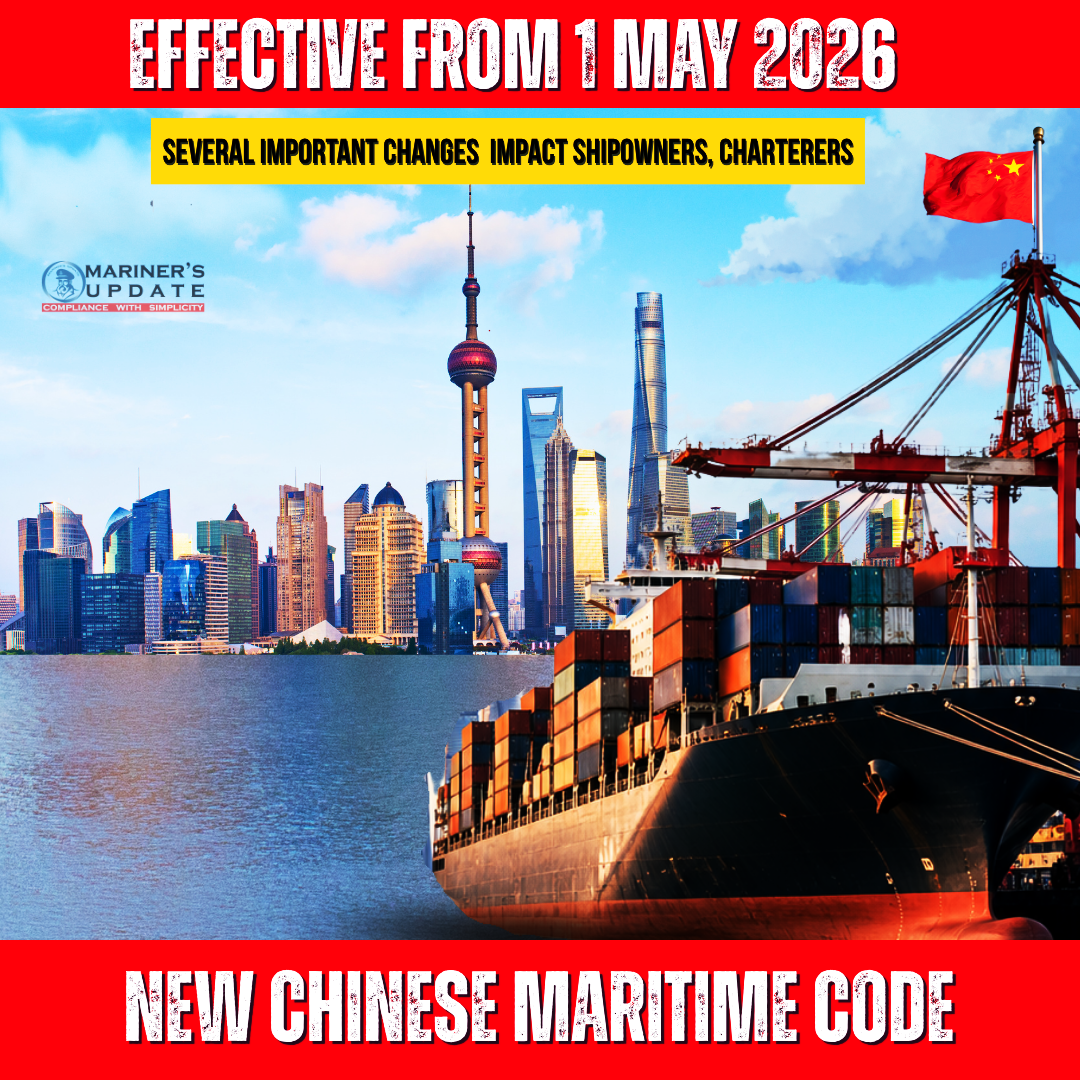
China’s updated Maritime Code, set to come into force on 1 May 2026, introduces a series of significant reforms that will affect shipowners, charterers, cargo stakeholders, and others involved in international shipping linked to Chinese ports. These changes aim to modernize the legal framework, enhance clarity, and strengthen protections across maritime operations.
Below is a breakdown of the key updates and their practical impact.
1. Changes to Limitation Periods
Easier interruption of claims
The new Code allows limitation periods to be interrupted not only through formal legal or arbitration proceedings, but also by issuing a simple demand for performance, such as a claim letter. Once interrupted, the limitation period restarts, offering claimants greater flexibility in preserving their rights.
Updated rules for recourse claims
In cargo-related recourse claims, if more than 90 days remain in the original one-year limitation period after settlement, that original period continues to apply. If less than 90 days remain, a fresh 90-day period is granted.
General average claims clarified
A six-year long-stop limitation period now applies to general average claims, calculated from the end of the maritime venture, regardless of when the adjustment process is completed.
2. Ship Ownership and Mortgage Rights
Transfer of mortgaged vessels
Ships under mortgage can now be transferred without requiring the mortgagee’s consent, unless otherwise contractually agreed. Importantly, the mortgage remains attached to the vessel even after the transfer.
3. Contracts for Carriage of Goods by Sea
Mandatory cargo liability rules
For international shipping contracts involving loading or discharge at Chinese ports, the Code’s cargo liability provisions apply compulsorily. Parties cannot bypass these rules by selecting a different governing law.
Broader definition of “actual carrier”
The term now includes any party entrusted—directly or indirectly—with performing cargo-handling duties. This expansion brings terminal operators and subcontractors within the liability framework, while also allowing them to benefit from limitation provisions.
Revised compensation standards
Compensation for cargo loss or damage is primarily based on market value at the place and time of delivery. If this cannot be determined, CIF value will serve as the fallback.
Storage cost responsibility
Responsibility for storage costs at the discharge port generally shifts to the shipper, unless the consignee exercises contractual rights but fails to take delivery.
Clarified carrier’s lien rights
Carriers are now explicitly allowed to exercise a lien over cargo—even if it is owned by a third party—provided the claim (e.g., unpaid freight, demurrage, or general average) arises from the same carriage.
4. Limitation of Liability
Higher liability caps adopted
The Code incorporates the increased limits established under the 1996 Protocol to the LLMC 1976, meaning shipowners and related parties may face higher financial exposure for qualifying claims.
Expanded eligibility for limitation
Ship managers and voyage charterers, including slot charterers, are now expressly entitled to limit liability in the same way as shipowners.
5. Oil Pollution Liability
Expanded scope of compensation
The Code clearly includes compensation for property damage (excluding the polluting vessel), economic losses caused by pollution, and costs of preventive measures.
Strict liability framework
In cases where oil pollution results from a collision, the vessel responsible for the leak bears primary liability, though it may pursue recourse against other vessels involved.
Practical Takeaways
The revised Maritime Code represents a substantial step forward in aligning China’s maritime laws with international standards while strengthening protections for cargo interests. It also introduces clearer rules for liability, dispute timelines, and operational responsibilities.
Given the mandatory nature of several provisions—especially those tied to Chinese ports—stakeholders in international shipping should review their contracts, compliance strategies, and risk management practices ahead of the May 2026 implementation.
Additionally, guidance issued by China’s Supreme People’s Court indicates that the new Code will generally apply to ongoing or future matters from the effective date onward. However, application may vary depending on case specifics, making legal consultation advisable during the transition period.