A Routine Move That Turned Critical
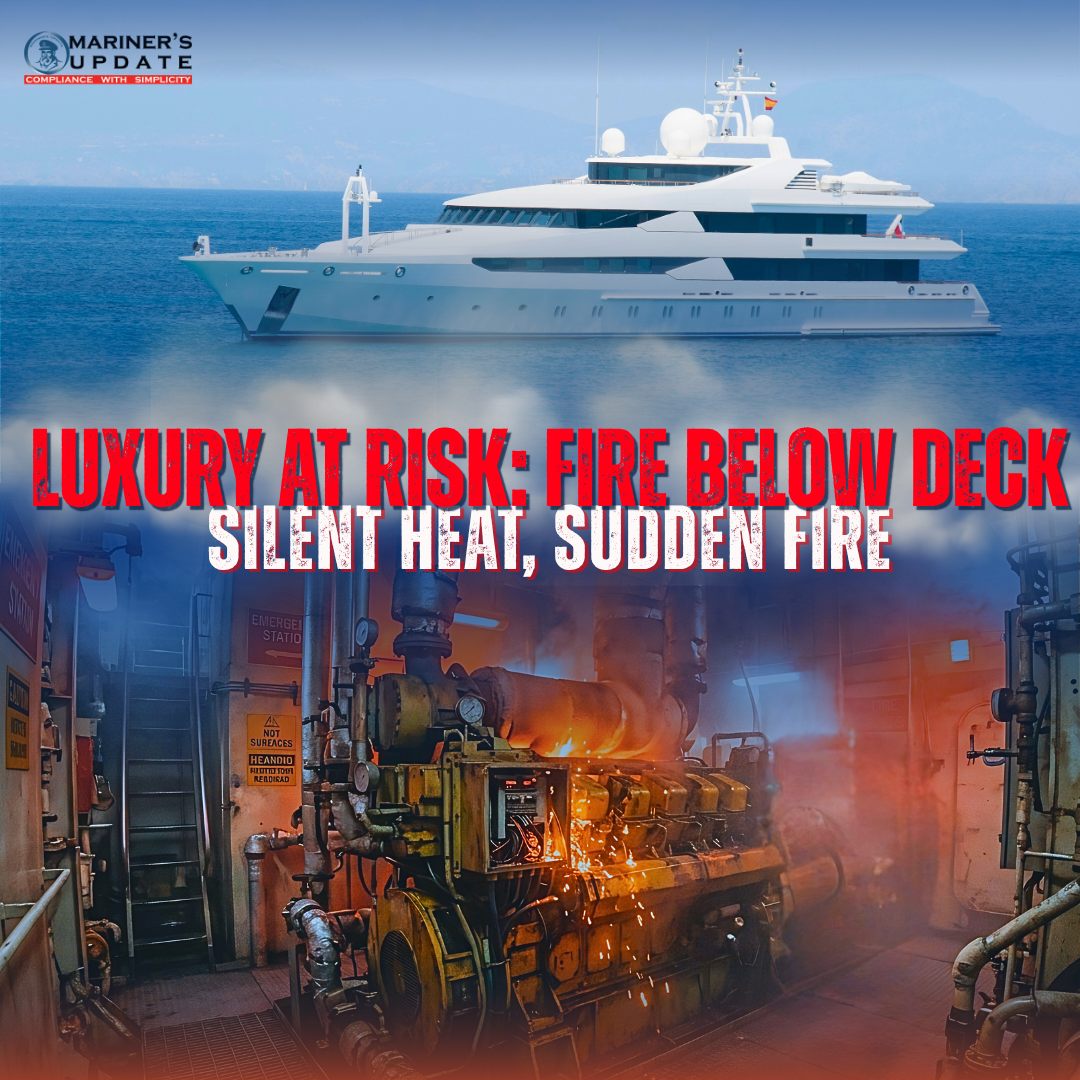
What began as a routine transition from dry dock to a repair berth quickly escalated into a serious onboard emergency for a large motor yacht. Following maintenance, the vessel was moved without access to shore power, prompting the crew to start one of the onboard generators. Crucially, the captain was not informed of either the lack of shore power or the activation of the generator—marking the first in a chain of missteps.
Hidden Hazards After Dry Dock
During maintenance, contractors had closed the engine room (ER) ventilation dampers. In the rush to leave dry dock, the crew did not complete a full systems check and failed to notice that these dampers remained shut. With the generator running and no proper ventilation, heat began to build up inside the engine room.
To compensate, an emergency escape hatch was opened, offering only limited and uncontrolled airflow. Not long after, a fire alarm was triggered.
Early Warning Signs Missed
Upon inspection, the captain observed a light haze in the engine room but detected no strong smell or visible flames. The space was closed again without further escalation. However, this “haziness” was an early indicator of a developing problem that required immediate and thorough investigation.
Escalation in the Engine Room
Equipped with breathing apparatus, an engineer and deckhand entered the ER and identified smoke near the running generator. The generator was promptly shut down to reduce fire risk—but this action left the vessel without power. The emergency escape hatch was also closed at this stage.
As the crew attempted to manage the situation, multiple system failures became apparent:
- The emergency fire pump was difficult to operate
- The emergency generator was not functioning
- Smoke detection and atmospheric monitoring equipment were unavailable
- The fire system’s backup battery had failed
With no reliable way to monitor conditions inside the engine room, the captain made the decision to activate the CO₂ fire suppression system.
Firefighting System Failures
Unfortunately, the CO₂ system did not function as expected. It had been incorrectly configured, and the crew was unaware that the cylinder valves needed to be manually held open until full discharge. This lack of familiarity rendered a critical safety system ineffective during an emergency.
Ultimately, local emergency responders intervened and secured the area, allowing safe re-entry.
Root Cause of the Fire
The investigation revealed that the fire originated from hot exhaust gases leaking through a faulty exhaust valve. The situation was made worse by the closed ventilation dampers, which restricted airflow and allowed heat and smoke to accumulate rapidly.
Key Lessons from the Incident
1. Communication Is Non-Negotiable
Critical operational changes—such as loss of shore power or starting a generator—must always be clearly communicated to the captain. A lack of information can severely compromise decision-making.
2. Post-Maintenance Checks Are Essential
After any dry dock period, systems may not be in their normal operational state. Crews must be given enough time to thoroughly inspect, test, and verify all equipment, especially safety-critical systems.
3. Time Pressure Creates Risk
Rushing operations increases the likelihood of oversight. Adequate time must be allocated for system checks, crew coordination, and readiness verification before returning to service.
4. Safety Systems Must Take Priority
Luxury vessels often emphasize guest experience, but safety infrastructure must always come first. In this case, multiple critical systems were either unavailable or non-functional.
5. Crew Familiarity and Training Matter
The crew must be fully trained and confident in both routine and emergency procedures. This includes understanding how to operate firefighting systems under pressure.
6. Teamwork Doesn’t Happen Instantly
Effective crew coordination requires time. The lack of communication and coordination in this incident suggests the team had not yet developed strong working dynamics after the maintenance period.
Final Thoughts
Behind the elegance of a superyacht lies the complexity of a fully operational seagoing vessel. This incident highlights how quickly things can go wrong when communication falters, procedures are rushed, and safety systems are not fully operational.
A strong safety culture—supported by proper planning, clear communication, and well-trained crews—is not optional. It is the foundation of safe and successful maritime operations.