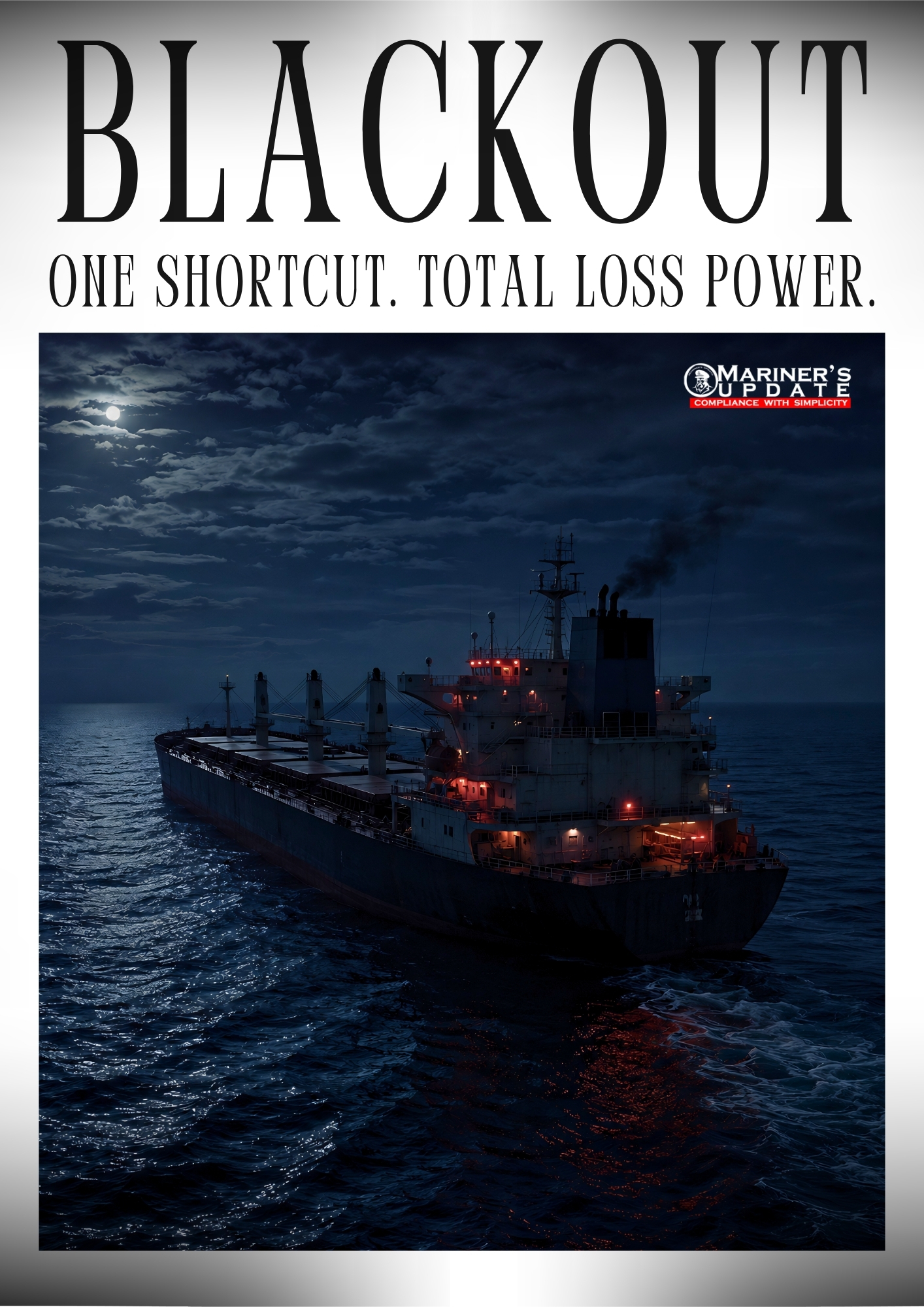
A recent machinery incident involving a commercial vessel highlighted the operational risks associated with improper fuel transfer and treatment practices during bunkering operations. Shortly after departure, the vessel experienced a total loss of propulsion during nighttime navigation after contaminated fuel entered the main engine system.
Preliminary investigation revealed that newly bunkered fuel had been transferred directly into the Fuel Oil Service Tank (FOST/day tank), bypassing the designated bunker storage tanks, settling tanks, and fuel purification process. As a result, untreated fuel containing impurities and unstable components reached the engine supply system without undergoing the required settling, heating, centrifuging, and filtration stages.
Within hours of departure, abnormal engine performance was observed, followed by fluctuating fuel pressure, injector malfunction alarms, and eventual shutdown of the propulsion plant. Multiple fuel injectors suffered severe contamination and blockage, requiring immediate replacement by the engine room team. Engineers subsequently initiated emergency fuel recovery measures by recirculating and purifying the remaining fuel inventory through the separators before propulsion could be restored.
The vessel remained without effective manoeuvrability for approximately five hours while troubleshooting and fuel treatment operations were carried out. Fortunately, environmental conditions at the time were favourable, with calm seas, adequate sea room, and limited traffic density. Had the incident occurred in restricted waters, during pilotage, or under adverse weather conditions, the outcome could have escalated into a grounding, collision, or major navigational emergency.
Technical Observations
- Fuel transfer procedures deviated from established engine room operating practices.
- The normal fuel treatment chain designed to remove water, sediments, catalytic fines, and contaminants was bypassed.
- Reliance was placed on supplier documentation and samples without sufficient onboard verification.
- Early warning signs such as inconsistent fuel characteristics and abnormal machinery indications were not escalated promptly.
- Operational decisions appear to have been executed without adequate supervision, cross-verification, or risk assessment.
Operational Concerns
Fuel contamination incidents continue to remain a major contributor to machinery damage and propulsion failures across the industry. Direct transfer of bunkered fuel into service tanks significantly increases the likelihood of untreated contaminants reaching sensitive engine components, particularly injectors, fuel pumps, and precision control systems.
This case also demonstrates how routine operational shortcuts can rapidly compromise vessel redundancy and emergency preparedness. Even temporary propulsion loss during open sea passage can expose vessels to navigational hazards, drifting risks, and delayed emergency response capability.
Lessons Learned
Strict adherence to fuel management procedures remains essential for safe vessel operations. Fuel should always pass through designated settling and purification stages before entering service tanks or engine supply systems. Representative sampling must be conducted throughout bunkering operations, including drip sampling and onboard verification wherever possible.
Engine room teams should remain alert to abnormal fuel behaviour following bunkering, including viscosity fluctuations, purifier discharge abnormalities, unstable combustion, or injector performance issues. Any deviation from standard transfer procedures must be supported by formal risk assessment, senior engineer approval, and operational monitoring.
Safety Recommendations
- Ensure all bunkered fuel is routed through approved storage, settling, and purification systems.
- Maintain operational readiness of purifiers, filters, and fuel monitoring equipment at all times.
- Conduct toolbox discussions prior to fuel transfer operations and reinforce procedural compliance among engine room personnel.
- Verify bunker quality using representative samples rather than relying solely on supplier-provided documentation.
- Establish clear communication between watchkeepers, engineers, and shore management whenever fuel abnormalities are identified.
- Raise a Letter of Protest immediately if supplied fuel quality is suspected to be off-specification or contaminated.
- Review emergency response procedures for blackout and loss-of-propulsion scenarios during drills and onboard training sessions.