Why MLC Compliance Matters During Port State Control Inspections
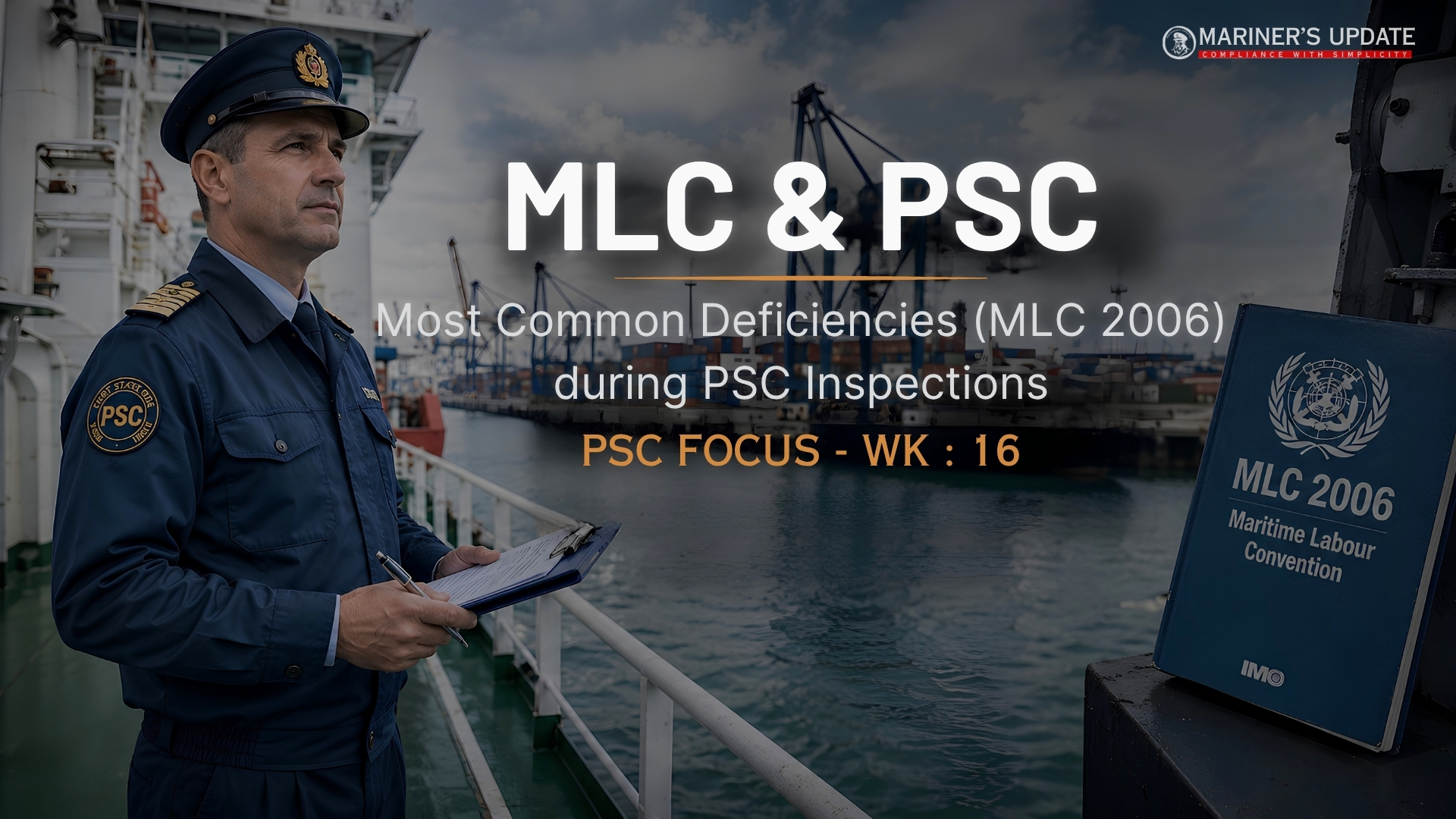
Port State Control (PSC) inspections continue to identify recurring Maritime Labour Convention (MLC 2006) deficiencies onboard vessels. Being caught with these issues can lead to detentions, delays, and reputational damage. Here’s a breakdown of the most common deficiencies found — and what needs to be done to stay compliant.
1. Seafarers’ Employment Agreements (SEA)
What’s going wrong: Employment agreements are missing required details, are not signed by the shipowner’s authorised representative, or seafarers are found working with expired SEAs.
What to do: Every seafarer must have a valid, properly signed SEA that contains all required particulars. Regularly audit SEAs onboard to confirm they are current, complete, and properly executed before a PSC inspector ever steps aboard.

2. Payment of Wages
What’s going wrong: Inspectors are finding clear evidence of seafarers being systematically underpaid — with discrepancies between contracted wages and actual payments, and in some cases, double bookkeeping practices.
What to do: Seafarers must be paid in full and on time, strictly in line with their employment agreements. Wage records must be transparent, accurate, and consistent with what crew members actually receive.

3. Hours of Work and Rest / Table of Shipboard Working Arrangements
What’s going wrong: Rest hour records and working arrangement tables do not reflect actual hours worked. Falsified or inaccurate records are a significant red flag for PSC officers.
What to do: Fatigue is a serious safety risk at sea. Shipowners must ensure seafarers — especially those involved in navigation and vessel operations — receive their minimum required rest hours. All records must truthfully reflect actual working and rest periods.

4. Entitlement to Leave and Repatriation
What’s going wrong: Seafarers are serving beyond eleven months onboard without being granted their minimum paid annual leave or being repatriated within the required timeframe.
What to do: No seafarer should serve more than eleven months continuously without taking minimum paid annual leave. Any agreement to forfeit leave is prohibited unless specifically permitted. Repatriation entitlements must also be observed within the required period.

5. Accommodation Facilities
What’s going wrong: Sleeping quarters, sanitary facilities, and hospital/medical spaces are being found in poor, unhygienic conditions during inspections.
What to do: All seafarer accommodation — including cabins, bathrooms, and medical areas — must be kept clean, safe, and well-maintained. Regular inspections of accommodation spaces should be carried out onboard as part of routine safety management.

6. Food, Catering and Drinking Water
What’s going wrong: Insufficient food supplies for the voyage, seafarers being charged for drinking water, and vessels with ten or more crew not having a fully qualified cook onboard.
What to do: Ships must carry adequate, nutritious food and drinking water — provided free of charge to all crew. Vessels with a prescribed manning of ten or more must have a fully qualified cook onboard unless a valid dispensation is in place.

7. Health, Safety and Accident Prevention
What’s going wrong: Occupational health and safety policies are not being properly implemented, unsafe conditions are not being reported or corrected, accident prevention programmes are absent, and in some cases seafarers are not protected from bullying and harassment onboard.
What to do: Shipowners must ensure a safe, respectful working environment for all crew. This means having clear procedures for reporting and correcting unsafe conditions, active accident prevention programmes, and firm anti-harassment and anti-bullying policies in place.

Staying ahead of these deficiencies is not just about passing inspections — it’s about upholding the rights and welfare of every seafarer onboard.