A Wake-Up Call for Global Supply Chain Risk Management
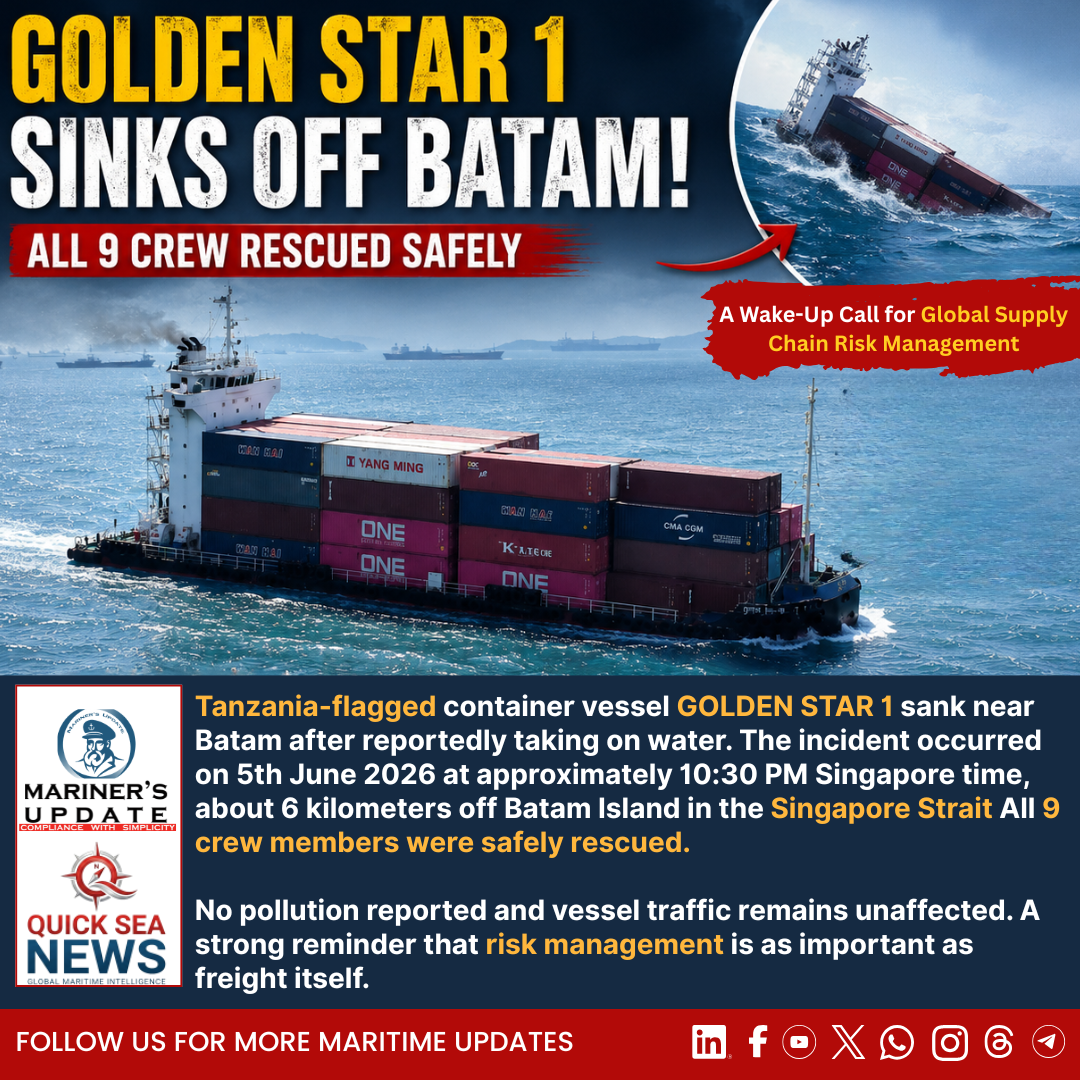
The sinking of the Tanzania-registered container vessel GOLDEN STAR 1 near Batam, Indonesia, has once again highlighted the complex risks that exist within global shipping and international trade.
According to the Maritime and Port Authority of Singapore (MPA), the incident occurred on 5 June 2026 at approximately 10:30 PM Singapore time, about 6 kilometers off Batam Island in the Singapore Strait. Reports indicate that the vessel took on water before eventually sinking.
Fortunately, all nine crew members onboard were safely rescued by Indonesian authorities, preventing what could have become a tragic loss of life.
MPA subsequently issued navigational broadcasts advising vessels transiting the area to exercise caution and report any sighting of floating containers or debris. Authorities confirmed that vessel traffic through the Straits of Malacca and Singapore remains unaffected, and no oil pollution has been reported in surrounding waters.
About the Vessel
GOLDEN STAR 1 was a Tanzania-flagged cargo vessel built in 1995. The vessel measured approximately 177 meters in length and 28 meters in breadth and was reportedly operated and managed by Pancon Shipping and Marine.
At the time of the incident, the vessel had departed Singapore and was bound for Malaysia when it reportedly began taking on water before sinking.
The exact cause of the casualty remains under investigation.
More Than a Maritime Casualty
While the successful rescue of all crew members is encouraging, incidents such as the sinking of GOLDEN STAR 1 provide important lessons for cargo owners, freight forwarders, insurers, ship operators, and supply chain professionals.
Global trade today operates in an increasingly uncertain environment where transportation risk extends far beyond vessel operations.
Supply chains face numerous threats, including:
• Severe weather events and natural disasters
• Piracy and armed robbery at sea
• Geopolitical conflicts and regional instability
• Port congestion and labor disruptions
• Vessel fires and machinery failures
• Cargo theft and pilferage
• Container losses overboard
• Regulatory and customs interventions
• Cybersecurity attacks on logistics systems
• Route disruptions, canal closures, and navigational incidents
The Cost of Risk vs. The Cost of Freight
Many businesses focus primarily on freight rates when making logistics decisions.
However, experienced logistics professionals understand that the true question is not:
“How much is the freight?”
The more important question is:
“If something goes wrong, who carries the risk?”
Understanding carrier liability limitations, securing appropriate cargo insurance, evaluating alternative routing options, and developing contingency plans are essential components of modern supply chain management.
Lessons for the Maritime Industry
The GOLDEN STAR 1 casualty serves as a reminder that resilience, preparedness, and proactive risk management are critical for protecting cargo, vessels, crews, and business continuity.
While investigations will determine the exact cause of the sinking, the incident reinforces the importance of:
✓ Effective vessel maintenance and seaworthiness
✓ Robust cargo insurance coverage
✓ Emergency response preparedness
✓ Continuous risk assessment
✓ Supply chain contingency planning
✓ Situational awareness in high-traffic waterways
The maritime industry cannot eliminate every risk. However, organizations that identify, assess, and manage risks effectively are far better positioned to withstand disruptions when unexpected events occur.
As investigations continue, the safe rescue of all nine crew members remains the most positive outcome of this incident.