
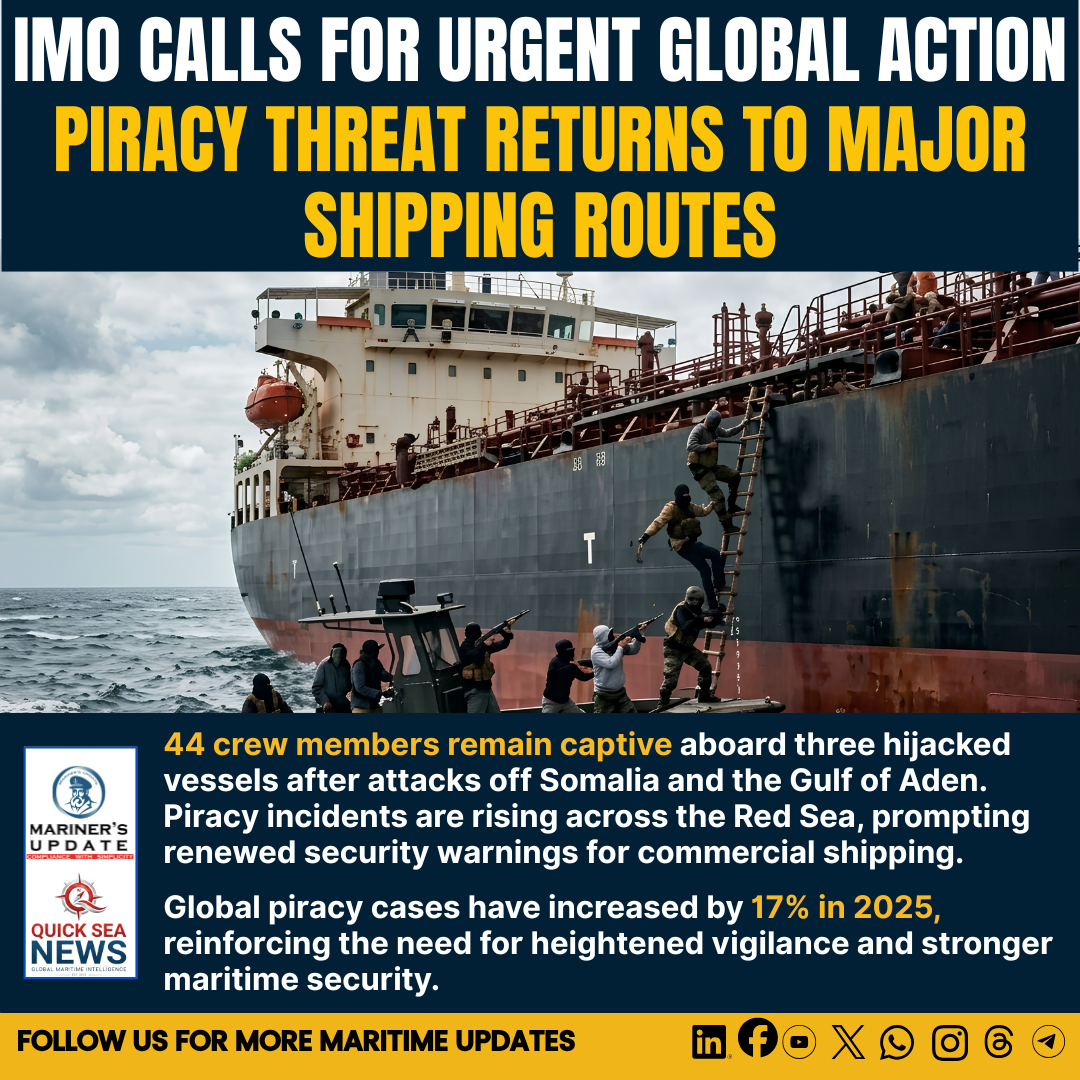
Growing piracy threats in the Red Sea and Gulf of Aden have once again highlighted the dangers faced by merchant seafarers, with 44 crew members continuing to remain in captivity aboard three hijacked vessels. Maritime authorities have issued an urgent appeal for coordinated international efforts to secure their safe release, warning that the humanitarian situation onboard has become increasingly critical.
The captive seafarers are reported to be suffering from severe shortages of food and drinking water while living under the constant threat of violence. The three vessels were hijacked in separate incidents between April and May in waters off Somalia and within the Gulf of Aden, underscoring the renewed activity of pirate groups in the region.
The appeal comes amid a noticeable rise in piracy and armed robbery incidents targeting commercial shipping. Over the past three months alone, 24 actual and attempted attacks have been reported across the Red Sea and Gulf of Aden, with pirates employing increasingly aggressive tactics and heavier weaponry against merchant vessels.
Adding to growing concerns, another bulk carrier was recently attacked in the Red Sea. Although the vessel continued its voyage safely and no crew members were injured, the incident serves as another reminder that piracy remains a persistent and evolving threat despite years of international counter-piracy efforts.
Recent maritime security assessments indicate that while seasonal weather has reduced the operational range of pirate skiffs in offshore waters, coastal areas continue to provide favorable conditions for opportunistic attacks. Security experts have warned that hostile small craft remain active, particularly within known operating zones along the Somali coastline and surrounding waters.
Shipowners, operators, and masters are being urged to maintain heightened vigilance, conduct comprehensive voyage risk assessments, and strictly implement Best Management Practices (BMP) when transiting high-risk areas. Preventive security measures remain one of the most effective defenses against piracy and armed robbery at sea.
Regional maritime security cooperation also continues through multinational initiatives involving countries across the Western Indian Ocean and Gulf of Aden. These efforts focus on improving information sharing, strengthening law enforcement capabilities, and enhancing coordinated responses to piracy incidents.
Beyond piracy, the maritime industry continues to face overlapping security challenges, including regional conflicts, attacks on commercial shipping, and disruptions to critical trade routes. These threats have significant implications for global supply chains, energy transportation, and food security.
According to the latest figures, reported piracy and armed robbery incidents worldwide have risen by approximately 17% in 2025, increasing from 146 incidents in the previous year to 171. The resurgence of attacks in one of the world’s busiest shipping corridors serves as a stark reminder that maritime security remains a global priority, while the safe release of the 44 captive seafarers remains an urgent humanitarian concern.