
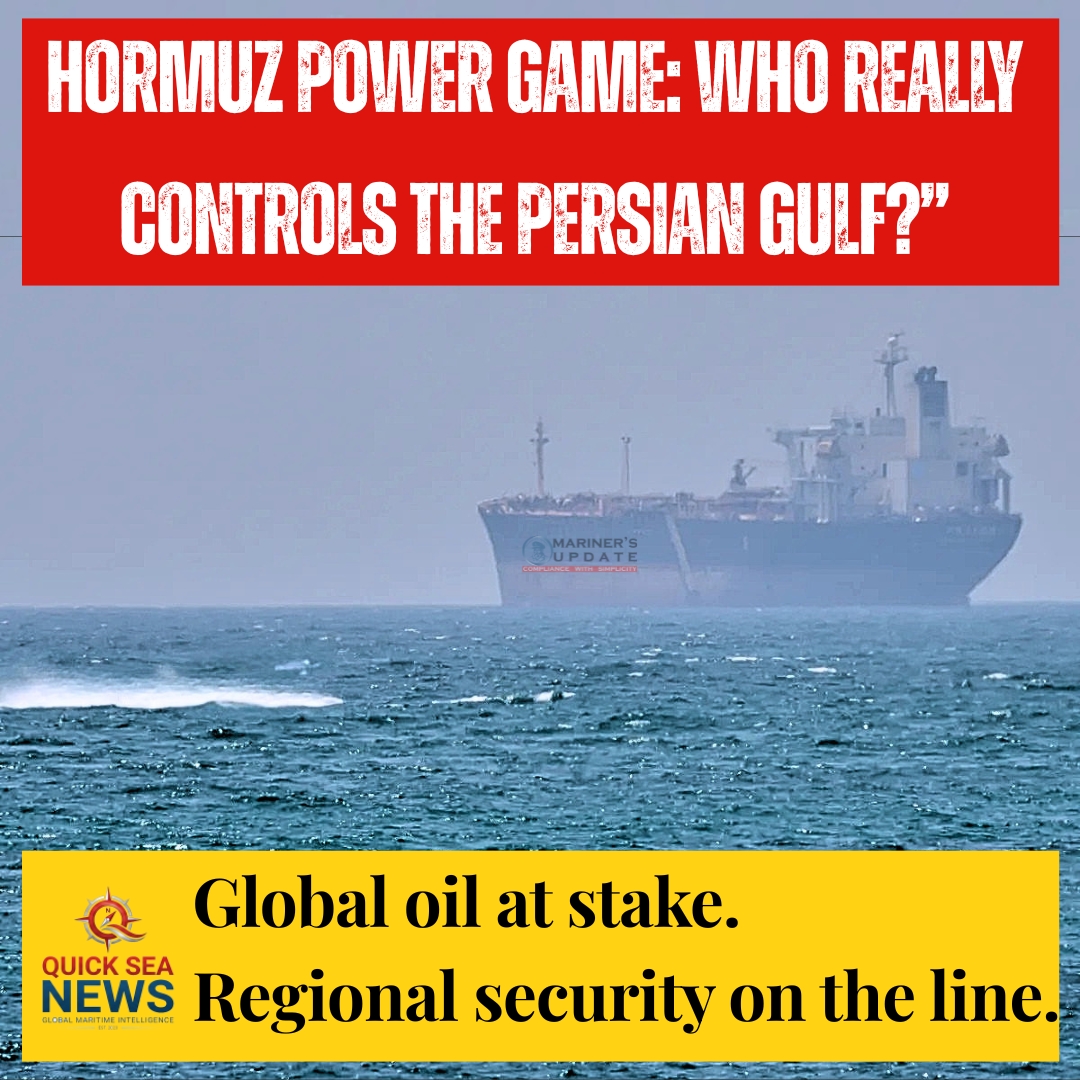
Rising tensions around the Strait of Hormuz are fueling deep unease across the Persian Gulf, as upcoming U.S.–Iran negotiations risk delivering a narrow deal that secures global oil flows—but leaves regional security concerns largely unresolved.
Officials and analysts increasingly believe the next round of talks, expected in Islamabad, will zero in on Iran’s uranium enrichment program and its strategic leverage over the Strait of Hormuz—rather than addressing Tehran’s missile capabilities or its network of regional proxies. For Persian Gulf nations, this shift signals a troubling change in priorities.
A Strategic Trade-Off
Roughly 20% of the world’s oil supply passes through the Strait of Hormuz, making it one of the most critical chokepoints in global energy trade. Persian Gulf officials fear that instead of dismantling Iran’s influence over this vital route, the U.S. may settle for managing it—effectively cementing Tehran’s position.
“The red line now is Hormuz,” said a source close to regional policymakers. “It wasn’t always this way. The focus has shifted.”
This evolving strategy, they argue, prioritizes global economic stability over the immediate security concerns of countries that lie within missile range and face direct threats from regional conflicts.
Iran’s ‘Golden Asset’
Iranian officials see things differently. According to sources within Iran’s security establishment, the Strait of Hormuz is not just a geographic feature—it is a carefully developed strategic tool.
Described as a “golden asset,” the waterway represents a form of leverage rooted in geography—one that cannot be neutralized. Iranian planners have long prepared for scenarios involving its disruption, positioning it as a powerful deterrent.
Some insiders suggest that a long-standing taboo around using Hormuz as a bargaining chip has now been broken. One source likened it to a “drawn sword,” signaling that Iran is ready to wield this advantage if necessary.
Global Stakes, Regional Frustration
The growing emphasis on Hormuz in diplomatic talks has sidelined other critical issues for Persian Gulf states—particularly Iran’s missile arsenal and proxy forces, which have repeatedly targeted the region.
Analysts warn this approach may not resolve tensions but instead stabilize them at a manageable level—an outcome that could suit both Washington and Tehran while leaving Persian Gulf countries exposed.
Ebtesam Al-Ketbi, head of a UAE-based policy think tank, described the situation as “not a true resolution, but a managed and prolonged conflict.” She emphasized that while global powers focus on oil routes, the Persian Gulf continues to bear the brunt of missile threats and regional instability.
Sanctions and Skepticism
Diplomatic sources say Persian Gulf nations are urging the U.S. to avoid sweeping sanctions relief for Iran. Instead, they favor a phased approach that tests Tehran’s actions over time.
Their concern: core threats remain unaddressed, including missiles capable of striking major cities and the continued use of proxy groups across the region.
Meanwhile, the economic toll of the ongoing conflict—sparked by the U.S.–Israel war with Iran earlier this year—continues to mount. Energy infrastructure attacks, rising insurance costs, and disrupted trade routes are hitting Persian Gulf economies hard.
Security Reliance Under Scrutiny
Despite frustrations, Persian Gulf nations acknowledge the critical role of U.S. military support, including advanced air defense systems like THAAD and Patriot missiles. These systems have been key in mitigating damage during recent escalations.
However, the conflict has exposed the limits of relying on a single external power. Analysts say the U.S. underestimated the likelihood of confrontation over Hormuz, raising questions about long-term security strategies.
“There’s a growing realization that dependence on one protector has its limits,” said a regional expert.
As negotiations between Washington and Tehran continue, Persian Gulf leaders are increasingly vocal—privately and publicly—about their exclusion from the process.
What was once seen as a regional issue is now viewed as a global concern, given the Strait’s importance to international trade and energy security.
For Persian Gulf nations, the message is clear: any lasting solution must address not just oil flows, but the broader security landscape shaping the region.