Maritime Safety Circular – Enclosed Space Entry & Human Factors
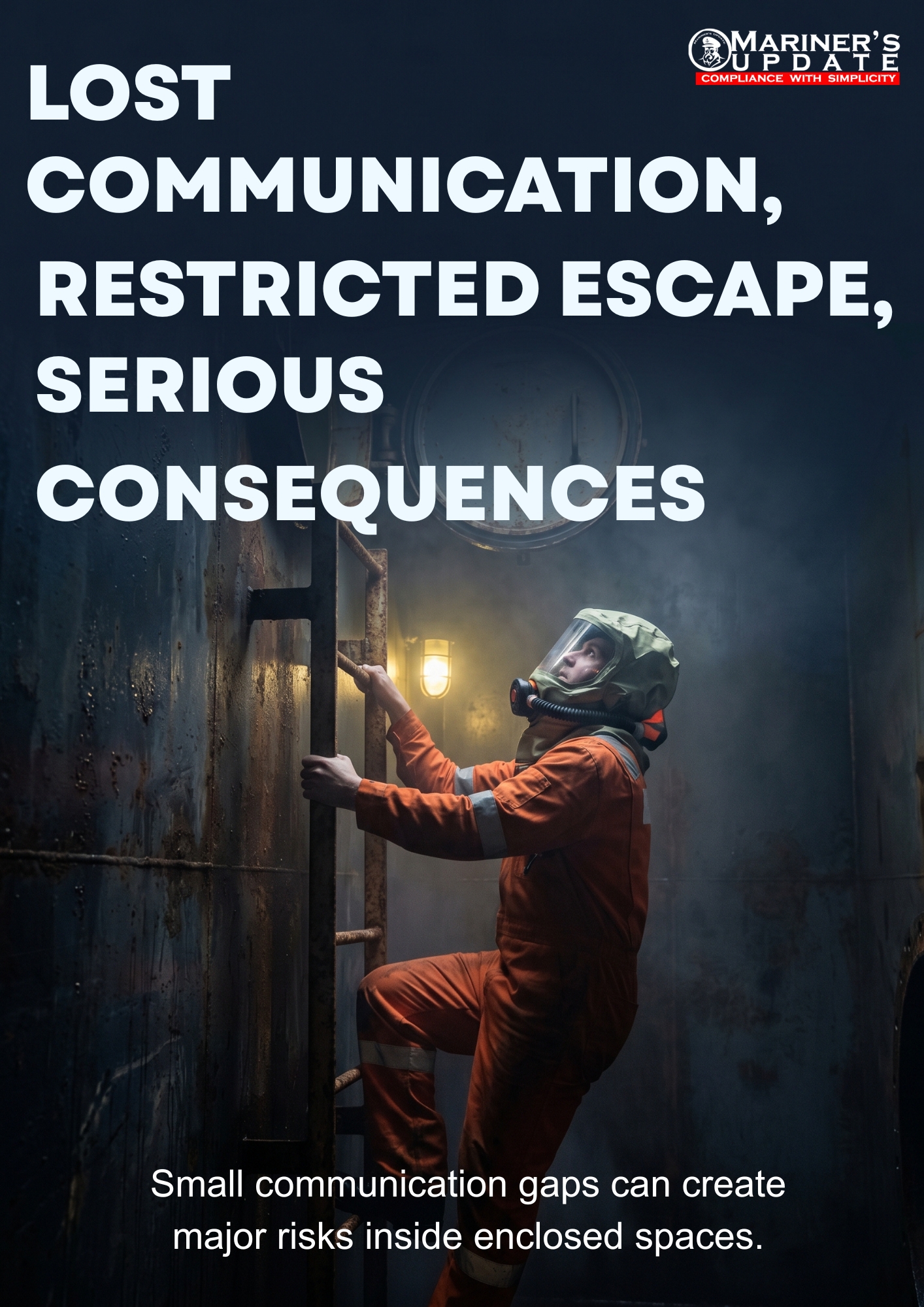
A routine enclosed space inspection onboard a vessel resulted in a crew member suffering a head injury after confusion developed during exit procedures inside a void space. Despite proper permits and safety checks being completed, a missed radio communication and multiple simultaneous tasks contributed to the incident.
The case highlights how quickly enclosed space operations can become dangerous when communication and coordination break down.
Routine Inspection Operations
The vessel’s crew had scheduled six-monthly inspections of several void spaces, including bilge suction and alarm testing. Due to operational schedules, the inspections were carried out during non-service hours.
A company technical manager joined the inspection team, and all enclosed space entry procedures were completed beforehand, including:
- Gas testing
- Permit-to-work checks
- Emergency arrangements
- Assigned crew responsibilities
The inspection team included the supervising officer, technical manager, and several ABs assigned to monitoring and safety duties.
How the Incident Occurred
The first two void spaces were inspected without problems. During inspection of the third space, the supervising officer and technical manager exited while the duty AB remained inside to continue bilge testing and communicate with the engine room.
To reduce radio traffic, the AB switched to a different communication channel. Unaware of this, the supervising officer informed him that the starboard hatch would be closed and instructed him to exit later through the port-side opening.
The message was never received.
Shortly afterward, the AB’s gas detector activated a low battery warning. Mistaking it for a gas alarm, he immediately used an Emergency Escape Breathing Device (EEBD).
During evacuation:
- The EEBD hood fogged up
- The AB dropped his radio
- Communication was lost
- Visibility became restricted
Disoriented, the AB attempted to exit through the starboard hatch, not knowing it had already been secured. While climbing the ladder, he struck his head against the closed hatch cover before the team reopened it for emergency exit.
Several days later, the crew member reported ongoing headaches linked to the impact.
Key Findings From the Incident
Communication Failure
The main contributing factor was the missed instruction caused by the radio channel change. No confirmation was received to ensure the message had been understood.
Task Overload
The AB was simultaneously handling:
- Bilge testing
- Engine room communication
- Alarm monitoring
- Emergency equipment
This increased stress and reduced situational awareness inside the confined space.
Alarm Misinterpretation
The gas detector’s low battery warning was mistaken for a gas emergency, triggering panic and confusion.
Poor Team Coordination
One of the most serious failures was the closure of an exit hatch while a crew member was still inside the enclosed space.
Exit routes should never be blocked until all personnel have safely exited.
Safety Lessons for the Maritime Industry
For Seafarers
Always confirm safety-critical instructions during enclosed space operations. Assumptions and routine habits can lead to serious incidents.
For Ship Managers
Work planning should consider human factors, communication backup systems, and operational workload during high-risk activities.
For Regulators
Safety procedures should address real onboard challenges, including communication failures, emergency escape difficulties, and equipment usability under stress.
Conclusion
This incident demonstrates that even properly planned enclosed space operations can become hazardous when communication and coordination fail.
Clear communication, open escape routes, effective teamwork, and reduced task overload remain critical for preventing injuries during confined space operations onboard vessels.