Safer Ships, Smarter Compliance:
Port State Control (PSC) inspections verify that ships comply with international regulations and are operated safely, securely, and responsibly. Successful PSC performance is rarely the result of luck—it comes from strong safety culture, disciplined operations, competent crews, and proactive shore support.
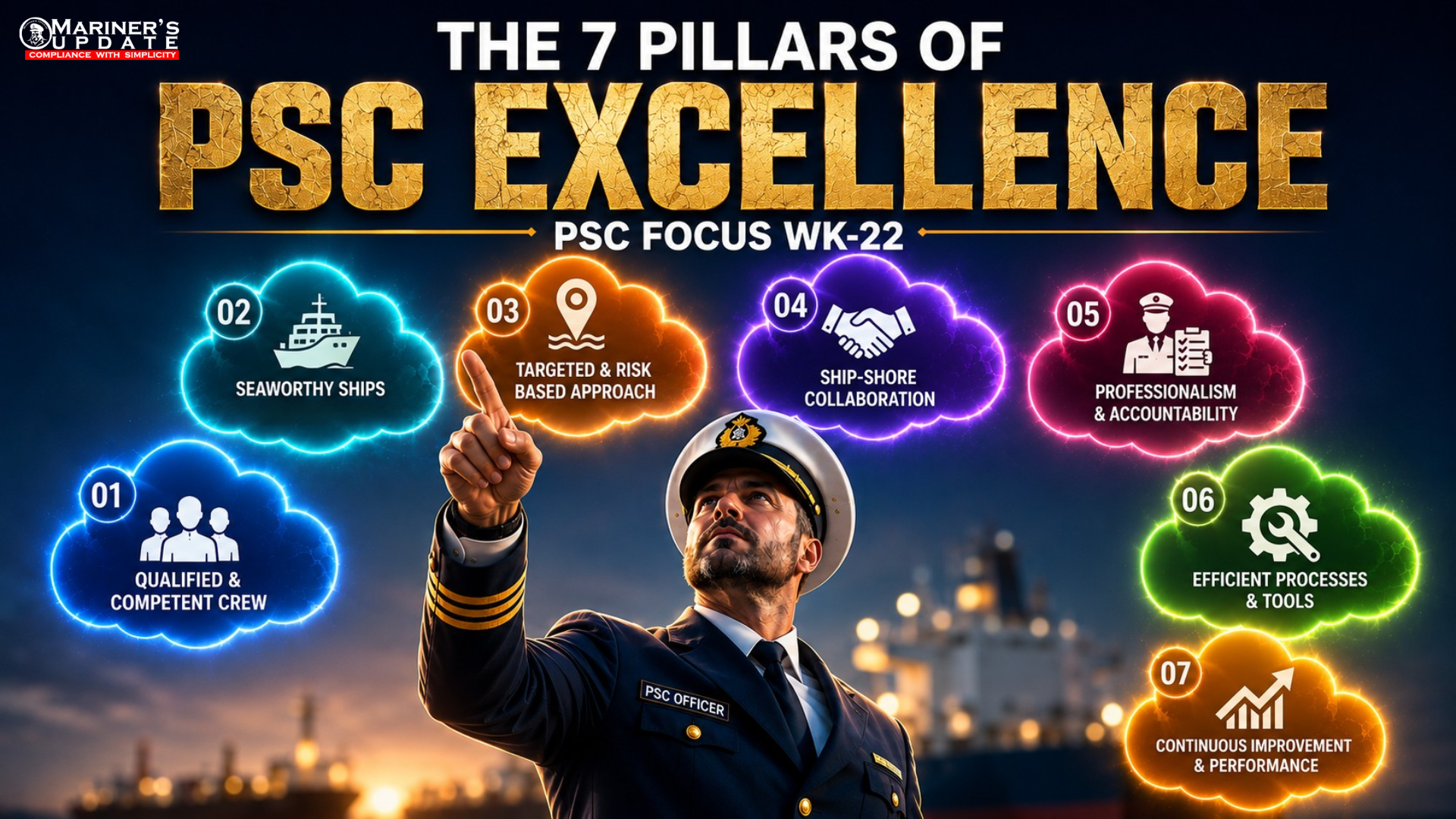
The Seven Pillars of PSC Excellence provide a practical framework for reducing deficiencies, preventing detentions, and building a safer, high-performing fleet.
01 | Competent People
Competent crews are the foundation of every successful PSC inspection. Beyond holding valid certificates, crew members must understand procedures, respond confidently during drills, and demonstrate familiarity with the Safety Management System (SMS).

Focus Areas
✔ Understand onboard procedures and SMS
✔ Demonstrate emergency equipment confidently
✔ Participate in realistic drills and training
✔ Promote a continuous learning culture
Key Message: Well-trained crews reflect an effective safety management system.
02 | Reliable Ships
Reliable vessels result from preventive maintenance, routine testing, and prompt corrective action—not last-minute repairs before port arrival.
Focus Areas
✔ Effective Planned Maintenance System (PMS)
✔ Timely defect rectification
✔ Regular testing of safety equipment
✔ Accurate maintenance records
Key Message: Reliable ships reduce operational risk and improve PSC performance.
03 | Port Intelligence
Every PSC regime may focus on different inspection priorities depending on current CICs, detention trends, and regional enforcement.

Before Arrival
✔ Review recent detention trends
✔ Check current CIC focus areas
✔ Study previous PSC reports
✔ Review company and Flag guidance
Key Message: Preparation eliminates surprises.
04 | Ship-Shore Collaboration
Strong communication between ship and shore prevents deficiencies before inspections begin.

Focus Areas
✔ Share lessons learned
✔ Communicate regulatory updates
✔ Provide timely technical support
✔ Conduct pre-arrival PSC readiness reviews
Key Message: Compliance is a shared responsibility.
05 | Professional PSCO Management
Professional, transparent, and cooperative interaction with the PSCO helps create an efficient inspection process.

Crew Should
✔ Welcome inspectors professionally
✔ Present documents clearly
✔ Answer honestly and accurately
✔ Demonstrate equipment confidently
Key Message: Professional conduct reflects a positive safety culture.
06 | Effective Execution
Procedures only have value when they are consistently followed onboard.
PSC inspectors assess whether daily operations match the company’s documented procedures.
Focus Areas
✔ Permit-to-Work compliance
✔ Lock-Out/Tag-Out procedures
✔ Enclosed Space Entry
✔ Navigation and pollution prevention
Key Message: Execution proves compliance.
07 | Continuous Learning
Every PSC inspection provides an opportunity to improve.
High-performing companies use inspection results to strengthen their SMS and fleet-wide performance.

Focus Areas
✔ Review deficiencies and observations
✔ Share lessons across the fleet
✔ Improve training and procedures
✔ Monitor recurring trends
Key Message: Continuous improvement prevents repeated deficiencies.
Building a PSC Excellence Culture
PSC readiness is built every day—not just before entering port.
When these seven pillars work together, organizations achieve:
✔ Better PSC performance
✔ Reduced detention risk
✔ Safer ship operations
✔ Stronger regulatory compliance
✔ Improved reputation
✔ Lower operational costs
✔ Continuous fleet improvement
Conclusion
Port State Control reflects a company’s safety culture, operational discipline, and commitment to international standards.
By investing in Competent People, Reliable Ships, Port Intelligence, Ship-Shore Collaboration, Professional PSCO Management, Effective Execution, and Continuous Learning, organizations consistently achieve stronger PSC performance and safer operations.