Experienced Crew Are Not Immune – The Biggest Threat Often Comes During Everyday Operations
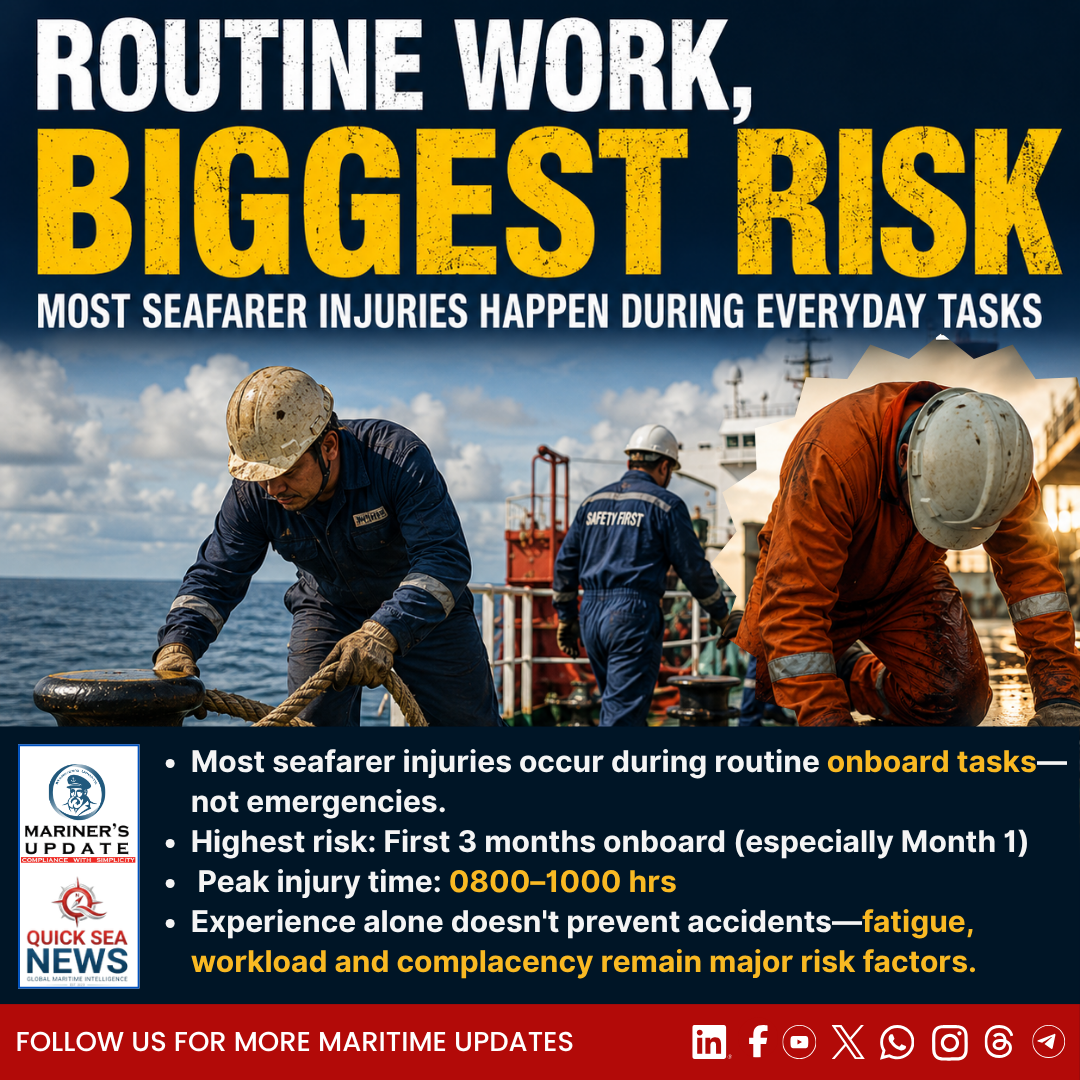
The latest analysis of thousands of maritime crew injury claims has revealed an important reality for the global shipping industry—most seafarer injuries are not caused by emergencies or unusual situations, but during routine, planned onboard operations.
The findings, based on approximately 3,000 crew-related claims recorded in 2025, including a detailed review of nearly 400 injury cases, provide valuable insights into when accidents occur, who is most at risk, and the operational factors contributing to injuries at sea.
The report reinforces a message that every shipping company, Master, officer, and crew member should remember:
Familiarity with a task does not guarantee safety.
Key Findings
1. The First Three Months Onboard Are the Highest-Risk Period
The analysis shows that newly joined crew members face the greatest risk of injury during their first three months onboard, with the first month being the most critical.
Although familiarization procedures are mandatory, adapting to a new vessel, different equipment, work routines, crew dynamics, and operational pressures significantly increases exposure to accidents.
This highlights the importance of:
- Comprehensive induction programmes
- Effective onboard mentoring
- Close supervision of newly joined crew
- Strong safety culture from Day One
2. Morning Working Hours See the Highest Number of Injuries
One of the most noticeable trends is that injuries peak between 0800 and 1000 hours.
These hours coincide with the busiest operational period onboard when maintenance, cargo preparation, inspections, deck work, and engine room activities are often carried out simultaneously.
The concentration of work during these hours increases:
- Human interaction
- Equipment usage
- Workload
- Exposure to hazards
This makes morning toolbox meetings, risk assessments, and proper work planning even more important.
3. Routine Tasks Cause Most Injuries
Contrary to common belief, the majority of injuries are linked to normal daily work, not emergency situations.
Routine activities such as:
- Maintenance work
- Cargo operations
- Mooring operations
- Equipment handling
- Cleaning and housekeeping
continue to account for a significant proportion of onboard injuries.
The findings also indicate that injury rates on the main deck are broadly comparable to those in the engine room, demonstrating that risk exists across all departments.
4. Experience Alone Does Not Prevent Accidents
One of the most striking observations is that experienced seafarers are involved in accidents almost as frequently as less experienced crew.
Years at sea do not automatically eliminate risk.
In many cases, familiarity with repetitive tasks may contribute to:
- Reduced vigilance
- Overconfidence
- Shortcuts
- Assumptions that “nothing will go wrong”
This serves as a reminder that safety procedures must be followed consistently, regardless of rank or experience.
Human Factors Continue to Play a Major Role
The analysis also highlights several operational pressures that influence safety performance.
Among the most significant are:
- Fatigue
- Mental stress
- High workload
- Long working hours
- Isolation from family
- Social alienation onboard
Rather than viewing accidents solely as human error, the findings suggest that many incidents occur because people are operating close to their physical and mental limits.
Recognising these human limitations is becoming increasingly important in modern safety management systems.
What Does This Mean for the Maritime Industry?
The findings reinforce that improving safety is not simply about introducing more procedures.
Instead, companies should focus on:
✔ Better onboard familiarization
✔ Managing fatigue and workload
✔ Encouraging effective supervision
✔ Strong toolbox meetings before routine jobs
✔ Continuous situational awareness
✔ Speaking up when work conditions become unsafe
✔ Building a reporting culture without fear of blame
Safety is ultimately achieved through consistent behaviour during ordinary work—not only during emergencies.
Final Thoughts
Routine work often creates a false sense of security. Yet the latest safety data clearly shows that ordinary tasks remain one of the biggest sources of onboard injuries.
Whether joining a vessel for the first time or sailing with decades of experience, every task deserves the same level of planning, communication, and attention.
In shipping, experience is valuable—but vigilance saves lives.