
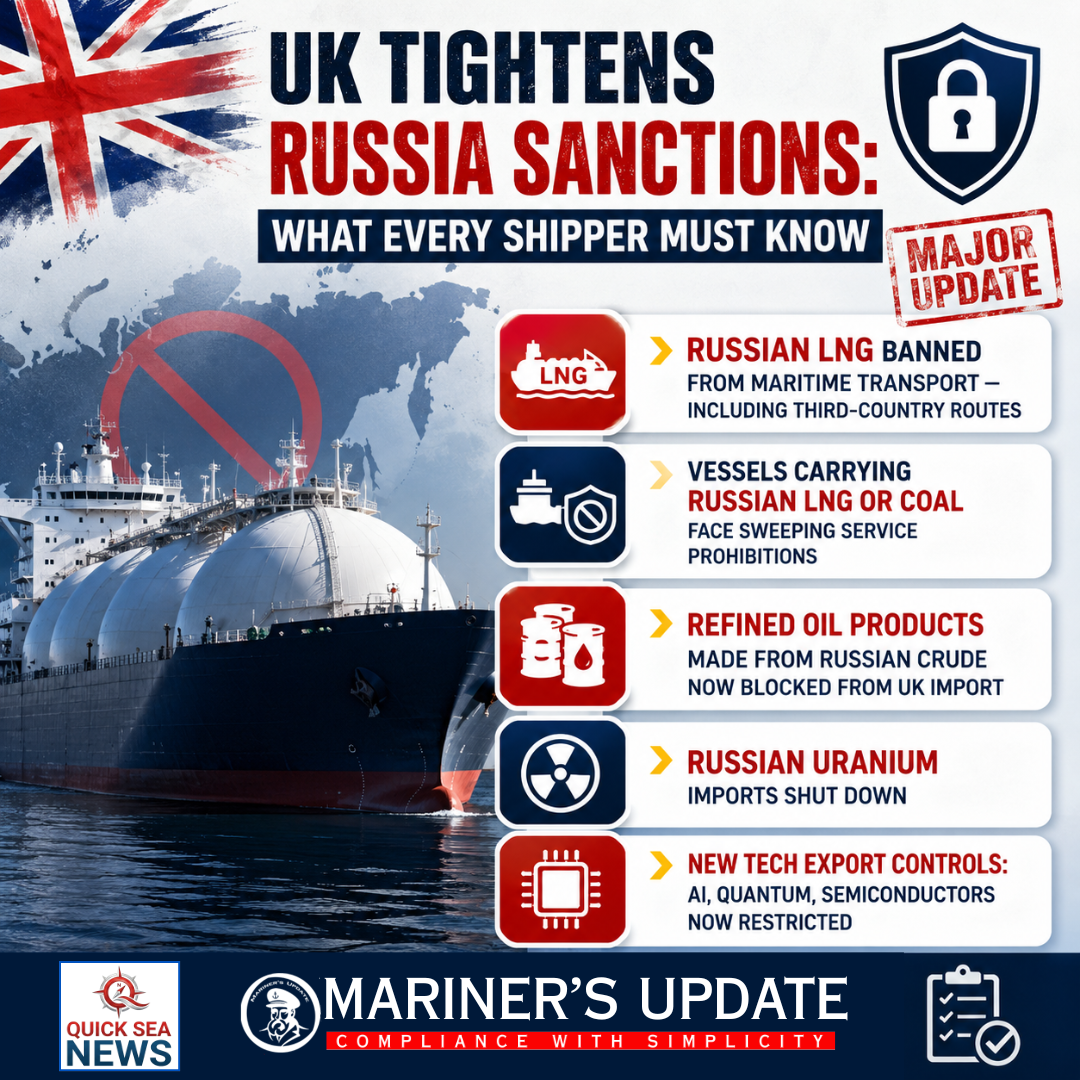
The United Kingdom has significantly escalated its sanctions framework against Russia, with sweeping new rules that came into force on 20 May 2026. The amended regulations touch virtually every corner of maritime trade — from liquefied natural gas shipments and oil refining to uranium imports and cutting-edge technology exports.
The LNG Clampdown
Perhaps the most consequential change is a sweeping ban on maritime transportation of Russian LNG. The rules prohibit anyone from supplying or delivering Russian LNG by vessel — whether the cargo moves directly from Russia or between two non-Russian countries. That last point is crucial: this isn’t just about direct Russia routes. Ship-to-ship transfer operations are explicitly caught too. Vessel owners, operators, charterers, and anyone providing financial services or insurance in connection with such shipments must all comply. The only breathing room comes through a time-limited exception for long-term contracts signed before 17 June 2025 (lasting more than one year), which may continue until 1 January 2027 — provided their terms haven’t been materially altered. A separate general licence also permits short-term LNG deliveries specifically from the Sakhalin-2 and Yamal terminals until the same date, with a mandatory notification to authorities within 30 days of activity commencing.
Ships in the Crosshairs
The ship specification regime has been overhauled. Previously, being placed on the UK Sanctions List primarily restricted a vessel’s access to UK ports. Now, the consequences are far broader. A specified vessel triggers a near-total services blackout: technical assistance, crew supply, operations, chartering, brokering, insurance, and financing are all prohibited. Critically, the grounds for designating a vessel have been widened to include ships carrying Russian LNG and coal — not just oil. Existing sanctioned vessels won’t automatically inherit these new restrictions, but the authorities have signalled they will conduct reviews.
Russian-Origin Oil Products — A New Import Wall
A new chapter in the regulations prohibits importing into the UK any refined oil product that was processed in a third country using Russian crude oil. In other words, even if the refining happened outside Russia, the Russian-origin crude disqualifies the product. Exceptions have been carved out for diesel and jet fuel through a general trade licence — but that licence can be revoked at any time, with the authorities aiming to give four months’ notice if they choose to withdraw it.
Uranium: Closing Another Energy Gateway
The amended rules also shut down the import, acquisition, and cross-border supply of Russian uranium and related services. Narrow carve-outs exist for nuclear installations that were already operational on 20 May 2026 and for uranium already exported from Russia before that date and held in storage abroad.
Trade Restrictions and Construction Services
Export and import prohibitions on goods to and from Russia have been expanded, with four new categories added: EU-aligned restrictions on industrial chemicals, metals, and machinery; goods recommended by Ukraine including metals and carbon fibre; riot control chemicals; and emerging technologies spanning quantum computing, artificial intelligence, semiconductors, and engineering biology. Pre-existing contracts on newly restricted goods benefit from a wind-down period running to 20 November 2026. Meanwhile, construction services to Russia-connected parties are now expressly prohibited, joining existing bans on architecture and engineering work.
What This Means for Shipping and Trade
The practical implications are significant. Shipowners, charterers, insurers, and cargo handlers with any exposure to Russian energy cargoes — even indirectly through third-country routes — must urgently review their compliance frameworks. No insurance cover will be available for trades that breach these rules. Thorough due diligence on all parties, vessels, cargoes, and service providers is now essential, and records of those checks must be maintained.