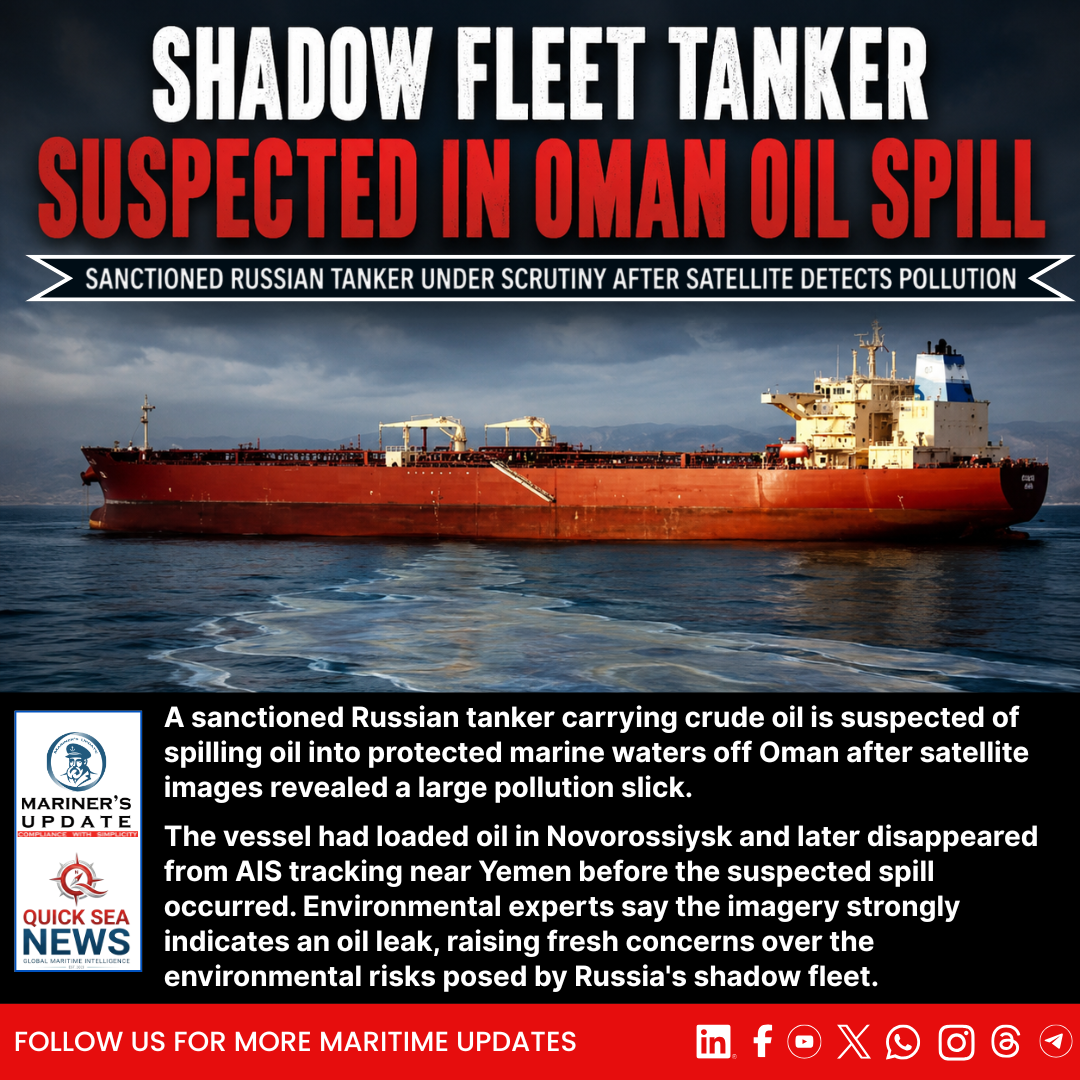
A tanker linked to Russia’s sanctioned shadow fleet has come under scrutiny after satellite imagery indicated a suspected oil spill in environmentally sensitive waters off the coast of Oman, raising fresh concerns over the environmental risks posed by vessels operating under international sanctions.
The vessel, Caroline Bezengi, which was reportedly carrying Russian crude oil, is believed to have caused an oil spill in a protected marine area located in a bay southwest of Al-Qibliyah Island. The incident has drawn attention from environmental monitoring organizations after satellite images captured between 2 July and 13 July revealed a large silvery-grey slick spreading across the sea surface.
Independent analysts from SkyTruth, the Conflict and Environment Observatory (CEOBS), and Data Desk reviewed the satellite imagery and concluded that the visible slick strongly suggests an oil spill. While the exact cause and quantity of oil released have not yet been officially confirmed, the imagery indicates significant marine pollution within an ecologically sensitive region.
According to shipping records, the Caroline Bezengi had loaded Russian oil at the Port of Novorossiysk before beginning its latest voyage. The tanker later stopped transmitting its Automatic Identification System (AIS) signal on 11 June while sailing off the coast of Yemen, a practice frequently associated with vessels involved in sanctioned or high-risk trading activities.
The tanker itself is already under international sanctions for transporting Russian petroleum products. Shipping databases identify its registered owner as Shanghai-based Rentoor Shipmanagement, although Reuters reported that it was unable to obtain any response or comment from the company regarding the suspected spill.
The incident adds to growing international concerns surrounding Russia’s so-called “shadow fleet”—a network of aging tankers operating under opaque ownership structures and often accused of disabling tracking systems to evade sanctions. Environmental organizations have repeatedly warned that these vessels present elevated risks of accidents, pollution, and maritime safety incidents due to limited oversight and maintenance.
The suspected pollution also comes amid heightened security concerns in regional waters. In a separate incident, armed attackers recently boarded the chemical tanker Asana in the Gulf of Aden off southern Yemen and temporarily took control of the vessel, underscoring the increasingly complex security environment facing commercial shipping across the Middle East.
As investigations continue, the Oman incident highlights the dual challenge confronting the maritime industry—protecting fragile marine ecosystems while ensuring compliance, transparency, and safety in global oil transportation.