
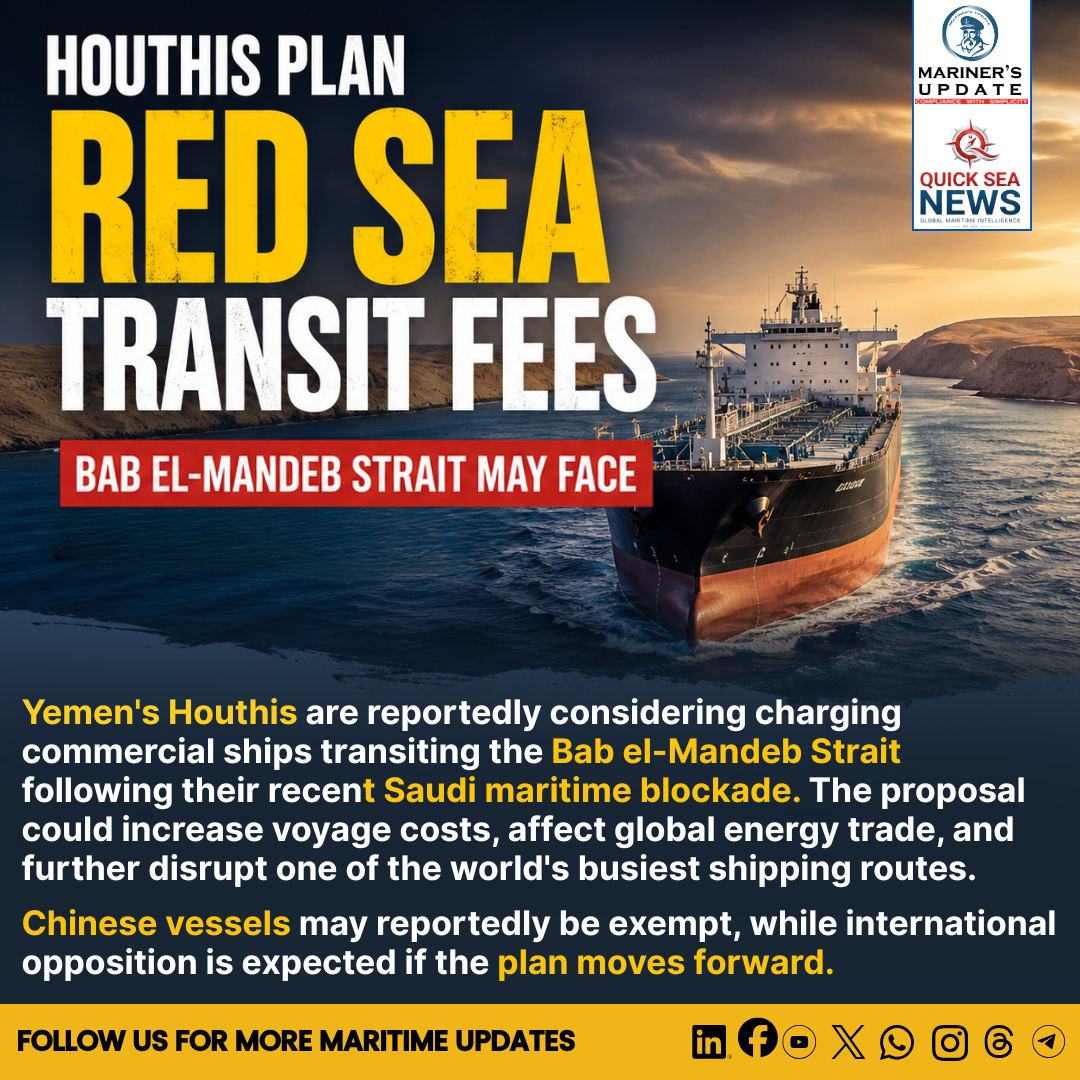
A fresh development in the Red Sea crisis could significantly impact global shipping and energy trade. Yemen’s Iran-aligned Houthi movement is reportedly considering imposing transit fees on commercial vessels passing through the strategic Bab el-Mandeb Strait, according to multiple regional and Western sources familiar with the discussions.
The proposal comes just days after the Houthis announced a naval blockade targeting Saudi Arabia, signaling another escalation in regional maritime tensions that could further disrupt one of the world’s busiest shipping corridors.
Houthis Considering Transit Fees for Red Sea Shipping
Sources indicate that the Houthis are exploring a plan to charge most commercial vessels using the Bab el-Mandeb, the narrow maritime gateway connecting the Red Sea with the Gulf of Aden. While no implementation timeline has been announced, discussions are reportedly progressing.
According to regional officials, senior Houthi representatives visited Iran in July during the funeral of Iran’s late Supreme Leader. During the visit, Iranian officials reportedly discussed establishing a framework that would allow the Houthis to collect transit fees from international shipping using the Bab el-Mandeb.
The reported objectives include:
- Normalizing the practice of charging fees for international waterway transit.
- Increasing economic and political pressure on the United States and its allies.
- Expanding Houthi influence over one of the world’s most strategically important maritime chokepoints.
Chinese Ships May Be Exempt
Sources familiar with the discussions say that Chinese commercial vessels could be exempted from any future transit charges.
The arrangement reportedly follows direct discussions between China and the Houthis aimed at ensuring the safe passage of Chinese tankers through the southern Red Sea without attacks.
China remains the world’s largest importer of Saudi Arabian crude oil, making uninterrupted access through the region strategically important.
Iranian Advisers Assisting the Proposal
Regional officials say Iranian advisers accompanied Houthi representatives back from Tehran and are helping develop a possible authority that would oversee and regulate any future fee collection system.
Yemen’s internationally recognized government has strongly criticized the proposal, warning that the Houthis are attempting to establish control over international shipping routes.
Growing International Concerns
Western diplomats believe any attempt to impose mandatory transit fees would likely face strong opposition from Gulf nations and European governments.
However, international naval forces operating in the region remain stretched by prolonged security operations, limiting their ability to fully protect merchant shipping.
At the same time, diplomatic efforts to ease regional maritime tensions continue to face setbacks. Iran has reportedly rejected proposals for regional joint management of the Strait of Hormuz that included voluntary transit payments.
Risk to Saudi Arabia and Global Energy Trade
The Bab el-Mandeb has become even more strategically important following rising tensions around the Strait of Hormuz.
Any disruption or closure of Bab el-Mandeb would significantly reduce Saudi Arabia’s ability to export oil through alternative routes, increasing concerns over global energy supplies.
The Houthis recently claimed responsibility for an attack on a Saudi tanker near the port of Jizan, highlighting the continuing risks facing commercial shipping.
Background: Red Sea Shipping Crisis
Commercial shipping in the Red Sea has yet to fully recover from the Houthi attacks that began in November 2023.
Although attacks largely paused following the Gaza ceasefire in October 2025, vessel traffic remains below historical levels due to ongoing security concerns and elevated insurance costs.
A 2024 United Nations Panel of Experts report also referenced allegations that some shipping agencies may have previously paid the Houthis for safe passage during the height of the maritime campaign. While the report could not independently verify these claims, the alleged collections were estimated at up to $180 million per month.
Impact on Global Shipping
If implemented, transit fees at Bab el-Mandeb could have significant consequences:
- Increased voyage costs for commercial shipping.
- Higher freight and insurance expenses.
- Greater uncertainty for tanker operators.
- Additional pressure on global energy supply chains.
- Potential changes in vessel routing decisions.
- Increased geopolitical tensions across major maritime trade corridors.
The proposal represents another potential shift in the Red Sea security landscape. Beyond the direct financial impact, it raises broader questions about freedom of navigation, control of international waterways, and the future security of one of the world’s most critical maritime chokepoints.
Although no official fee structure or implementation date has been announced, shipowners, operators, charterers, insurers, and maritime stakeholders will be closely monitoring developments as they could influence voyage planning, operational costs, and global trade flows in the months ahead.