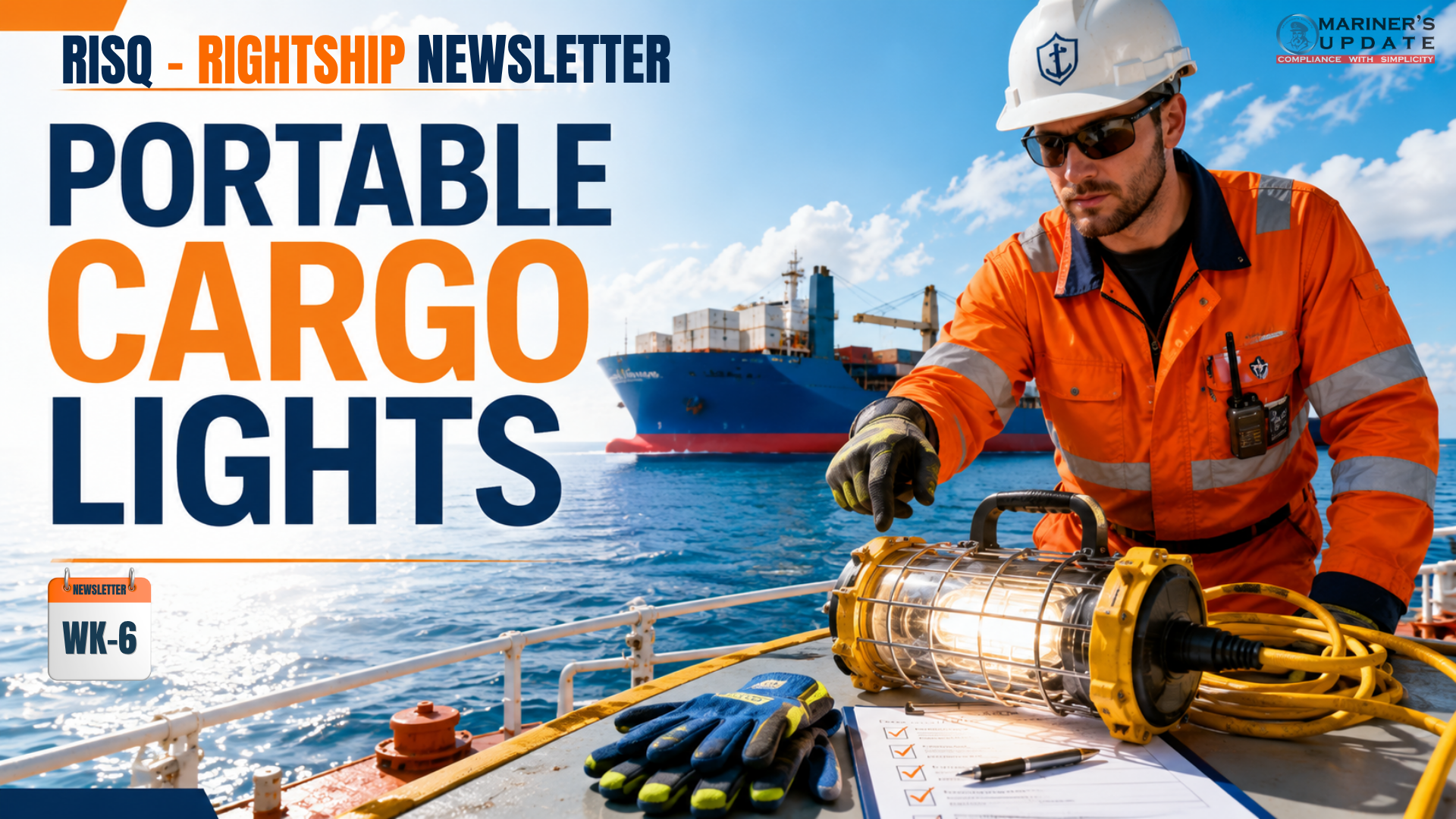
A hidden electrical hazard in cargo holds and stores
Most vessels run portable lights at 220V AC — and constant handling, knocks, and damp cargo spaces leave them exposed to damage. When a fault reaches the casing, current can pass straight through anyone who picks it up. In the last two years, this has cost several crew members their lives. Here’s what RightShip’s data shows, and what operators can do about it.
Why Crew Are Being Electrocuted
🔸 Faulty wiring & repairs
Mis-wired plugs, taped joints, and home-made cables have energised entire light casings. In multiple fatal incidents, a portable light’s power plug had been incorrectly wired during a prior repair — turning the whole metal frame live. The crewmember had no way of knowing until they touched it.
🔸 Wet, humid conditions
Damp cargo holds, bosun stores, and wet PPE turn a small electrical fault into a fatal shock path. Several fatalities occurred in cargo tunnels, forecastle stores, and holds being prepared for steel or bulk cargo — all damp environments where an IP20-rated lamp (no water protection) should never have been used.
🔸 Damaged casings
Cracked, dented, or impact-damaged metal housings expose live parts during routine handling. In one case, a portable light’s casing was damaged after striking the hatch coaming — the live current then passed straight through the crew member positioning it.
🔸 No risk assessment
Several incidents had no toolbox talk or risk review before the task began. Crew were sometimes absent from toolbox meetings due to rest hours, and the specific risk of using electrical equipment in a wet, conductive environment was never identified or flagged.
RightShip Data Snapshot
During the 2025 calendar year, 23% of all completed RightShip inspections identified at least one finding related to portable cargo lights — confirming this remains a persistent, fleet-wide gap rather than an isolated issue.
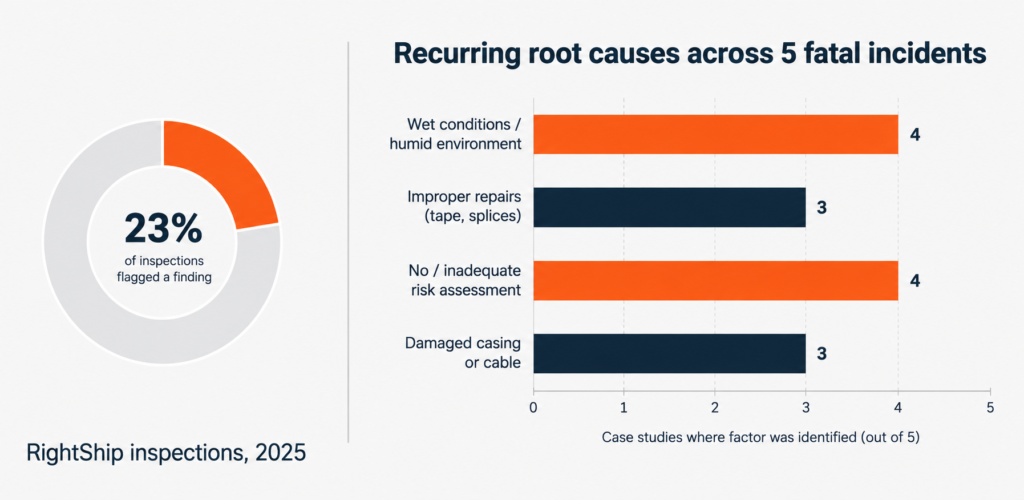
Across five fatal incidents reviewed over the last two years, the recurring root causes were:
- Wet/humid environment — 4 of 5 cases
- Inadequate or missing risk assessment — 4 of 5 cases
- Improper repairs (tape, makeshift splices) — 3 of 5 cases
- Damaged casing or cable — 3 of 5 cases
RightShip’s RISQ Question 14.10 specifically checks whether portable and fixed cargo lights are inspected and maintained, the casing material (metal vs non-conductive), and whether an isolation transformer is fitted for voltages above 50V — because a touch voltage above 50V AC can be life-threatening under the wrong conditions.
Act Now — Recommendations for Vessel Operators
✅ Risk-assess every portable light task. Identify “electric shock while using electrical equipment” as a standalone risk in cargo hold work, and hold a proper toolbox talk before any task begins.
✅ Never handle lights while powered on. Position and secure the light first, then connect the power source — not the other way around.
✅ Move to low-voltage systems. A 24V DC lighting system, or 36V AC low-voltage portable lights, removes the risk of a fatal shock at the source. Isolation transformers are another proven engineering control.
✅ Tag, inspect, and log lights regularly. Maintain an inventory with test-date tags, store lights in a dry designated space, and keep cables and handling lines coiled separately.
✅ Replace — don’t tape — damaged cables. Equipment with taped repairs, frayed sheathing, or improvised wiring should be removed from service immediately, not patched up.
✅ Build it into the Planned Maintenance System. Routine checks should cover casing condition, cable and plug integrity, insulation resistance testing, and periodic testing of safety cut-off devices.
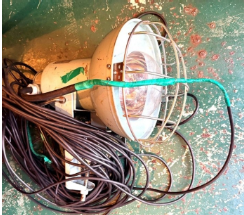
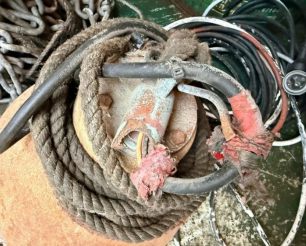
A seemingly small, routine task — rigging a light for cargo work — has repeatedly turned fatal. Addressing crew risk perception, tightening maintenance systems, and shifting to low-voltage equipment are practical steps that can prevent the next incident.
Zero Harm starts with the basics.