Canada Chooses German Submarines to Modernize Its Underwater Fleet
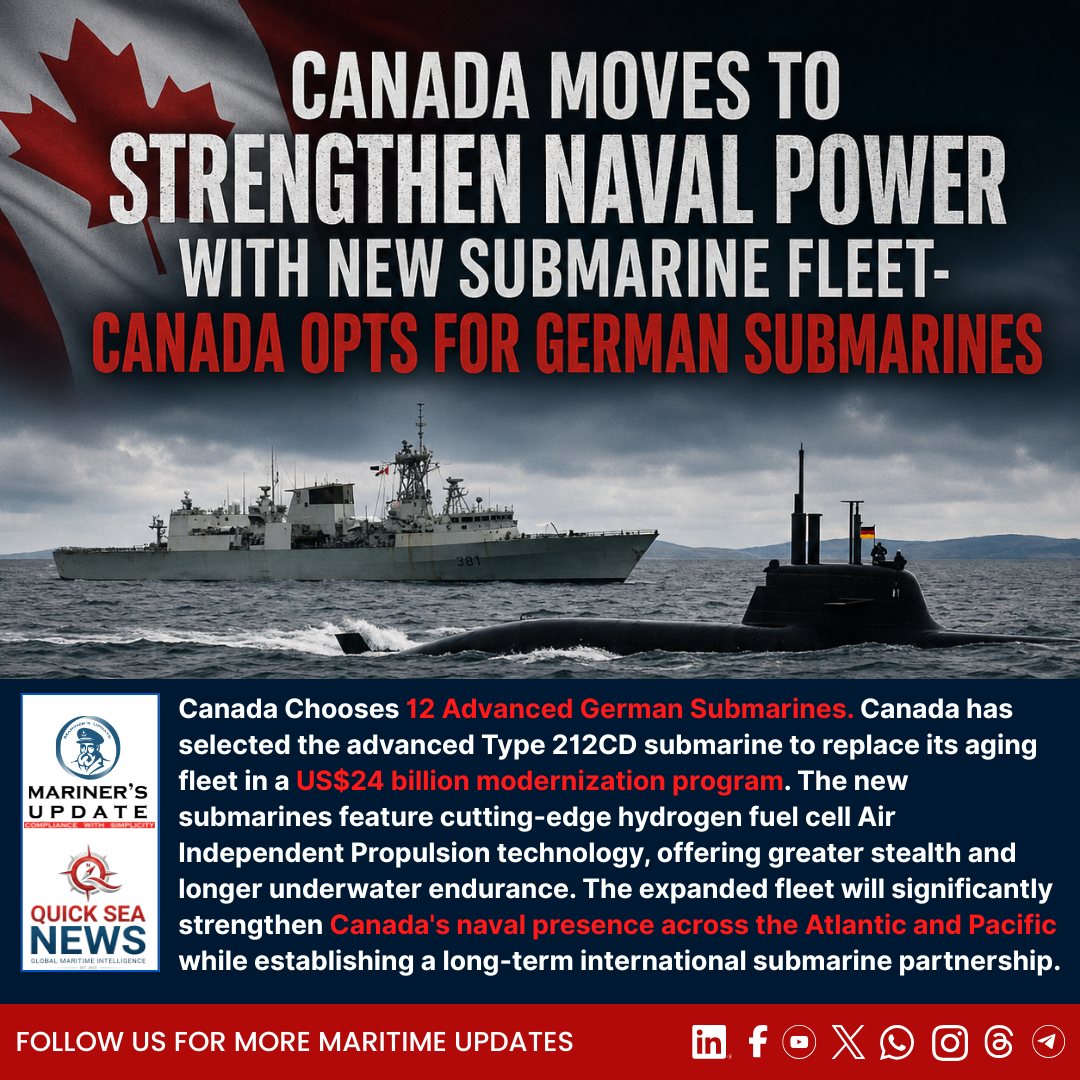
Canada has taken a major step toward modernizing its naval capabilities by selecting the German-designed Type 212CD submarines as the preferred replacement for its aging submarine fleet. The decision, subject to final contract approval, marks one of the fastest procurement processes ever completed for a defense program of this scale and reflects Canada’s determination to strengthen its maritime security and long-term defense readiness.
The planned acquisition, valued at approximately US$24 billion, includes 12 next-generation submarines that will significantly enhance Canada’s underwater warfare capability across both the Atlantic and Pacific Oceans.
Joining a Proven International Submarine Program
The Type 212CD program is being jointly developed by Germany and Norway, with Canada now set to become the third participating nation. The project builds upon the successful Type 212A submarine program, expanding cooperation between allied nations on submarine construction, maintenance, and operational support.
The submarines will be constructed under the leadership of ThyssenKrupp Marine Systems (TKMS) in Kiel, Germany. The vessels will feature advanced hydrogen fuel cell-based Air Independent Propulsion (AIP) technology, allowing them to remain submerged for extended periods while maintaining exceptionally low acoustic signatures.
The combat management system is being jointly developed through German and Norwegian industrial cooperation, while long-term fleet support is planned through Norway’s established submarine infrastructure. Details regarding Canada’s industrial participation and future support responsibilities are expected to be finalized during contract negotiations.
Canada Becomes an Equal Partner
Germany and Norway have each ordered six Type 212CD submarines. Canada’s planned purchase of 12 submarines will make it an equal partner in the multinational program, creating a three-nation collaboration covering construction, maintenance, technology development, and operational cooperation.
The first Type 212CD submarine, intended for the Norwegian Navy, is scheduled to be launched in 2027, paving the way for future deliveries under the expanded partnership.
Why Canada Chose Conventional Submarines
Rather than pursuing nuclear-powered submarines, Canada opted for an advanced conventional design that better matches its operational timelines and strategic requirements.
The Type 212CD offers several advantages:
- Faster delivery compared to nuclear submarine programs.
- Lower acquisition and operating costs.
- Highly advanced stealth characteristics.
- Long-endurance underwater operations through Air Independent Propulsion.
- A quicker replacement for Canada’s aging Victoria-class submarines.
The decision enables Canada to modernize its fleet without waiting for the significantly longer timelines associated with nuclear-powered submarine programs.
Expanding Canada’s Naval Presence
Once operational, the new fleet will dramatically improve Canada’s ability to conduct underwater surveillance, intelligence gathering, deterrence missions, and maritime security operations across both coastlines.
The expanded submarine force will strengthen Canada’s contribution to allied naval operations while improving its capability to protect national waters and respond to evolving maritime security challenges.
A Strategic Step Beyond Fleet Modernization
Beyond the military benefits, the agreement also represents deeper long-term defense cooperation among participating nations. The partnership extends beyond shipbuilding to include future maintenance, technological collaboration, training, and operational coordination throughout the submarines’ service life.
The program positions Canada within a long-term multinational submarine partnership while significantly enhancing its future naval capabilities.