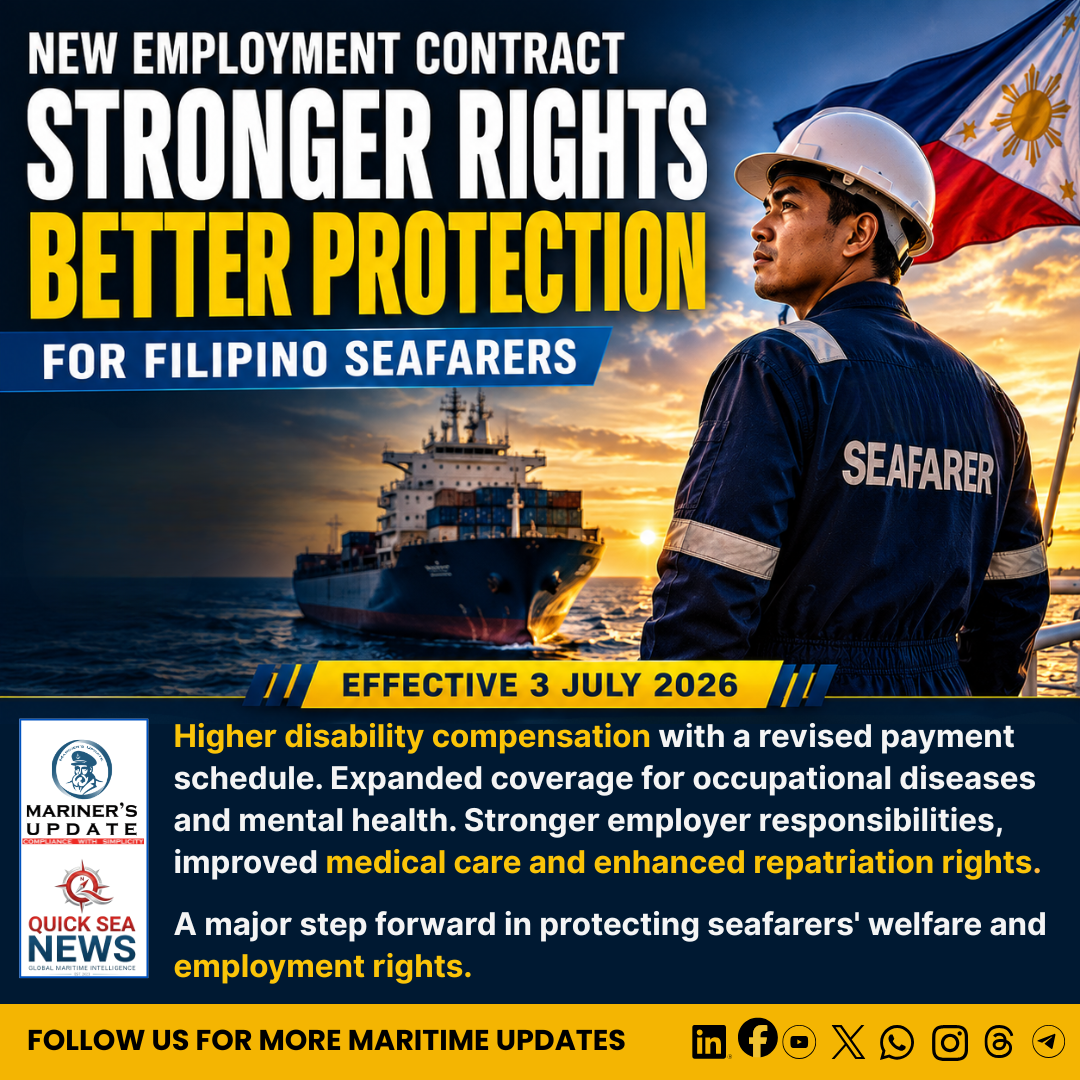
A significant overhaul of the employment framework for Filipino seafarers has come into effect, introducing one of the most comprehensive updates in recent years. Effective from 3 July 2026, the revised Standard Employment Contract strengthens seafarer welfare, modernizes compensation, enhances employer responsibilities, and aligns employment conditions with current international maritime labour practices.
The updated contract goes far beyond increasing financial benefits. It establishes clearer medical procedures, expands occupational disease coverage, strengthens dispute resolution mechanisms, improves onboard welfare standards, and introduces enhanced protection for mental health, gender equality and workplace dignity.
Higher Disability Compensation
One of the most notable changes is the 10% increase in the base disability compensation, raising the base amount from US$50,000 to US$55,000. As a result, maximum Grade 1 disability compensation now reaches US$66,000, with all disability grades adjusted accordingly. A revised disability schedule provides updated compensation values for Grades 1 to 14 while maintaining an overall maximum limit of US$66,000 for multiple disability claims.
Expanded List of Occupational Diseases
The revised contract significantly broadens the list of compensable occupational illnesses. It now includes infectious diseases, cardiovascular and cerebrovascular conditions, musculoskeletal disorders, occupational strain injuries, and mental and behavioural illnesses such as PTSD. Each condition is linked to a defined disability grading system, creating greater consistency in compensation assessments.
Independent Medical Review Process
A structured third-doctor procedure has been introduced for cases where medical assessments differ between the company physician and the seafarer’s chosen doctor. An independent specialist will provide the final binding disability assessment before disputes proceed to arbitration, improving transparency and reducing prolonged medical disagreements.
Greater Employer Responsibilities
Employers now have broader obligations covering:
- Immediate family notification during emergencies.
- Financial security in cases of abandonment.
- Access to employment and medical information.
- Anti-harassment, anti-bullying and anti-discrimination policies.
- Safe travel arrangements before joining vessels.
- Improved onboard accommodation and recreational facilities.
- Access to communication services where available.
- Enhanced medical care, including telemedicine and mental health support.
Mental Health Receives Formal Recognition
For the first time, mental health becomes an integral part of employer-funded medical care. The revised provisions require access to counselling, psychotherapy, mental health assessments and treatment whenever required, recognising psychological wellbeing as equally important as physical health.
Improved Protection During High-Risk Operations
The contract strengthens safeguards for seafarers operating in piracy-prone or war-risk areas. Employers must fully disclose voyage risks, while seafarers are given greater rights to make informed decisions regarding deployment into declared high-risk zones. Wages and contractual benefits also continue throughout periods of captivity until release and repatriation.
Other Major Improvements Include
- Expanded definition of beneficiaries for death compensation.
- Stronger grievance and arbitration procedures.
- Revised rules on allotments and wage protection.
- Better repatriation rights and employer obligations.
- Clearer definitions of work-related injury and death.
- Protection against unlawful wage deductions.
- Enhanced gender-sensitive accommodation standards.
- Restrictions on unauthorized social media posts that may affect vessel security.
- Updated transfer, resignation and employment termination provisions.
- Expanded list of disciplinary offences and penalties.
Industry Impact
These changes represent a major shift towards stronger employment protection, improved welfare standards and greater legal clarity. Shipowners, managers, crewing agencies and seafarers should review the updated contract carefully to ensure full compliance and proper implementation across all future employment agreements.