Peak Fishing Season Navigation Measures Updated for Safer Transit in Congested Coastal Waters
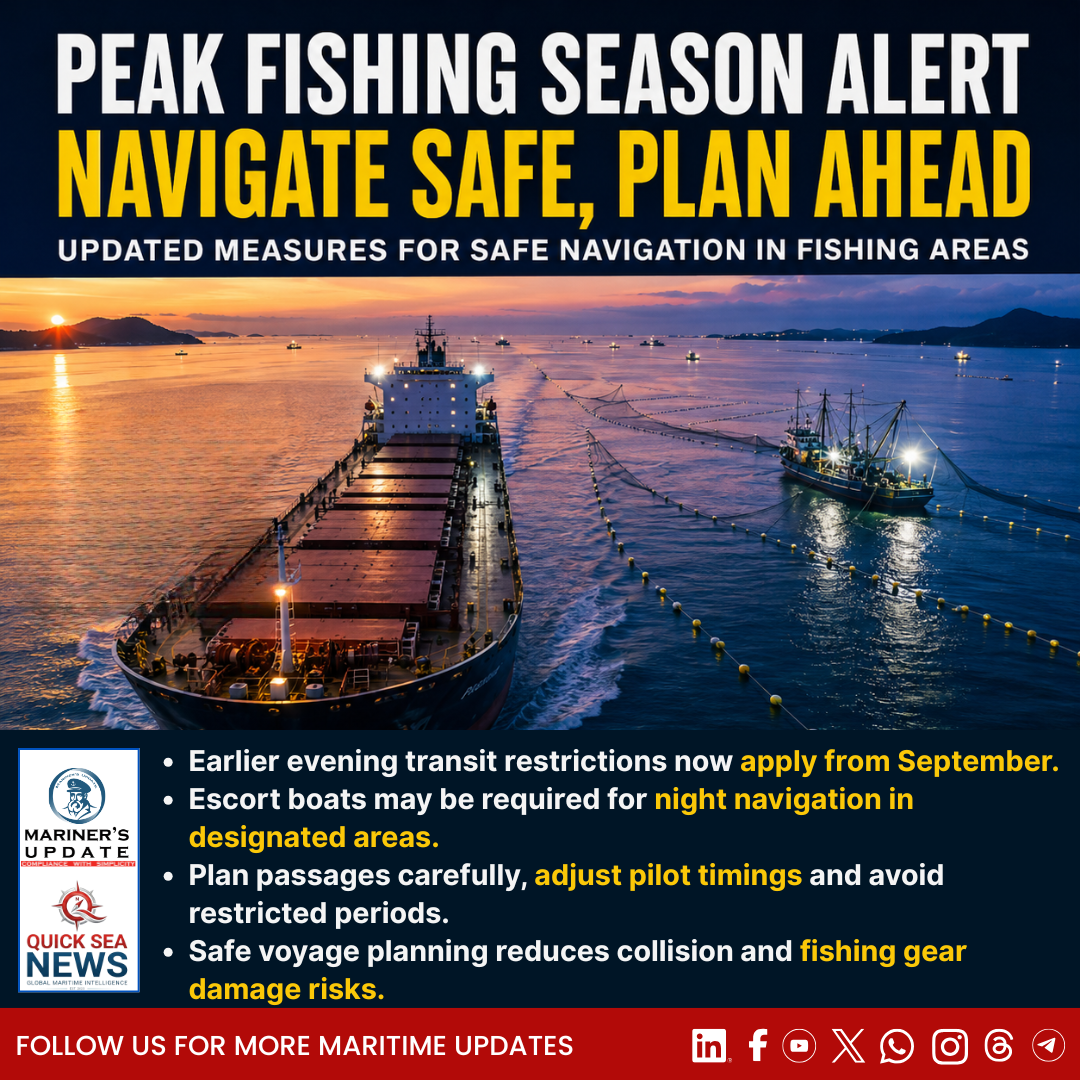
Mariners operating through heavily trafficked coastal waters during the annual drift-net fishing season are advised to exercise heightened caution as updated navigation measures have been introduced to reduce the risk of collisions, fishing gear damage, and navigational incidents. The revised guidance places greater emphasis on voyage planning, pilot coordination, transit timing, and the use of escort boats in designated areas during high-risk periods.
The seasonal drift-net fishing activity significantly increases the number of fishing vessels and deployed fishing gear across major traffic routes. Large commercial vessels navigating these waters face additional challenges, particularly during hours of darkness, when identifying fishing equipment and maintaining safe passing distances becomes more difficult.
Key Operational Changes
One of the most important revisions is the advancement of the evening restriction period. From September onward, vessels should complete transit through designated high-risk areas by 1700 hours, instead of the previous 1800-hour requirement. This earlier timing reflects the seasonal reduction in daylight and aims to improve navigational safety before darkness sets in.
Escort Boats Required for Night Navigation
If vessels are unable to clear specified navigation areas before the prescribed cut-off time, operators should arrange escort boats to assist safe passage during night operations. Escort boats are intended to help identify fishing gear, warn nearby fishing vessels, and reduce the likelihood of accidental entanglement or collision while transiting through affected routes. The guidance also identifies the areas where escort boat arrangements are required.
Voyage Planning Is Essential
Masters, bridge teams, operators and voyage planners should carefully review passage plans before entering these waters. Recommended actions include:
- Planning arrival and departure times to avoid restricted periods.
- Adjusting pilot boarding schedules to ensure daylight transit wherever possible.
- Allowing additional sea room and time for altered routing.
- Maintaining enhanced bridge watchkeeping during fishing operations.
- Coordinating with local authorities and pilots before entering affected areas.
Special Routing and Port Timing Requirements
Certain routes require vessels to follow alternative tracks during the peak fishing season to minimize encounters with drift nets. In addition, recommended arrival windows have been introduced for selected ports, while late departures may require vessels to remain at anchor overnight before proceeding after sunrise. These operational measures are intended to improve safety for both commercial shipping and local fishing communities.
Why This Matters
Drift-net fishing seasons create one of the most demanding navigational environments for merchant vessels. Fishing gear may extend over considerable distances, often becoming difficult to detect in reduced visibility or at night. Damage to fishing equipment can lead to operational delays, financial claims, environmental concerns and safety hazards for both ships and fishermen.
Proper voyage planning, strict adherence to local navigation guidance, and early coordination with pilots remain the most effective ways to ensure safe and efficient passage.
As seasonal fishing activities continue, shipping companies, Masters and bridge teams should review local navigation requirements well in advance and incorporate the latest operational precautions into their passage plans.