
Introduction
In the maritime industry, safety often depends on small decisions made during routine tasks. What may seem like a minor shortcut can quickly escalate into a serious incident. This case highlights how improper labeling and assumptions around “empty” chemical drums led to a dangerous exposure onboard.
The Incident
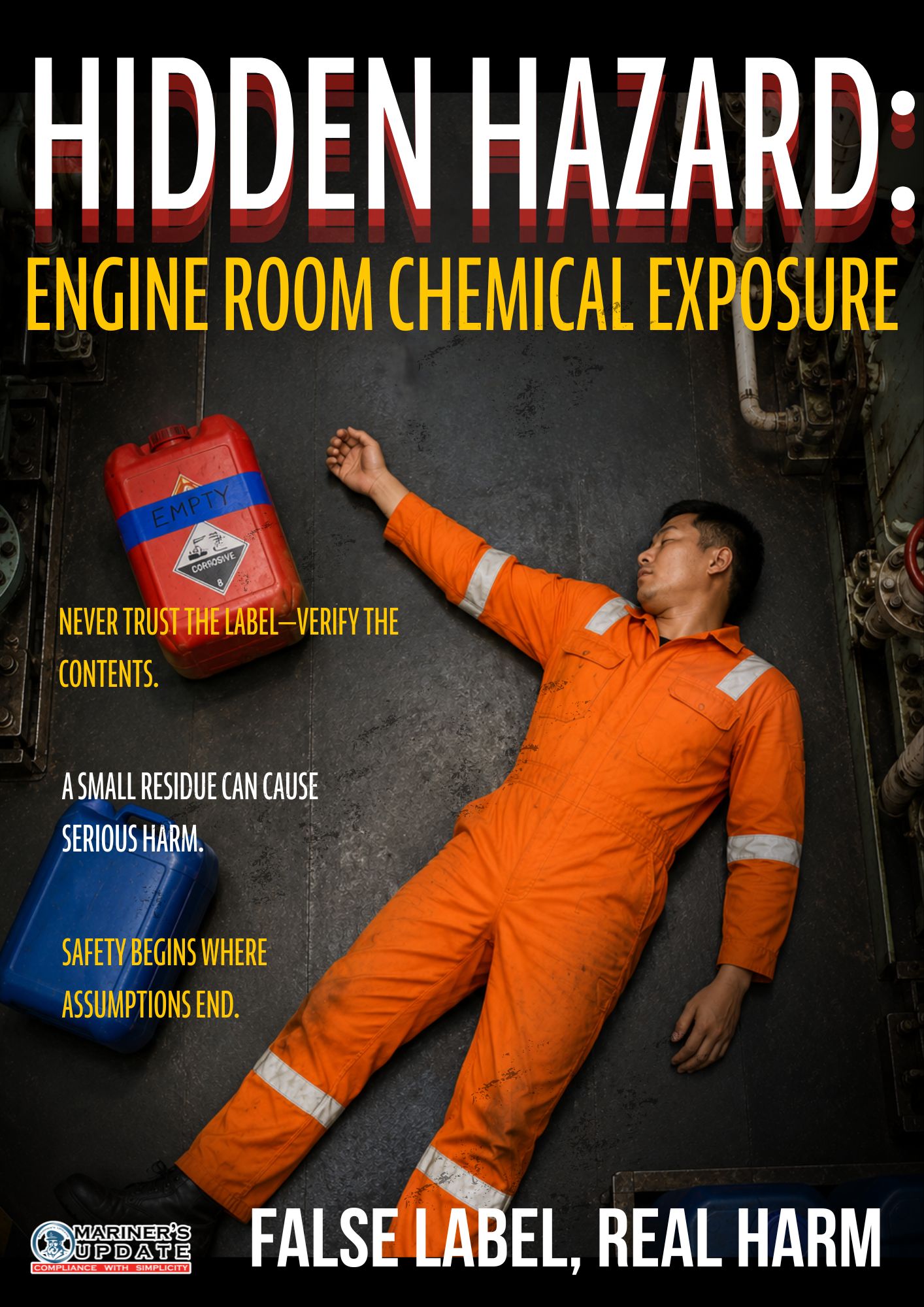
While tidying the engine room, an engineer placed several chemical drums in the workshop for disposal. To indicate they were empty, blue tape was placed across them, and the word “Empty” was written on top.
However, one drum still contained a small amount of residual acid.
Later that day, a motorman entered the workshop to dispose of the drums. Unable to clearly identify the contents—because the Safety Data Sheet (SDS) was covered—he opened the drum and attempted to identify the chemical by smell.
This resulted in immediate exposure to harmful fumes, leading to severe inhalation and hospitalization.
Compounding the issue, multiple chemicals onboard—including acids, bases, detergents, and defoamers—were stored in identical drums, making proper labeling the only reliable method of identification.
What Went Wrong?
This incident was not caused by a single mistake but a chain of unsafe practices:
- Obscured Safety Labels: Critical information was hidden under tape
- Improper Disposal Practices: Drums were marked “empty” without proper cleaning
- Assumptions Over Verification: The label was trusted without confirmation
- Unsafe Identification Method: Smelling chemicals to identify them
- Lack of Communication: No clear briefing about the drum contents
Key Safety Lessons
1. Never Compromise on Labeling
Original labels and SDS must always remain visible until the container is fully cleaned and decontaminated. Temporary markings should never obscure critical safety information.
2. “Empty” Must Mean Zero Hazard
Even small chemical residues can be dangerous. Drums must be:
- Fully drained
- Properly cleaned
- Safely ventilated
before being declared empty.
3. Smell Is Not a Safety Tool
Attempting to identify chemicals by smell is extremely hazardous and strictly unacceptable. Always refer to the SDS or seek clarification.
4. Use Proper PPE at All Times
When handling chemicals—especially unknown substances—crew must wear:
- Gloves
- Eye protection
- Respiratory protection
- Use gas detectors where necessary
5. Build a “Stop and Check” Culture
If there is any doubt, operations must pause. Verification should always come before action. Safety depends on questioning assumptions.
Human Factors Behind the Incident
Complacency
The “Empty” label created a false sense of safety.
Communication Gaps
There was likely no proper handover or briefing regarding the drum contents.
Lack of Situational Awareness
The downstream risks of leaving chemical residue were not considered.
Safety Culture Weakness
Procedures existed, but enforcement and awareness were insufficient.
Recommendations for the Industry
For Seafarers
Do not trust makeshift labels—verify contents before handling.
Never take risks when unsure—ask and confirm.
For Ship Managers
Treat near-misses as system failures, not individual errors
Strengthen training on chemical handling and hazard awareness
Encourage open communication regardless of rank
For Regulators
Ensure stricter controls on hazardous waste handling
Conduct spot checks on real onboard practices
Promote better labeling standards and disposal procedures
Final Thoughts
This incident serves as a powerful reminder: hazards do not disappear just because they are labeled differently.
A drum marked “empty” can still carry serious risks if not handled correctly. Safety onboard is built on discipline, awareness, and a culture where verification always comes before assumption.