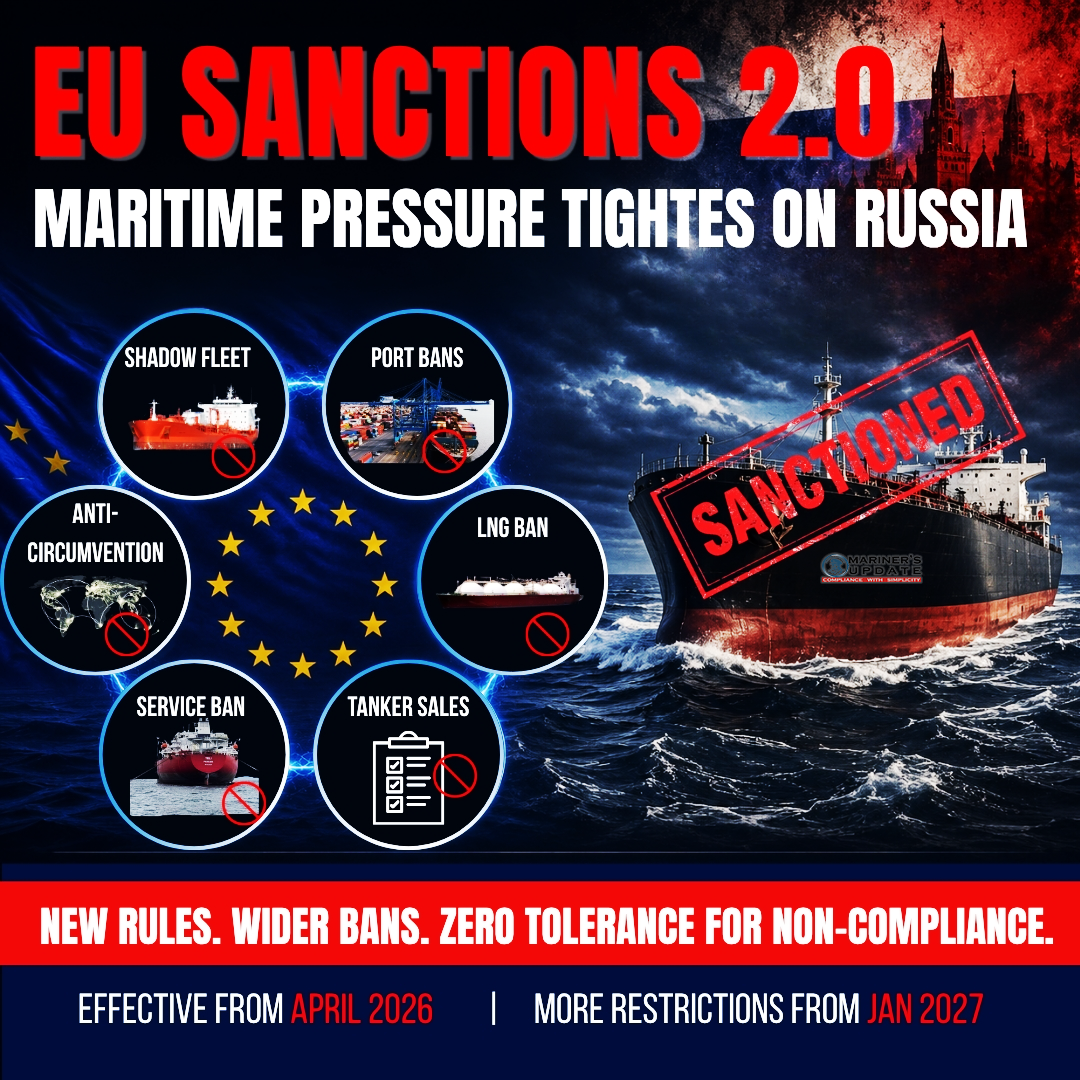
On 23 April 2026, the Council of the European Union adopted its 20th sanctions package against Russia, reinforcing and expanding existing measures under Regulations (EU) 833/2014 and 269/2014. Implemented through Council Regulations (EU) 2026/506, 2026/509, and 2026/511, the package represents one of the most comprehensive updates in recent years, particularly impacting shipping, marine insurance, and related maritime services.
This latest round introduces 120 new individual and entity listings—the highest in a single package in the past two years—alongside wide-ranging sectoral, financial, and anti-circumvention measures.
Key Highlights for Maritime Stakeholders
- Expansion of the “shadow fleet” regime, including 46 newly designated vessels
- New compliance obligations for tanker sales and resale restrictions
- Gradual ban on financial and insurance services to LNG tankers linked to Russia
- Legal groundwork for a future full maritime services ban on Russian oil transport
- Transaction bans targeting specific ports in Russia and Indonesia
- Introduction of a country-level anti-circumvention tool targeting Kyrgyzstan
Crackdown on the Shadow Fleet
The EU has added 46 vessels to its list of designated “shadow fleet” ships, bringing the total to 632. These vessels are now subject to strict prohibitions, including denial of EU port access and bans on maritime services such as insurance, ship-to-ship transfers, and cargo handling.
At the same time, 11 vessels have been removed from the list after demonstrating compliance. A new derogation allows end-of-life vessels to proceed to recycling facilities under controlled conditions.
Expanded Sanctions on Energy and Maritime Entities
A total of 120 individuals and entities have been designated, including 36 linked to Russia’s energy sector. These cover the full oil supply chain—from exploration to transportation—and include operations in third countries connected to shadow fleet activities.
Notable additions include major Russian companies such as Bashneft, Slavneft, Gazprom Flot, Gazprom LNG Technologies, Gazpromneft Marine Bunker, Rosneftflot, and Lukoil Nizhnevolzhskneft.
Several UAE-based ship management firms and maritime security providers have also been sanctioned, reflecting increased scrutiny of international networks supporting Russian oil transport.
New Port Transaction Restrictions
The EU has imposed transaction bans on key ports and terminals:
- Murmansk and Tuapse in Russia
- Karimun Oil Terminal in Indonesia
These restrictions limit financial and operational engagement with these facilities under EU jurisdiction.
Toward a Full Maritime Services Ban
A significant development in this package is the establishment of a legal framework for a future comprehensive ban on maritime services related to Russian crude oil and petroleum products.
If implemented, this would prohibit transport, financing, and insurance services for vessels carrying Russian oil. The timeline for enforcement will depend on coordination with the G7 and the Price Cap Coalition.
LNG and Icebreaker Service Restrictions
From 25 April 2026, the EU prohibits providing technical, financial, brokering, or insurance services to Russian-linked LNG tankers and icebreakers.
From 1 January 2027, the restrictions will extend further to include:
- All LNG tankers operating in or for Russia, regardless of ownership or flag
- LNG terminal services provided to Russian-controlled entities
Stricter Rules on Tanker Sales
EU operators involved in tanker sales must now comply with enhanced due diligence requirements. Contracts must include a “no Russia” clause prohibiting resale to Russian entities or use within Russia.
Sellers are required to:
- Conduct and document risk assessments
- Implement mitigation measures
- Notify authorities with full transaction details
These restrictions must also be passed along the contractual chain to ensure compliance by all future buyers.
Financial Sector Measures Intensified
The EU has expanded transaction bans to include 20 additional Russian banks. Financial institutions in Kyrgyzstan, Laos, and Azerbaijan have also been targeted for facilitating sanctions circumvention.
Conversely, five institutions have been removed from the list following regulatory engagement and compliance improvements.
First Use of Country-Level Anti-Circumvention Tool
In a notable move, the EU has applied its anti-circumvention mechanism at the country level for the first time. Exports of specific machine tools and telecommunications equipment to Kyrgyzstan are now restricted due to concerns over re-export to Russia for military use.
Strengthened Legal Protections for EU Operators
New provisions enhance legal safeguards for EU businesses facing retaliatory actions. EU courts can now intervene to prevent parties from initiating proceedings in Russian courts related to sanctions-affected disputes.
Additionally, EU entities may seek damages in Member State courts against parties attempting to enforce Russian legal decisions in third countries.
Additional Trade and Service Restrictions
The package also introduces:
- Import bans on metals, chemicals, and minerals valued at over €530 million
- Import quotas on Russian ammonia
- Export restrictions on industrial goods, chemicals, and steel components
- A ban on providing cybersecurity services to Russia
Compliance Reminder for Industry Participants
Operators involved in maritime trade are reminded that insurance cover and services will not apply to activities breaching EU sanctions. Thorough due diligence on all parties, cargoes, vessels, and intermediaries is essential.
Maintaining detailed records of compliance checks and risk assessments is strongly advised, particularly when engaging in high-risk trade routes or transactions.
This latest sanctions package underscores the EU’s continued focus on tightening enforcement, closing loopholes, and increasing pressure on Russia’s energy and maritime sectors.