When Safety Becomes Silence: A Hidden Welfare Crisis at Sea
The Problem Begins: A Ship Overrun
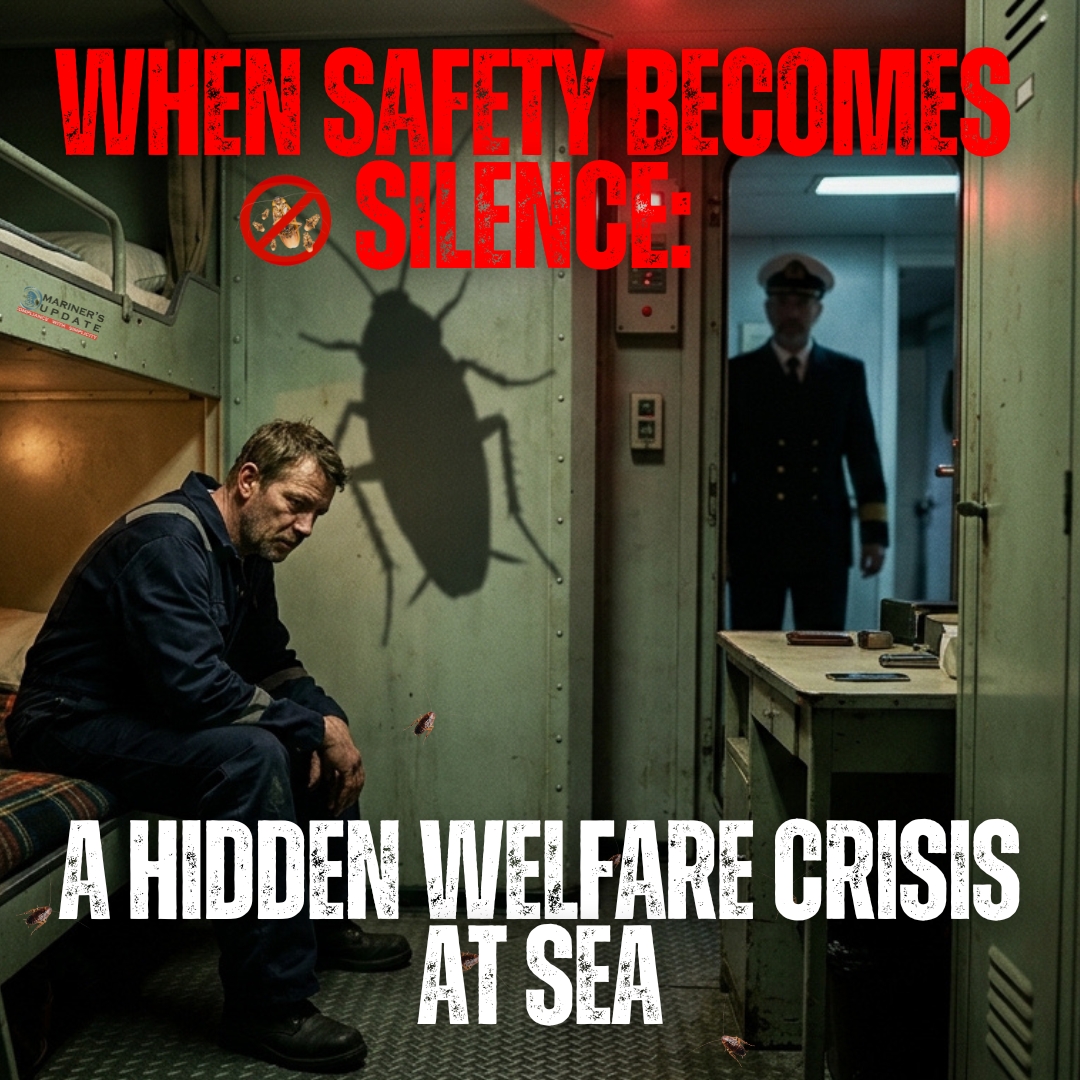
A vessel reported a severe pest infestation, with cockroaches spreading across nearly every corner of life on board. They contaminated food stores, refrigerators, utensils, sleeping areas, and personal spaces.
This wasn’t just unpleasant, it turned daily life into a constant battle. Eating became unsafe. Sleeping became stressful. The crew found themselves trapped in an environment that felt both physically unclean and mentally exhausting.
The Human Cost: Fear, Stress, and Isolation
The infestation alone was enough to disturb wellbeing, but the situation worsened due to leadership behaviour.
The captain reportedly acted unpredictably and used intimidation to discourage crew members from reporting issues. This created an atmosphere of fear where speaking up felt risky.
As a result:
- Crew members experienced high stress and anxiety
- Sleep and nutrition were affected
- Psychological safety completely broke down
Even during inspections, the crew remained silent, fearing consequences.
⚠️ A Dangerous “Solution”: Fumigation Gone Wrong
Efforts were made to address the infestation through fumigation, but the execution introduced even greater risks.
Critical safety procedures were ignored:
- No proper risk assessment was carried out
- Crew were not briefed on the chemical hazards
- Safety meetings were not conducted
- Some crew members were asleep in their cabins during fumigation
This exposed them to serious health risks, especially from inhaling toxic chemicals. Evidence later confirmed these unsafe practices.
To make matters worse, the crew was instructed to repeat fumigation during the voyage without:
- Proper protective equipment
- Adequate masks or hazmat gear
This turned a corrective action into another hazard.
System Failure: When Procedures Exist Only on Paper
Although the company had a Safety Management System in place, it was not followed in practice.
This case highlights a classic issue often called “paper compliance” — where procedures exist only to satisfy documentation requirements, not to ensure real safety.
Key failures included:
- Lack of leadership accountability
- Ignored safety protocols
- No enforcement or monitoring of procedures
What Went Wrong: Root Causes
Several deeper issues contributed to this situation:
🔹 Local Practices
Operational decisions were made outside established safety procedures, ignoring formal guidelines.
🔹 Weak Safety Culture
The onboard culture discouraged transparency. The priority seemed to be avoiding detection rather than maintaining safety.
🔹 Lack of Capability
Leadership on board appeared unprepared to implement and manage safety systems effectively.
Welfare Impact: More Than Just Physical Risk
This incident clearly shows how operational failures directly affect seafarer welfare:
- Mental health deteriorates under fear and uncertainty
- Physical health is compromised through unsafe exposure
- Trust in leadership and systems collapses
- Crew morale and performance decline
A ship cannot function safely when its people feel unsafe.
Lessons for the Maritime Industry
For Seafarers
Speaking up is not just a right, it is essential for safety. Silence in dangerous conditions can lead to severe consequences.
For Managers
A safety culture is not defined by documents, but by actions. Systems must be actively implemented, and crews must feel supported and heard.
For Regulators
Inspections must go beyond checklists. If crews are afraid to speak, critical risks can remain hidden. Stronger mechanisms are needed to ensure open communication and trust.
Final Thought
This case is a stark reminder that true safety lives in practice, not paperwork.
Without accountability, communication, and genuine care for crew wellbeing, even the most detailed procedures lose their meaning.