In the world of maritime trade, the shipowner is far more than simply the legal owner of a vessel. They are the backbone of every voyage — the party responsible for ensuring the ship is fit, legal, compliant, and commercially reliable from port to port. While charterers, shippers, and agents each play their part, the shipowner’s obligations form the bedrock on which safe and efficient shipping is built.
Whether you’re navigating a charter agreement, assessing maritime risk, or simply trying to understand how global shipping works, knowing what a shipowner is accountable for is essential. Here are five responsibilities that define the role.
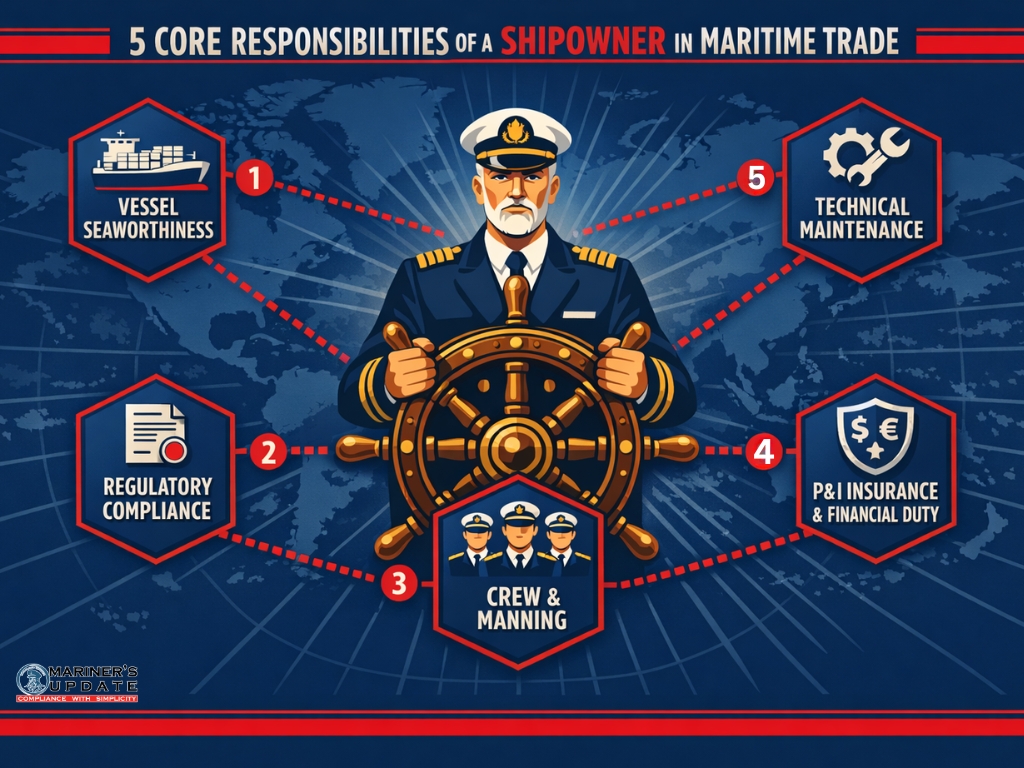
1. Keeping the Vessel Fit for Sea
A shipowner’s most fundamental duty is to provide a vessel that is genuinely seaworthy — and to keep it that way. This means more than just a structurally sound hull. The ship must be properly equipped, well-maintained, and suited to both the intended voyage and the cargo it will carry.
Seaworthiness isn’t a box ticked once at the start of a voyage; it’s an ongoing obligation throughout the vessel’s operational life. Falling short of this standard can expose the shipowner to serious claims — from cargo damage and costly delays to personal injury liability.
2. Staying on the Right Side of International and Local Law
Ships don’t operate in a regulatory vacuum. Shipowners are required to ensure their vessels comply with a complex web of international conventions and the domestic laws of every country they trade with. This covers safety standards, environmental and pollution controls, crew certification, and operational requirements.
The consequences of non-compliance can be severe — port detentions, heavy financial penalties, and lasting reputational damage. More critically, regulatory failures tend to place liability firmly on the shipowner’s shoulders when something goes wrong.
3. Hiring and Managing a Qualified Crew
No amount of technical equipment matters if the people running the ship aren’t up to the task. Shipowners are responsible for ensuring their vessels are crewed by qualified, certified seafarers who meet international standards.
But the responsibility doesn’t end at hiring. It extends to ongoing training, enforcing proper work and rest hour requirements, and maintaining safe and decent living conditions on board. Poor crew management is a recurring factor in maritime accidents — making this one of the most operationally and legally significant duties a shipowner carries.
4. Maintaining the Ship in Good Technical Condition
Regular maintenance and prompt repairs are not optional — they are a core part of owning and operating a vessel. Shipowners must put robust maintenance systems in place to guard against machinery failures, structural wear, and safety hazards before they become serious problems.
Neglecting this duty has a cascading effect: off-hire disputes with charterers, cargo claims, reputational damage, and in the worst cases, total loss of the vessel. From a legal standpoint, poor technical management also weakens a shipowner’s ability to rely on the protections built into most standard shipping contracts.
5. Carrying the Right Insurance and Accepting Financial Accountability
Shipowners are expected to maintain adequate insurance — particularly for liabilities to third parties. Protection and Indemnity (P&I) cover is the cornerstone of maritime liability insurance, addressing risks such as pollution incidents, crew injury claims, and cargo damage.
Operating without proper coverage is a significant risk. A single serious incident can have financially devastating consequences, not just for the shipowner but for every stakeholder connected to the voyage. Insurance is, in many respects, the financial expression of the shipowner’s broader duty of responsibility.
Conclusion: The Shipowner as the Foundation of Safe, Reliable Trade
Owning a ship is the starting point, not the sum total, of what it means to be a shipowner. The role carries legal, operational, and ethical obligations that directly shape maritime safety and commercial dependability at every level of the supply chain. A clear grasp of these responsibilities helps reduce disputes, allocate liability fairly, and keep shipping operations running smoothly.