Port State Control Preparation Guidance — Vessels Calling Australia
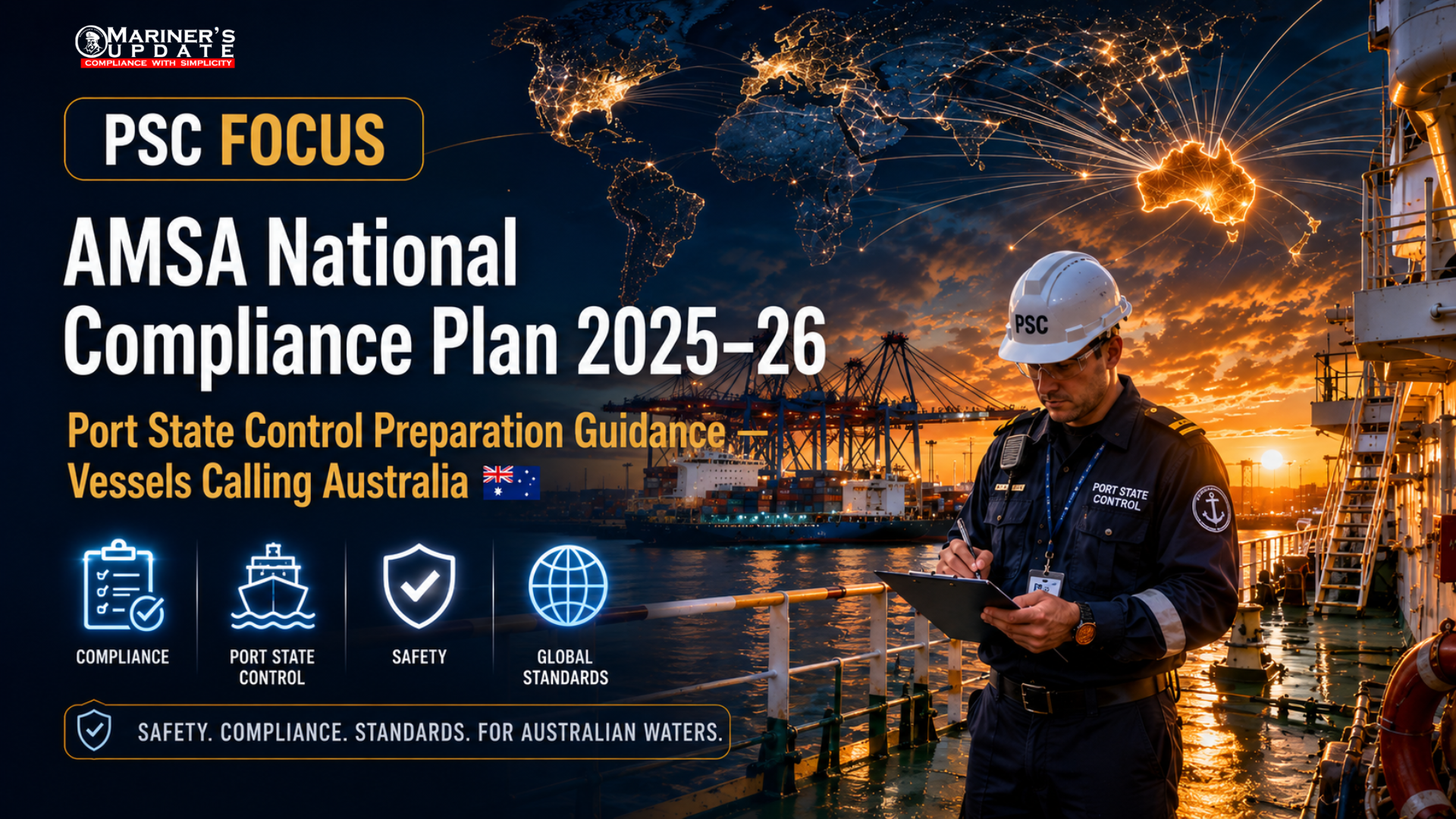
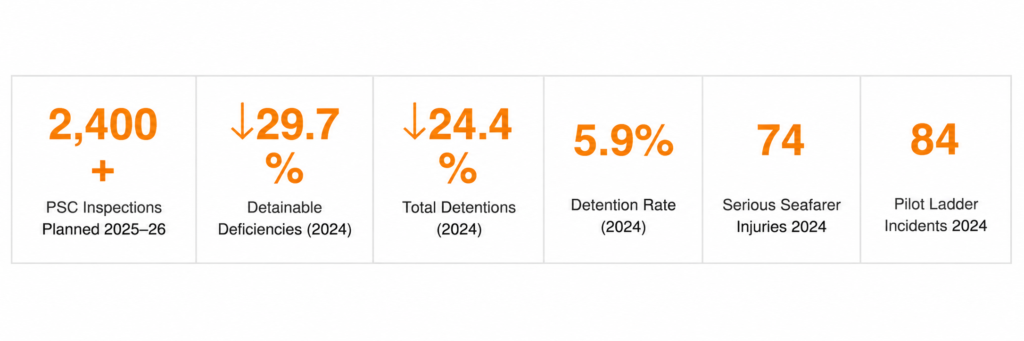
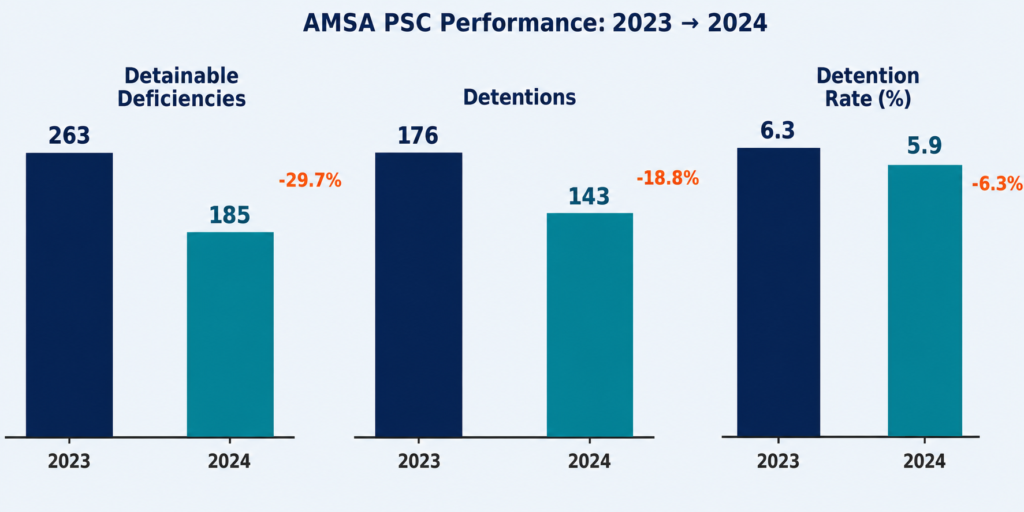
AMSA will conduct a minimum of 2,400 PSC inspections on foreign-flagged vessels in 2025-26 using an enhanced risk-based targeting model. Vessels with weak maintenance, poor SMS implementation, or prior deficiencies face more intrusive inspections. Masters and operators calling Australian ports should treat the six areas below as immediate priorities.
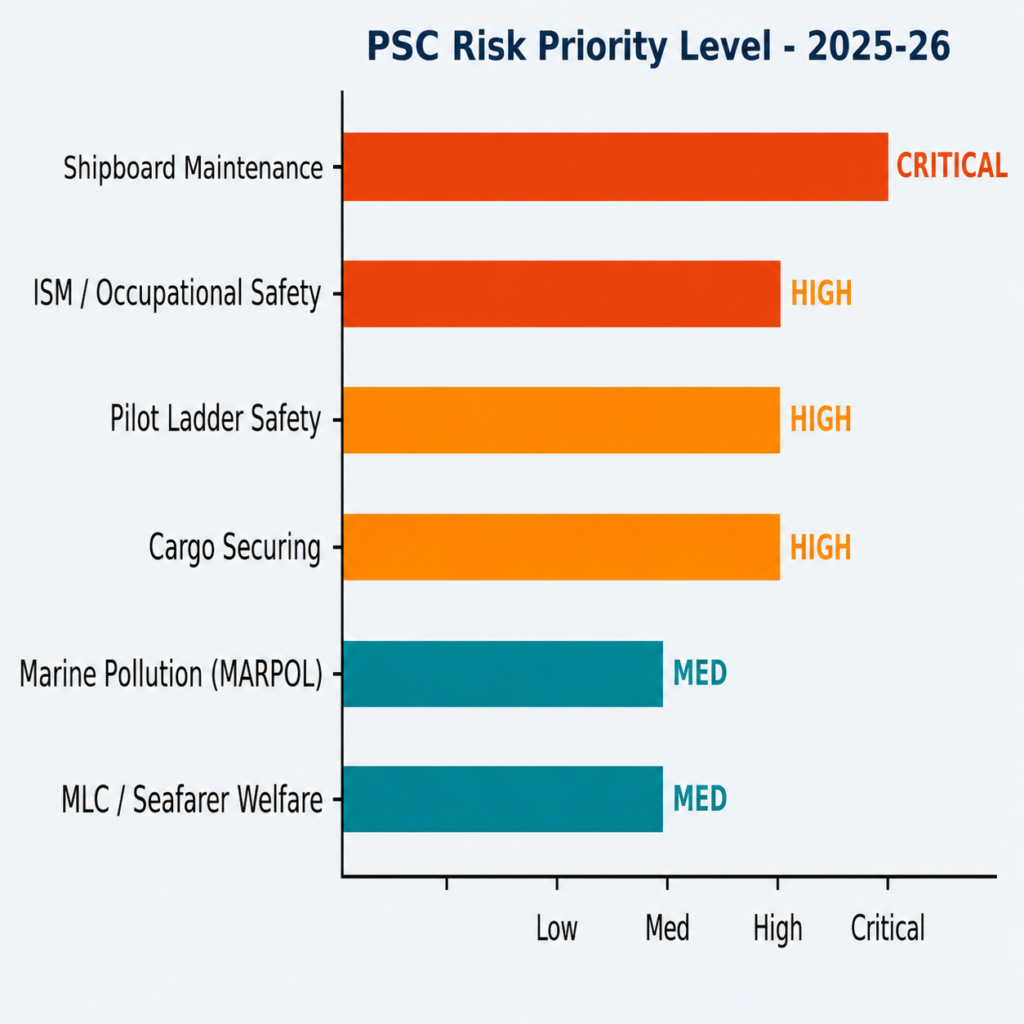
6 KEY PSC DEFICIENCY AREAS — KNOW BEFORE YOU ARRIVE
01 | SHIPBOARD MAINTENANCE — HIGH PRIORITY
AMSA has confirmed shipboard maintenance as a continued core inspection focus. It remains the leading cause of PSC detention in Australia.
What inspectors check:
- Engines, alarms and safeguards
- Emergency power and steering systems
- Fire safety and critical equipment
- PMS records and defect close-outs
Action to take:
- Audit your PMS and close all outstanding defects before arrival
- Remove temporary repairs — they trigger expanded inspections
- Ensure maintenance records are complete and readily accessible
02 | OCCUPATIONAL SAFETY AND ISM CODE
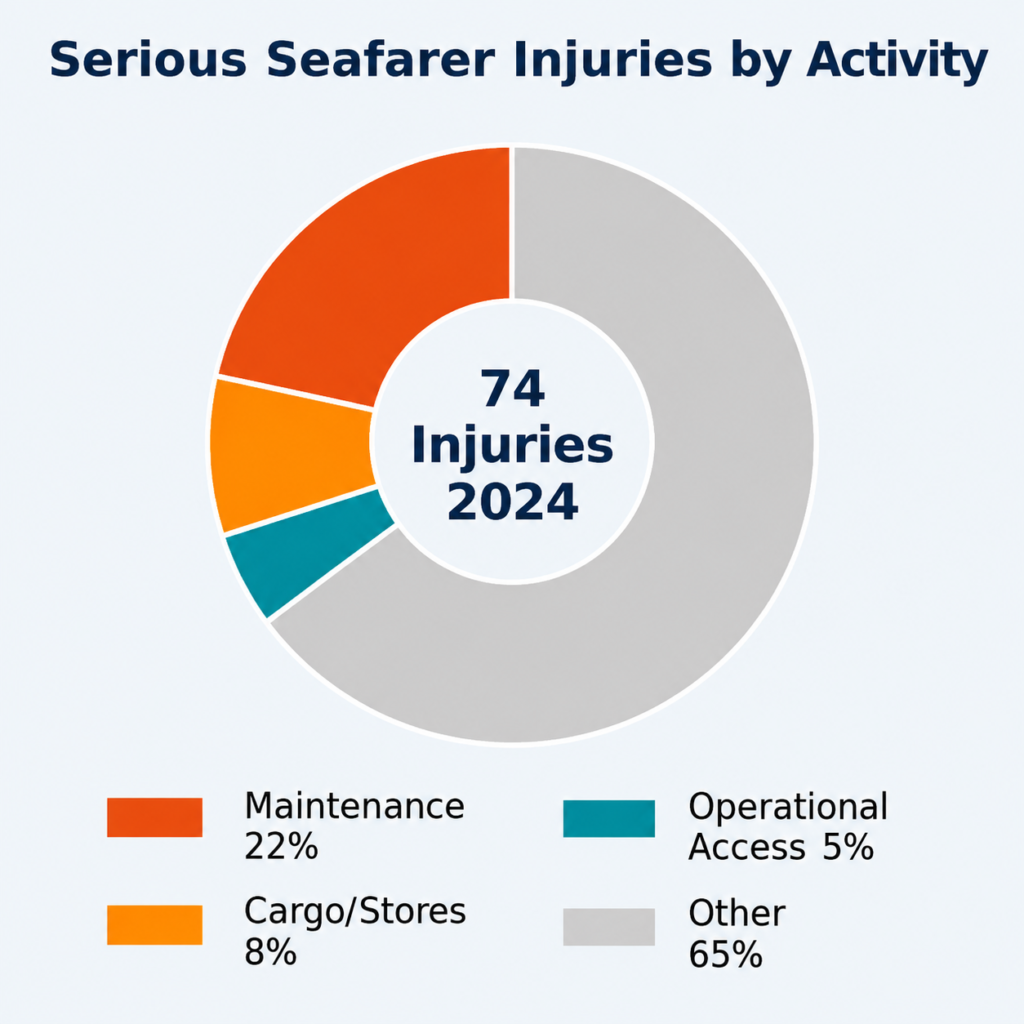
74 serious seafarer injuries were recorded in 2024 — 22% during maintenance, 8% during cargo and stores operations. AMSA will verify that SMS is practically implemented, not just filed.
What inspectors check:
- Risk assessments under the ISM Code
- Practical SMS implementation beyond paperwork
- Task-based controls for maintenance, cargo and access
Action to take:
- Conduct and document vessel-specific risk assessments
- Verify SMS is actively used, not just a paper exercise
- Focus on high-risk tasks: maintenance, cargo handling and access
03 | PILOT LADDER AND TRANSFER ARRANGEMENTS
84 pilot ladder incidents were reported in 2024. A recent serious event where a side rope parted during pilot descent reinforces this as a critical safety risk. Non-compliance is frequently detainable.
What inspectors check:
- Ladder condition, age and certification
- Correct rigging, side ropes and stanchions
- Crew knowledge and supervision during transfer operations
Action to take:
- Inspect and certify pilot ladder before each port call
- Drill crew on pilot transfer procedures
- Ensure full compliance with SOLAS Chapter V / Regulation 23
04 | CARGO HANDLING AND SECURING (Marine Order 32)
Container vessels accounted for 16% of all identified deficiencies in 2024. Global average container losses at sea stand at approximately 1,061 per year (2021-2023).
What inspectors check:
- Ship-specific Cargo Securing Manual availability and approval
- Lashing equipment condition and certification
- Practical compliance with the CSS Code
Action to take:
- Review and update your Cargo Securing Manual
- Inspect all lashing gear and replace any damaged items
- Familiarise crew with CSM procedures
Note: The Tokyo MOU and Indian Ocean MOU Concentrated Inspection Campaign (CIC) on cargo securing is scheduled for late 2026.
05 | MARINE POLLUTION PREVENTION (MARPOL)
AMSA has observed inconsistent compliance with waste management and discharge requirements. Discharges from sewage, garbage, and exhaust gas cleaning units can significantly harm the marine ecosystem.
What inspectors check:
- OWS integrity — no bypasses or tampering
- Oil Record Book accuracy and consistency
- Garbage Management Plans and sewage discharge controls
Action to take:
- Verify ORB entries accurately reflect actual operations
- Ensure no bypass valves are fitted to OWS
- Serious breaches may result in detention, fines, or prosecution
06 | MARITIME LABOUR CONVENTION (MLC) — SEAFARER WELFARE
Wages remain the number one MLC complaint to AMSA — accounting for 29.3% of all employment-related complaints in 2024, with a year-on-year increase.
What inspectors check:
- Seafarer Employment Agreements and wage payments
- Hours of work and rest records
- Accommodation, food and welfare conditions
Action to take:
- Audit SEAs and wage payment records before arrival
- Verify rest hour compliance and check fatigue logs
- Ensure complaint procedures are posted and accessible
Note: AMSA and the Fair Work Ombudsman are conducting joint inspections on vessels operating under temporary licences. Increased enforcement is underway.
KEY TAKEAWAYS FOR MASTERS AND OPERATORS
SMS must be operational — not just a paper exercise. Inspectors verify practical implementation onboard.
Prepare for intrusive inspections — AMSA’s algorithm targets vessels with prior deficiencies and poor maintenance history.
Pilot ladders — certify, inspect and drill crew before every Australian port call. Non-compliance is detainable.
Cargo Securing Manual — must be ship-specific, approved, and crew must be familiar with it.
ORB and MARPOL records — must accurately reflect operations. Tampering carries prosecution risk.
MLC wages — AMSA and the Fair Work Ombudsman are conducting joint inspections. Ensure SEAs and wage records are in order.