Turning Safety Insights into Safer Operations
The maritime industry has significantly strengthened its safety management systems over the years. Despite these improvements, serious incidents continue to occur during high-risk operations. The focus is no longer on introducing more procedures, but on ensuring existing controls are practical, consistently applied, and fully supported by leadership, technology, and collaboration. This week’s RISQ highlights the key operational areas that deserve continued attention.
Bridging the Gap Between Procedures and Practice
Strong safety performance depends on how procedures are applied onboard rather than how many documents exist. Risk assessments, behavioural safety initiatives, and safety management systems are effective only when they can be implemented consistently during day-to-day operations.
Companies should regularly evaluate whether existing procedures remain practical under real working conditions and provide crews with the resources, training, and support needed to follow them confidently.
Enclosed Space Entry Remains a Critical Risk
Enclosed space entry continues to be one of the highest-risk activities onboard ships and remains a leading cause of fatalities across the industry.
Common areas requiring continuous improvement include:
✔ Effective Permit-to-Work implementation
✔ Proper atmosphere testing before entry
✔ Reliable gas monitoring throughout the operation
✔ Competency-based crew training
✔ Realistic emergency preparedness and rescue planning
✔ Managing fatigue and operational pressures
Improving enclosed space safety requires a combination of robust procedures, practical training, strong supervision, and a proactive safety culture.
Ship-to-Shore Operations Require Shared Responsibility
Safe cargo operations rely on effective coordination between vessel crews, terminal personnel, stevedores, operators, and other stakeholders.
Clear communication, well-defined responsibilities, and the authority to stop unsafe operations are essential for reducing operational risks.
A collaborative approach ensures that safety responsibilities are shared throughout the entire operational chain rather than resting solely with the vessel’s crew.
Reducing Crew Workload Improves Safety
Increasing administrative requirements, repetitive inspections, and overlapping reporting obligations can reduce the time available for crews to focus on critical operational tasks.
Simplifying processes, improving digital integration, and enhancing information sharing can significantly reduce workload while allowing crews to concentrate on safe ship operations.
Reducing unnecessary administrative burden ultimately supports better decision-making and stronger operational performance.
Key Focus Areas
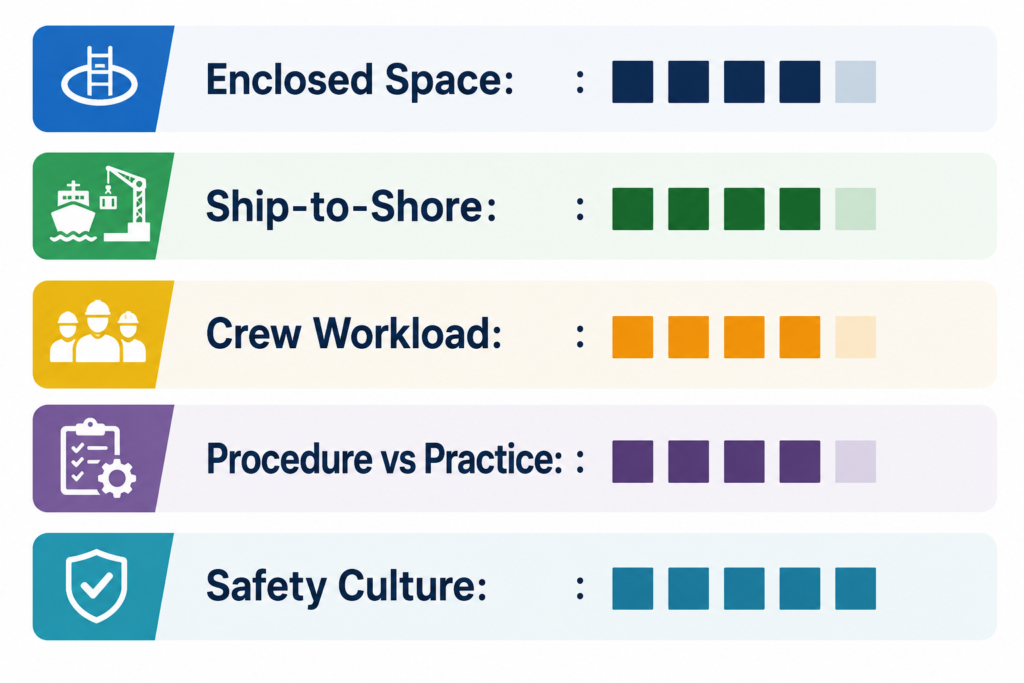
| Operational Theme | Priority |
|---|---|
| Practical implementation of procedures | High |
| Enclosed space safety | Very High |
| Ship-to-shore coordination | High |
| Crew workload reduction | High |
| Leadership and safety culture | Very High |
| Data quality and transparency | Medium-High |
Operational Risk Snapshot
Key Takeaway
Continuous improvement in maritime safety depends on more than compliance alone. Practical procedures, competent crews, supportive leadership, effective engineering controls, transparent reporting, and strong collaboration across the maritime industry all contribute to safer operations. The ultimate goal is to create an environment where safe decisions become the easiest decisions—every day, during every operation.