Growing Security Risks Continue to Challenge Commercial Shipping in One of the World’s Most Critical Energy Corridors
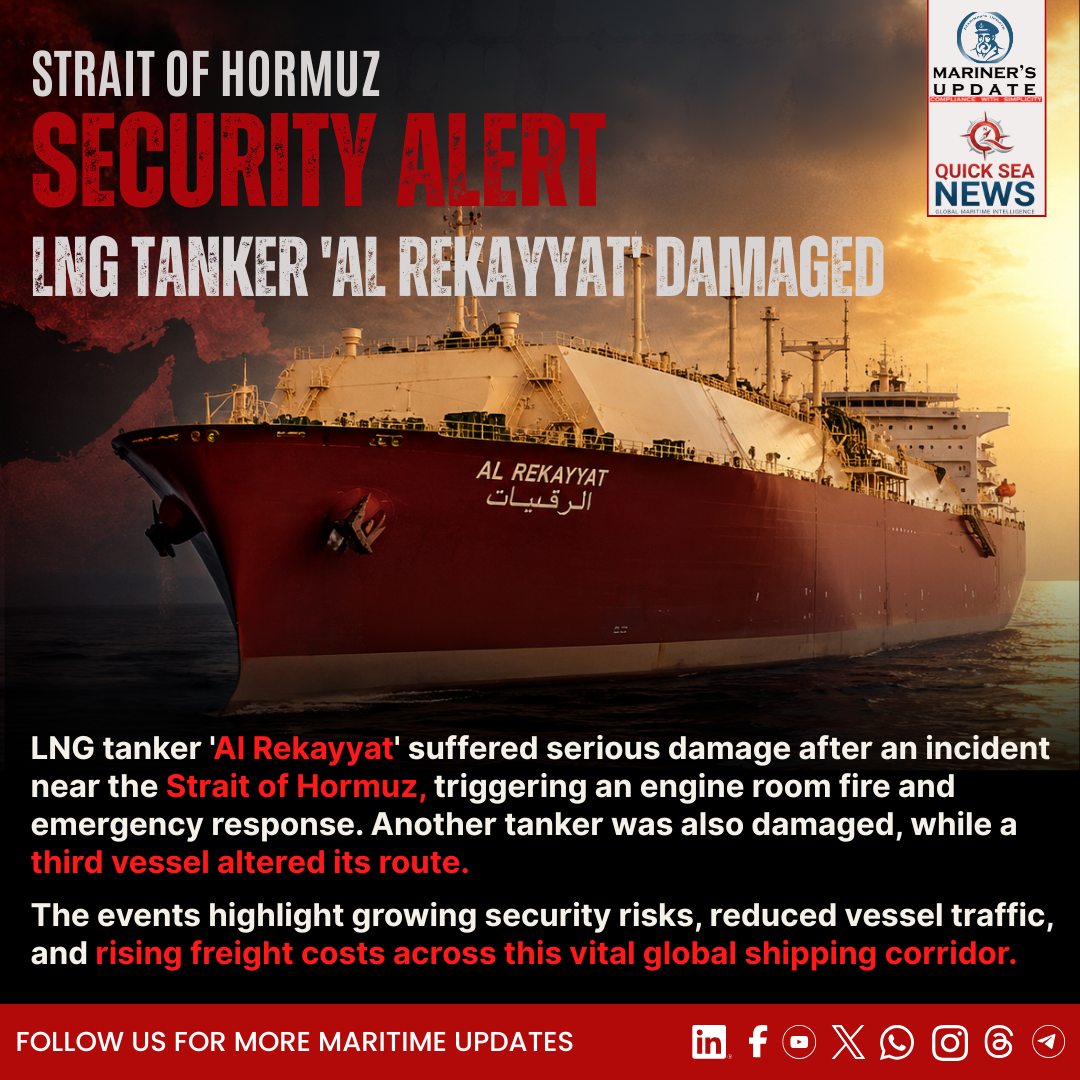
Fresh security incidents in the Strait of Hormuz have once again highlighted the increasing risks facing commercial shipping. LNG tanker ‘Al Rekayyat’ reportedly sustained serious damage after coming under attack during transit, while another crude oil tanker was also damaged in a separate incident. A third gas carrier was forced to alter its course, further emphasizing the fragile security situation in the region.
The incidents have renewed concerns over crew safety, freedom of navigation, global energy transportation, and supply chain stability.
LNG Carrier Suffers Serious Damage
An LNG carrier carrying a full cargo of liquefied natural gas reportedly came under attack while navigating near the Strait of Hormuz. The vessel transmitted distress calls after suffering damage on the port side, resulting in an engine room fire and heavy smoke.
Due to the highly flammable nature of LNG cargoes, onboard fire created a significant explosion risk. Emergency procedures were immediately initiated, and the crew was safely evacuated while damage assessments continued.
Although the cargo containment system remained the primary concern, the incident demonstrated how quickly a machinery space fire can escalate into a major maritime emergency.
Second Tanker Also Damaged
In a separate event within the same region, a crude oil tanker reportedly sustained damage while operating near the Gulf.
Although the exact cause remains under investigation, the occurrence highlights that multiple commercial vessels are facing elevated security threats during transit through the region.
The sequence of incidents has increased concerns among shipowners, charterers, insurers, and voyage planners.
Another Gas Carrier Forced to Alter Course
A third gas carrier was reportedly instructed to divert from its intended route and proceed closer to coastal waters while attempting to transit the Strait.
The incident illustrates the increasing operational uncertainty faced by merchant vessels, where voyage plans may need to change rapidly due to evolving security conditions.
Such diversions can affect voyage duration, scheduling, fuel consumption, and overall operational efficiency.
Shipping Traffic Remains Below Normal Levels
Although vessel movements through the Strait have gradually resumed, overall traffic remains significantly below normal trading volumes.
Daily transits have recovered only partially compared to pre-conflict levels, reflecting continued caution among operators and voyage planners.
Several vessels have reportedly delayed passage or altered their routes until the security situation becomes clearer.
Freight Rates Continue to Rise
Growing uncertainty has once again pushed tanker freight rates sharply higher.
Owners and operators continue to factor increased security risks into voyage planning, resulting in:
- Increased charter rates
- Higher insurance premiums
- Additional security costs
- Longer waiting times
- Greater operational uncertainty
The market remains highly sensitive to any disruption within the Strait due to its strategic importance for global oil and LNG exports.
Persistent Risks for Global Shipping
The latest incidents demonstrate that geopolitical tensions continue to pose significant risks to commercial shipping despite efforts to maintain safe navigation.
For ship operators, the challenges extend beyond physical security and now include:
- Voyage planning uncertainty
- Crew safety concerns
- Elevated operational risk
- Rising transportation costs
- Supply chain disruption
- Market volatility
The events also reinforce the importance of continuous voyage risk assessments, close monitoring of maritime security advisories, effective bridge resource management, and maintaining readiness for rapidly changing operational conditions.
Conclusion
The Strait of Hormuz remains one of the world’s most strategically important maritime chokepoints, carrying a substantial share of global oil and LNG exports. Recent incidents serve as a reminder that even localized security events can rapidly influence global shipping operations, freight markets, energy logistics, and voyage planning.
As regional tensions continue, the maritime industry will remain focused on safeguarding crews, maintaining uninterrupted trade, and adapting operational strategies to an increasingly complex security environment.