Multiple Attacks Trigger Highest Security Concerns for Commercial Shipping
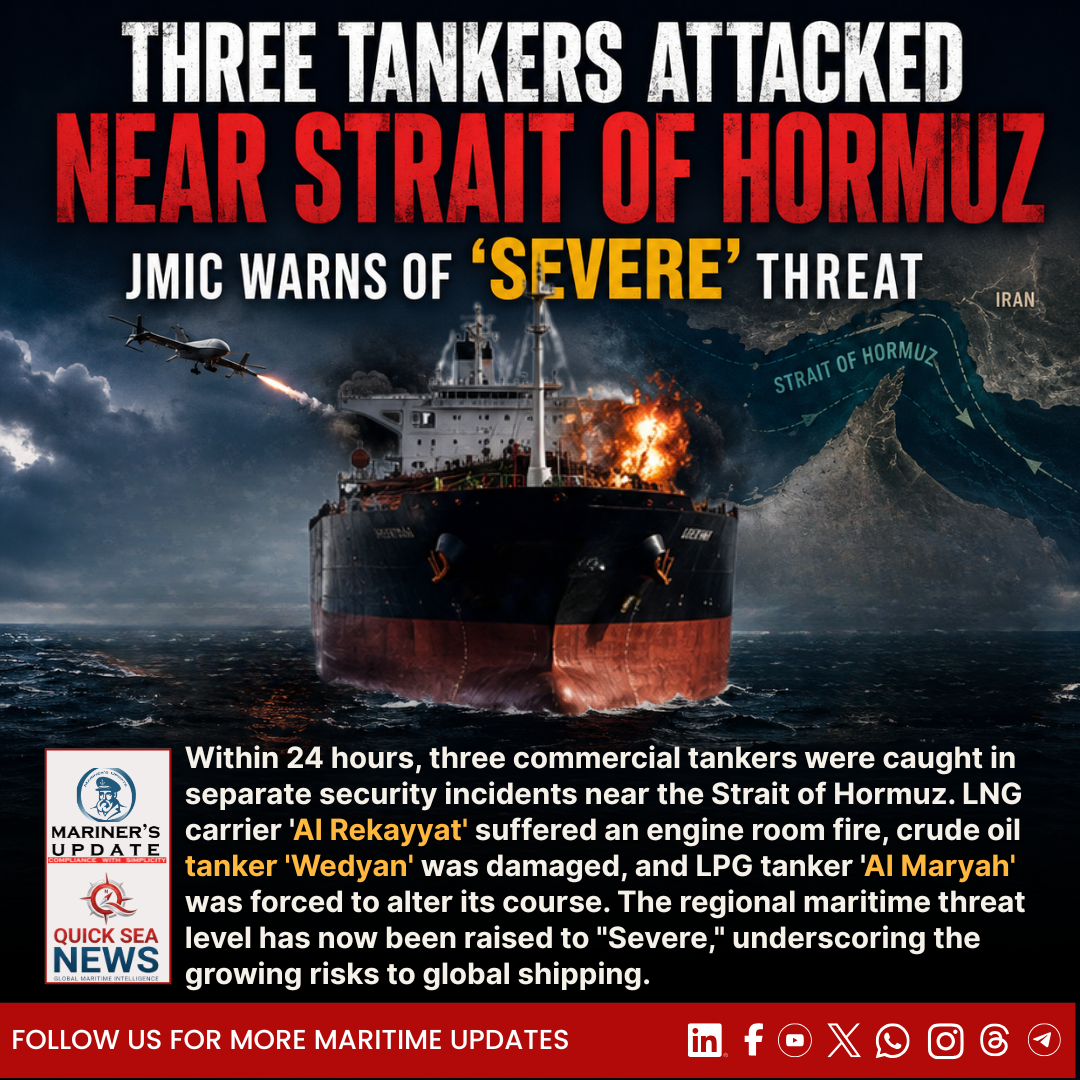
The security situation in the Strait of Hormuz has deteriorated significantly after three commercial tankers were attacked within 24 hours, prompting maritime security authorities to raise the regional threat level to “Severe.”
The incidents have renewed global concerns over the safety of one of the world’s busiest maritime chokepoints, where a large portion of global crude oil, LNG, and LPG exports transit every day.
With drone activity, projectile attacks, vessel interference, GPS disruptions, and reports of drifting mines increasing across the region, shipowners and operators are once again reassessing voyage risks through the Gulf.
Three Separate Tanker Attacks Reported
The latest incident involved a commercial tanker that was reportedly struck by an Uncrewed Aerial Vehicle (UAV) while transiting the Strait of Hormuz.
The vessel sustained minor structural damage but remained operational and continued towards its next port without injuries to the crew or pollution being reported.
This attack followed two earlier incidents that occurred within the previous 24 hours, making it the third confirmed attack on commercial shipping in the region.
LNG Carrier ‘Al Rekayyat’ Suffers Engine Room Fire
Among the affected vessels was LNG carrier ‘Al Rekayyat’, which reportedly sustained damage on its port side during transit.
The impact resulted in an engine room fire, forcing the crew to broadcast distress messages and initiate emergency procedures.
Due to the nature of LNG cargoes, the onboard fire raised concerns over a potential explosion risk. However, all crew members were safely evacuated while emergency response measures continued.
Crude Oil Tanker Also Damaged
A second commercial tanker, crude oil tanker ‘Wedyan’, also sustained damage near the Omani coastline.
Although the exact cause remains under investigation, the incident further highlights the growing risks facing merchant vessels navigating through the Strait.
LPG Tanker Ordered to Alter Course
In a separate development, an LPG tanker was instructed to alter its planned route and proceed closer to the Iranian coastline while attempting to transit the Strait.
The incident demonstrates the increasing operational uncertainty faced by commercial shipping, with voyage plans changing rapidly due to evolving security conditions.
Threat Level Raised to ‘Severe’
Following the three attacks, maritime security authorities elevated the regional security assessment from “Substantial” to “Severe,” indicating that deliberate hostile action against commercial shipping is now considered likely.
Operators have also been warned about:
- Continued UAV activity
- Vessel hailing by military forces
- Targeted surveillance
- GPS interference
- Reports of drifting sea mines
- Elevated regional military activity
These threats significantly increase navigational complexity for vessels operating within the Strait.
Commercial Shipping Continues Under Heightened Risk
Despite the deteriorating security environment, merchant vessels continue transiting both the southern and northern shipping corridors.
However, industry observers expect vessel movements to decline in the coming days as operators reassess risks and voyage planning.
The latest incidents also come despite recent efforts aimed at restoring safe commercial navigation in the region, highlighting the fragile nature of maritime security within this strategic waterway.
Industry Impact
The attacks are expected to influence:
- Voyage planning
- Crew safety measures
- Freight markets
- Marine insurance premiums
- Regional energy transportation
- Global supply chains
Ship operators are being urged to maintain enhanced security awareness, closely monitor regional advisories, and immediately report any suspicious activity.
The latest attacks underscore the growing vulnerability of commercial shipping in the Strait of Hormuz. As geopolitical tensions continue to impact one of the world’s most strategically important maritime routes, shipowners, Masters, and operators must remain vigilant through continuous risk assessments, enhanced security procedures, and close monitoring of official maritime advisories to safeguard crews, vessels, and global trade.