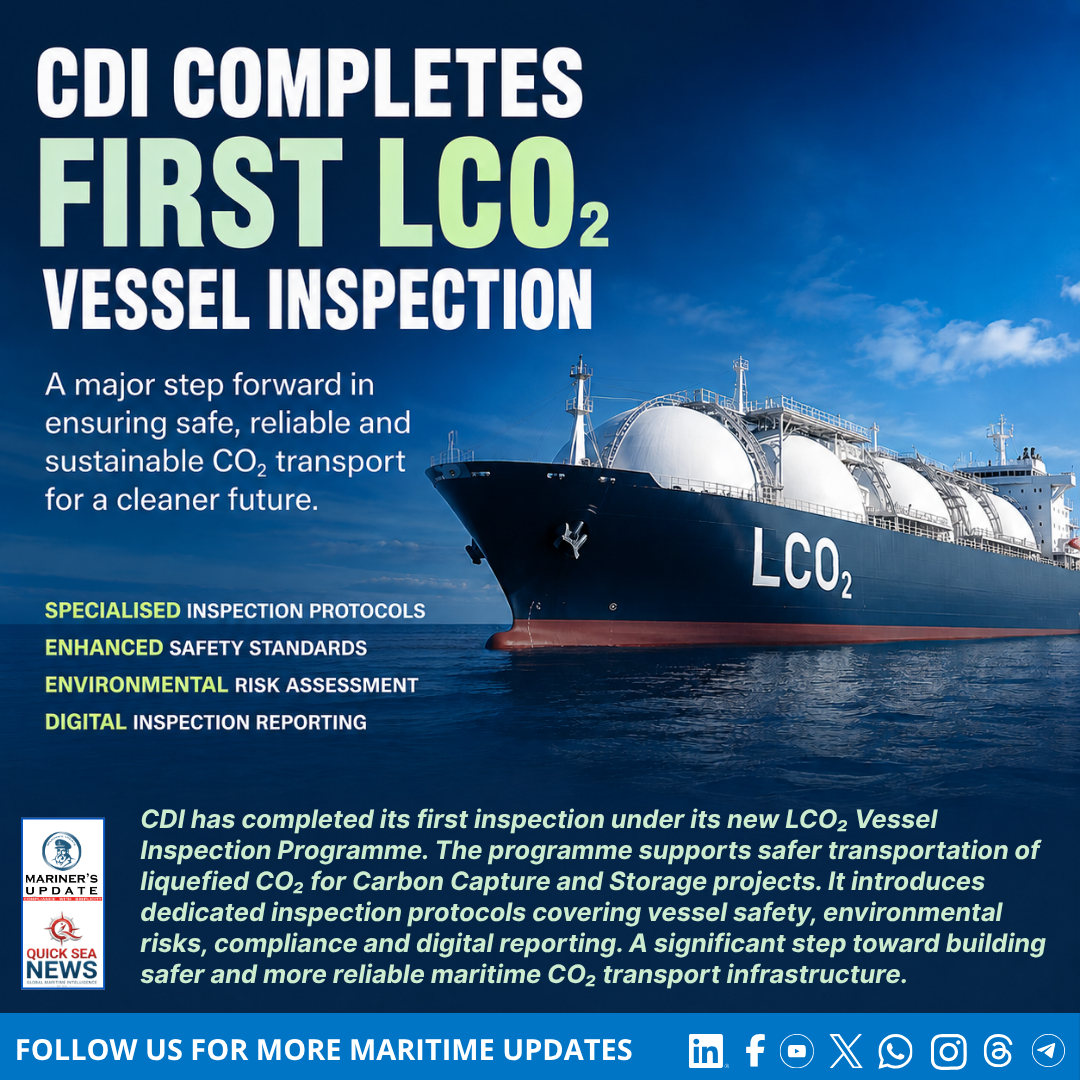
The Chemical Distribution Institute (CDI) has announced the successful completion of the first vessel inspection under its newly launched Liquefied Carbon Dioxide (LCO₂) Vessel Inspection Programme, marking an important development for the emerging maritime carbon transport sector.
The programme has been introduced under the CDI-Marine Inspection Scheme to support the safe, reliable and sustainable transportation of liquefied carbon dioxide aboard specialised vessels designed to carry reclaimed LCO₂ for Carbon Capture and Storage (CCS) projects.
Why LCO₂ Shipping Is Becoming Increasingly Important
As global efforts to reduce greenhouse gas emissions accelerate, Carbon Capture and Storage is gaining importance, particularly in industries where reducing emissions through conventional decarbonisation measures remains challenging.
Within the CCS value chain, the transportation of captured carbon is a critical component. Once CO₂ is captured from industrial sources, it may need to be transported to locations where it can be permanently stored. In suitable cases, maritime transportation provides an important link between the point of capture and the eventual storage site.
The increasing development of this sector is creating demand for specialised vessels and robust operational standards specifically suited to the transportation of liquefied CO₂.
CDI Introduces Dedicated Inspection Framework
Recognising the unique requirements of LCO₂ transportation, CDI has developed a dedicated inspection programme aimed at assessing key aspects of vessel safety, integrity, regulatory compliance and environmental performance.
The programme is intended to provide shipowners, operators, charterers and other relevant stakeholders with greater confidence that vessels involved in LCO₂ transportation are operating against appropriate industry expectations.
Key Features of the LCO₂ Vessel Inspection Programme
Specialised LCO₂ Inspection Protocols
The inspection programme incorporates criteria specifically developed around the characteristics of liquefied carbon dioxide transportation. These include the specialised containment requirements and operational challenges associated with carrying LCO₂ cargoes.
Enhanced Safety Standards
The programme provides comprehensive assessments aligned with applicable international regulations, recognised industry guidance and established good practices, with the objective of supporting safe vessel operations.
Environmental Risk Assessment
Environmental and operational controls are also assessed to help identify and minimise potential environmental risks associated with the loading, transportation and discharge of LCO₂ cargoes.
Digital Inspection Reporting
CDI’s programme incorporates digital reporting tools intended to improve the quality and consistency of inspection data, enhance transparency and provide authorised stakeholders with efficient access to inspection findings.
A Milestone for the Emerging Carbon Transport Industry
The completion of the first inspection represents a significant milestone as the maritime industry prepares to support the growing carbon capture and storage ecosystem.
Unlike conventional cargo sectors, LCO₂ transportation involves specialised cargo characteristics, vessel systems and operational considerations. Establishing dedicated inspection and assurance frameworks will therefore be increasingly important as the sector develops and more specialised vessels enter service.
CDI said the programme is intended to support the ownership, operation, management and chartering of vessels involved in the transportation of liquefied carbon dioxide.
The initiative also reflects the broader evolution of the maritime industry, where new cargoes, technologies and energy-transition projects are creating new operational and safety requirements.
Looking Ahead
The successful completion of CDI’s first LCO₂ vessel inspection provides an early foundation for a structured inspection approach within this developing sector.
As Carbon Capture and Storage projects expand and the need to move captured CO₂ between industrial facilities, ports and storage locations increases, the role of specialised maritime transport is expected to become more significant.
For the shipping industry, this development highlights an important emerging area where marine safety, environmental protection, inspection assurance and the energy transition are increasingly interconnected.
CDI’s LCO₂ Vessel Inspection Programme is available to CDI members and industry stakeholders involved in the ownership, operation, management and chartering of vessels engaged in LCO₂ transportation.