A deadly accident at a shipbreaking yard in Chattogram, Bangladesh, has renewed serious questions over whether international certification is translating into safe working conditions on the ground.
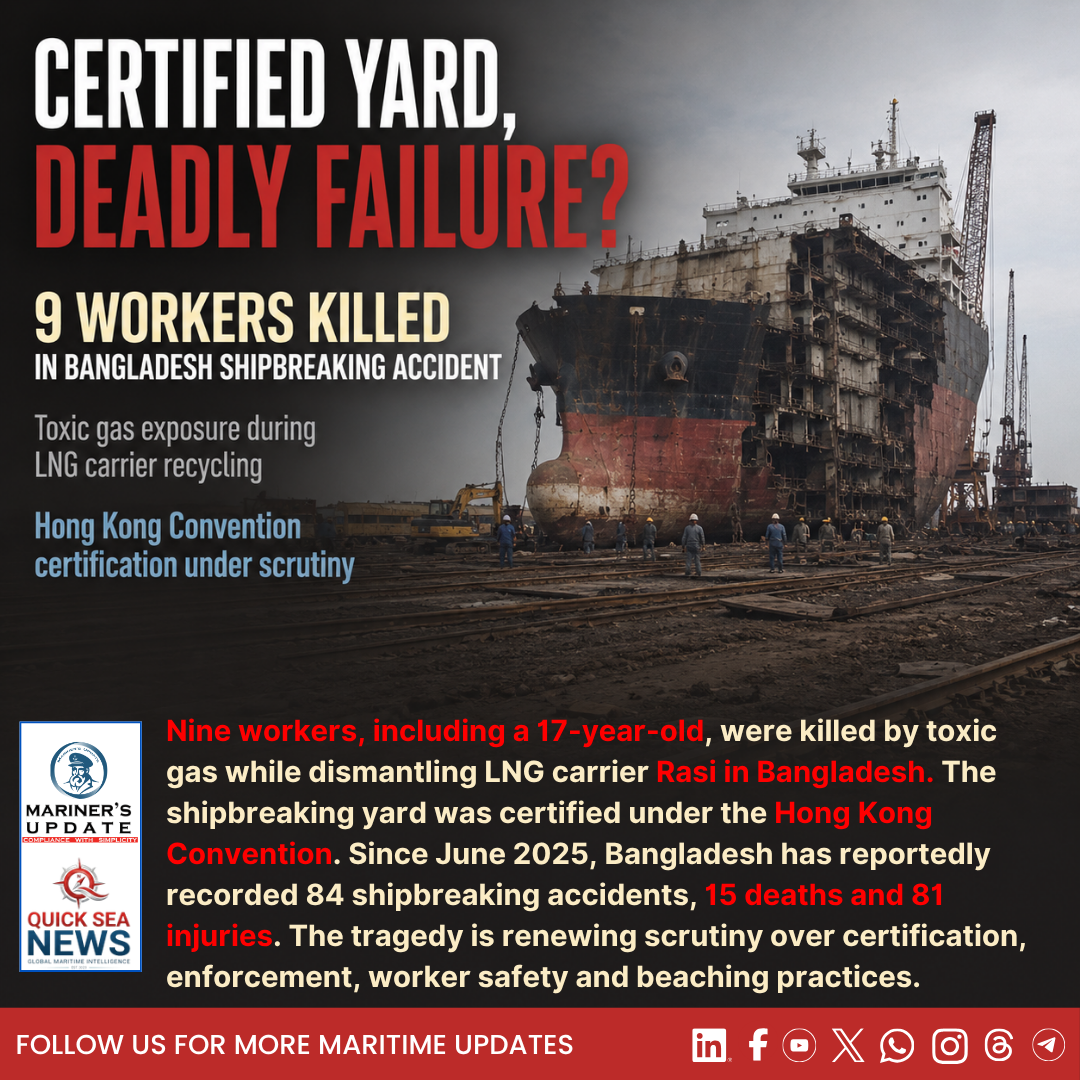
Nine workers were killed on 14 August 2026 after being exposed to toxic gas while dismantling the LNG carrier Rasi at Ferdous Steel shipbreaking yard in Chattogram, according to the NGO Shipbreaking Platform. Among those who lost their lives was a 17-year-old worker, while several others were injured.
The incident has drawn particular attention because Ferdous Steel is certified as compliant with the Hong Kong International Convention for the Safe and Environmentally Sound Recycling of Ships, which entered into force in June 2025.
Safety Concerns Despite Certification
According to the NGO Shipbreaking Platform, Bangladesh’s Department of Inspection for Factories and Establishments had already taken legal action against Ferdous Steel approximately one month before the fatal accident. The action reportedly followed repeated occupational safety failures.
Following the incident, the Bangladesh Environmental Lawyers Association called for an independent investigation and demanded the closure of the yard.
The latest accident has intensified concerns about the effectiveness of certification systems when serious workplace safety deficiencies continue to occur at certified recycling facilities.
The NGO Shipbreaking Platform, citing The Daily Star, reported that 84 accidents have occurred at Bangladeshi shipbreaking yards since the Hong Kong Convention entered into force in June 2025. These incidents have reportedly resulted in 15 worker deaths and 81 injuries.
The organization argues that the figures demonstrate a potential gap between compliance on paper and the actual conditions experienced by workers inside ship recycling yards.
The Vessel at the Centre of the Incident
The vessel involved was LNG carrier Rasi (IMO 9176008), formerly known as HL Ras Laffan and previously owned by South Korea-based H-Line Shipping.
According to the NGO Shipbreaking Platform, shipping databases identify cash buyer GMS in connection with the vessel’s sale for recycling.
The organization had previously raised concerns in March 2025 over H-Line’s planned retirement of the vessel and criticized the use of South Asian shipbreaking facilities for end-of-life vessels.
Following the latest accident, the NGO is calling on Bangladeshi authorities to:
- Conduct an independent investigation into the deaths.
- Hold those responsible for safety failures accountable.
- Increase the frequency of unannounced inspections at ship recycling facilities.
- Strengthen enforcement of occupational safety requirements.
The Wider Debate: Can Beaching Be Safe?
The Bangladesh tragedy comes at a time when ship recycling practices in South Asia are facing renewed international scrutiny.
The European Commission has recently proposed adding two Indian ship recycling facilities in Alang, Gujarat, to the European List of approved ship recycling facilities:
- Shree Ram Vessel Scrap / Shree Ram Shipping Industries
- YSI Recyclers
Both facilities use the controversial beaching method, where ships are deliberately driven onto tidal mudflats before dismantling begins.
Environmental organizations have strongly opposed the proposal, arguing that beaching makes it more difficult to properly contain oil, heavy metals and other hazardous materials released during ship dismantling. Critics say the method can create risks for both workers and coastal ecosystems.
The European Commission, however, concluded after reviewing the applications that the two facilities meet the requirements of the EU rules governing safe and environmentally sound ship recycling.
A public consultation on the proposal remains open until 30 August 2026.
What Does the Hong Kong Convention Require?
The Hong Kong Convention entered into force on 26 June 2025, establishing the first mandatory international framework specifically governing the safe and environmentally sound recycling of ships.
Among its key requirements are:
- Ships heading for recycling must maintain an Inventory of Hazardous Materials.
- Recycling facilities must prepare ship-specific recycling plans.
- Governments are responsible for ensuring that ship recycling facilities comply with the Convention’s requirements.
Bangladesh, India and Pakistan, three of the world’s major destinations for end-of-life ships, are parties to the Convention.
However, critics argue that the Convention’s failure to completely prohibit the beaching method remains a significant weakness. They maintain that driving ships onto tidal beaches can leave workers exposed to hazardous substances while increasing the risk of environmental contamination.
A Certification Question That Cannot Be Ignored
The deaths at Ferdous Steel raise a fundamental question for the global maritime industry:
Is certification alone enough to guarantee safe ship recycling?
The purpose of international ship recycling standards is not simply to demonstrate documentary compliance. They are intended to protect workers, control hazardous materials and prevent environmental damage throughout the recycling process.
The Chattogram accident highlights the importance of effective implementation, continuous monitoring and genuine enforcement—not merely certification.
As more vessels reach the end of their operational lives, the pressure on ship recycling facilities will continue to increase. The industry will therefore face growing expectations to ensure that the final stage of a vessel’s life does not come at the cost of workers’ lives or coastal environments.