Ch 2.8.1
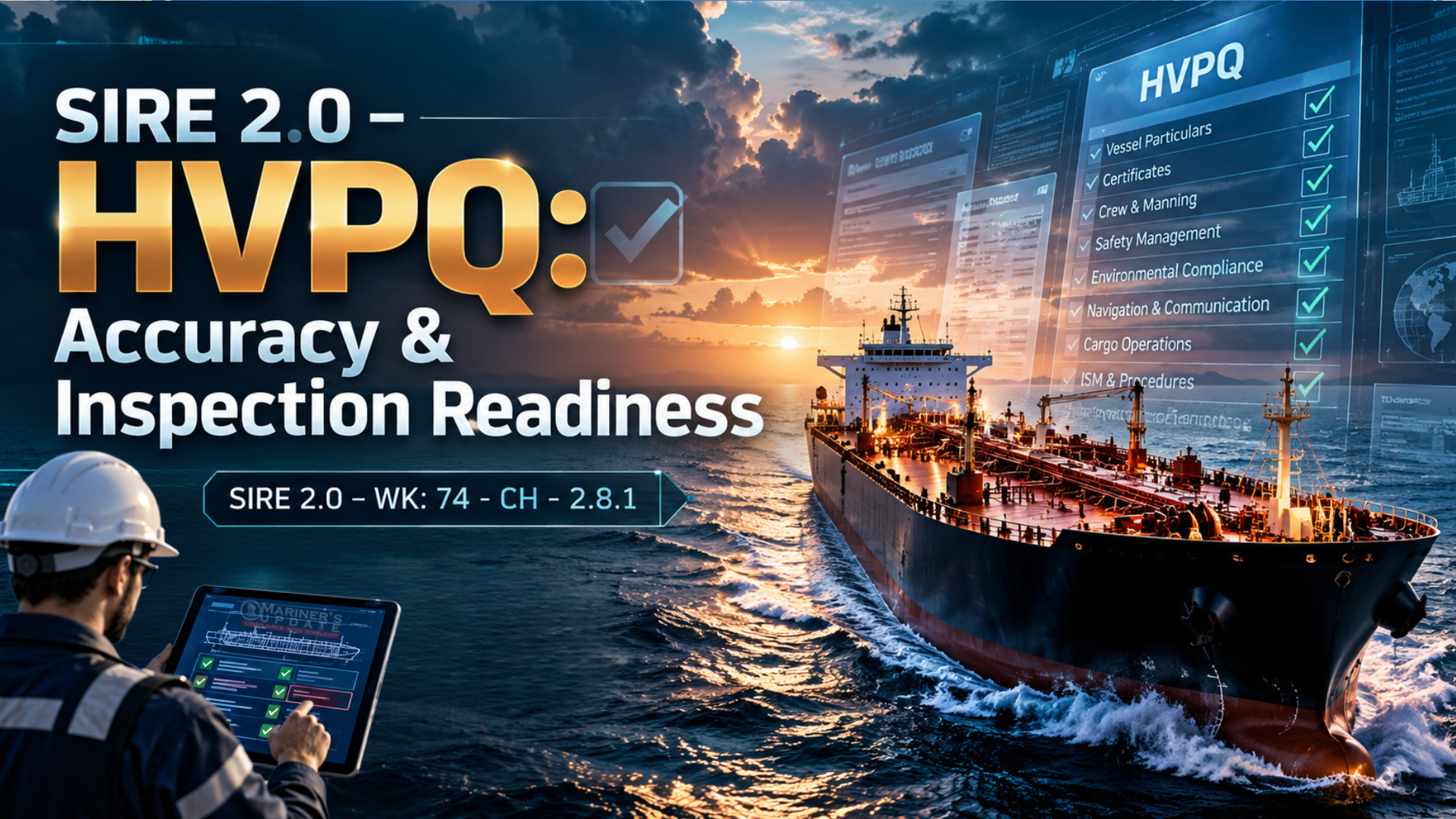
Was the OCIMF Harmonised Vessel Particulars Questionnaire (HVPQ) available through the OCIMF SIRE Programme database completed accurately to reflect the structure, outfitting, management and certification of the vessel?
Applies to: Oil Tanker | Chemical Tanker | LNG | LPG
Potential Ground for Negative Observation (OBS)
Where the information provided within the HVPQ misrepresented the details of the vessel through multiple systemic inaccuracies or omissions relating to ownership, class status, validity of certification or outfitting of the vessel:
• Make an observation within the process response tool and add a comment to identify which questions were provided with inaccurate information.
Checklist for You
1. Is all the information in HVPQ accurate and upto date?
2. The latest submitted HVPQ is available onboard and its revision or submission date is identifiable.
3. Named ship and shore personnel review, approve and update the questionnaire.
4. Answers are checked against certificates, approved drawings, manuals, class status and physical equipment.
5. Management, flag, class, name, equipment and modification changes trigger prompt HVPQ review.
6. High-risk particulars such as capacities, dimensions, cargo systems and safety equipment have been physically or documentarily verified.
7. HVPQ data agree with PIQ answers and other OCIMF documents.
8. Errors have a controlled correction and resubmission process rather than being left for the next periodic review.
Guidelines
PROCESS
Prior to the inspection:
The operator must have updated the HVPQ to ensure that all static and dynamic information is complete and accurate. They have to declare through the inspection booking system that the information contained within the HVPQ was updated, complete and accurate, in order for the HVPQ to be released to the Inspector.
In particular, the Inspector will seek to verify the accuracy of the following sections in the HVPQ
• 1 General Information.
• 2 Certificates.
• 3 Crew.
• 4 Navigation.
• 7 Structural condition.
• 12 Propulsion.
… and review that information which appears inconsistent with the type and specialisation of the vessel and make a note of information which will assist in better understanding the background of the questions assigned to the bespoke Vessel Inspection Questionnaire for the inspection.
During the inspection onboard the vessel
During the inspection onboard the vessel, the Inspector will clarify with the Master or an appropriate Officer on any inconsistencies identified within the HVPQ. Verified errors or omissions within the HVPQ will be informed to the Master and documented for the inspection. Particular attention is paid to details relating to ownership, Class status, validity of certification or outfitting of the vessel. Through the inspection software, the Inspector will have access to certificates and documents.
Reference
OTM 8.1