Ch 2.6.2 | VOC Management Plan
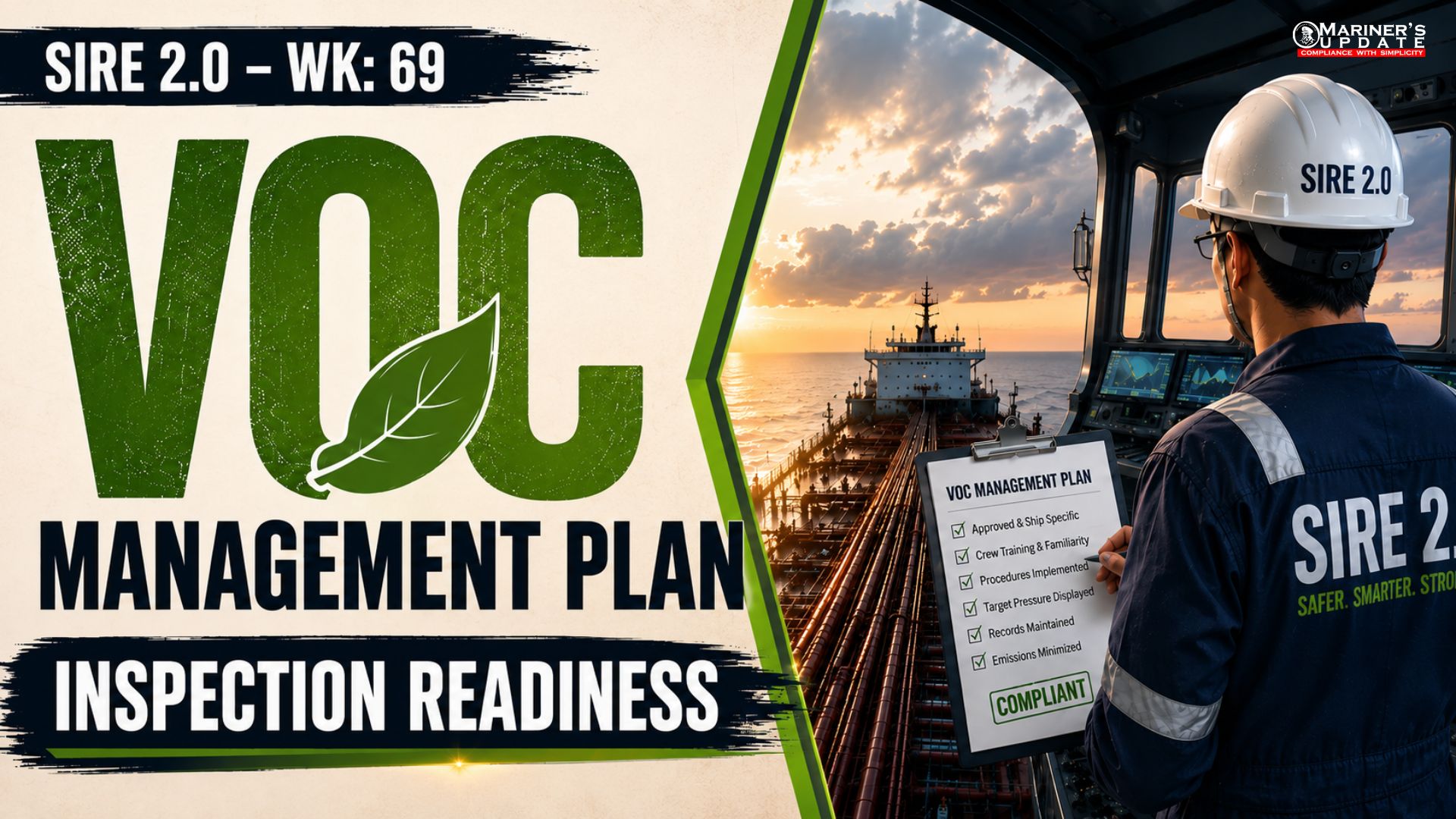
Were the Master and officers familiar with the VOC Management Plan, and had the procedures for minimising VOC emissions set out in the Plan been implemented and documented as required?
Applies to: Oil Tanker | Chemical Tanker | LNG | LPG
Potential Ground for Negative Observation (OBS)
• The VOC Management Plan was not approved by the Flag State or recognised organisation such as a Class Society.
• The VOC Management Plan was not ship specific.
• The VOC Management Plan was not in a language readily understood by the Master and officers.
• The person identified as responsible for implementing the VOC Management Plan was not familiar with its contents.
• The accompanying officer was not aware of the VOC Management Plan or familiar with the actions necessary to comply with the provisions of the Plan (which may be incorporated in the cargo transfer plan).
• There was no evidence that the training programmes set out in the VOC Management Plan had been implemented.
• There was no evidence that the procedures for minimising VOC emissions set out in the Plan had been implemented during routine crude oil loading, carriage, discharge and crude oil washing.
• The target operating pressure for the cargo tanks was not clearly indicated in the cargo control room.
• Records required to be maintained by the VOC Management Plan had not been maintained for all occasions when crude oil was being loaded, carried and discharged, including crude oil washing.
• Cargo tank pressure was maintained significantly below the target operating pressure during loading and/or carriage of crude oil, by venting to atmosphere.
Checklist for You
- Is Ship specific VOC management plan approved by the Flag State or recognised organisation such as a Class Society available on board?
- Is VOC Management Plan in a language readily understood by the Master and officer?
- Are training programmes set out in the VOC Management Plan been implemented?
- Are procedures for minimising VOC emissions set out in the Plan had been implemented during routine crude oil loading, carriage, discharge and crude oil washing?
- Are target operating pressure for the cargo tanks clearly indicated in the cargo control room?
- Are records required to be maintained by the VOC Management Plan been maintained for all occasions when crude oil was being loaded, carried and discharged, including crude oil washing?
- Are Cargo tank pressure maintained significantly below the target operating pressure during loading and/or carriage of crude oil, by venting to atmosphere?
- Is the person identified as responsible for implementing the VOC Management Plan familiar with its contents?
- Are all officers familiar with the VOC Management Plan and the actions necessary to comply with the provisions of the Plan (which may be incorporated in the cargo transfer plan)?
Guidelines
HUMAN
1. PIQ Declaration
- Ensure the vessel’s VOC Management Plan is declared in PIQ (PIQ 2.6.2).
2. Crew Familiarity
- The responsible person must know the Plan and record-keeping rules.
- The Accompanying Officer must understand the Plan and ongoing cargo operation requirements.
3. Cargo Transfer Plan
- Include VOC-related actions in the cargo transfer plan if applicable.
Train the crew to follow the Plan and document compliance during cargo operations.
PROCESS
1. Ship-Specific and Approved Plan
- The VOC Management Plan must:
2. Crew Training and Records
- Conduct training for crew involved in cargo operations as per the Plan.
- Maintain training records for the Inspector.
3. Procedures for Minimising VOC Emissions
- Follow steps in the Plan to reduce VOC emissions during:
- Keep records showing compliance.
4. Cargo Tank Pressure
- Display target operating pressure for cargo tanks during loading and carriage in the Cargo Control Room.
5. Inspector’s Review
- Provide records of past cargo operations, tank pressures, and voyage details.
- Show cargo plans and deck logbooks for ongoing operations to confirm compliance with the Plan.
Regularly update training, records, and procedures to ensure smooth inspections and compliance.
Reference
TMSA KPI 10.1.3 • VOC management
IMO: ISM Code, 7.0
IMO: MARPOL/Annex VI/Chapter 3 Regulation 15.
IMO: Resolution MEPC.185(59) Guidelines for the development of a VOC Management Plan
OCIMF: Volatile Organic Compound Emissions from Cargo Systems on Oil Tankers. First Edition 2019.